Gold Diggers Series Episode 5- Fine Motor Skills

Episode 5

Fine Motor Skills

Rev. Dr. Natasha Francis-Campbell

October 6, 2021

Motor development includes fine and gross motor skills.

This article aims at:

  • providing information about fine motor skills that will sensitise and encourage parents about activities that will foster such development.
  • highlighting the relevance of  the fostering of fine motor skills development in the icons.
  • engendering cooperation in the home that is multifunctional.

What are fine Motor Skills?

Fine motor skills are the ability to make movements employing the small muscles in our hands and wrist. (“Local Offer Jargon Buster”) They are developed in children as they grow.

Are Fine Motor Skills Important?

School-aged children depend on fine motor skills to master many tasks.  Some of the skills that depend on well-developed fine motor skills includes:

  • Turning the pages of a book
  • Colouring
  • Drawing and painting
  • holding pens, pens, crayons or markers
  • Tracing
  • Writing
  • Cutting with scissors
  • Pasting and gluing
  • using erasers
  • Measuring with a ruler
  • Typing and using a computer mousepad
  • Playing musical instruments

The development of fine motor skills also promotes self-help skills in children.  They will be able to perform activities including:

  • pressing keypads
  • turning doorknobs
  • turning locks and keys
  • tying shoelaces
  • buttoning and unbuttoning clothes
  • zipping and unzipping
  • fastening snaps and buckles
  • using floss
  • brushing teeth
  • taking a bath
  • Using the toilet
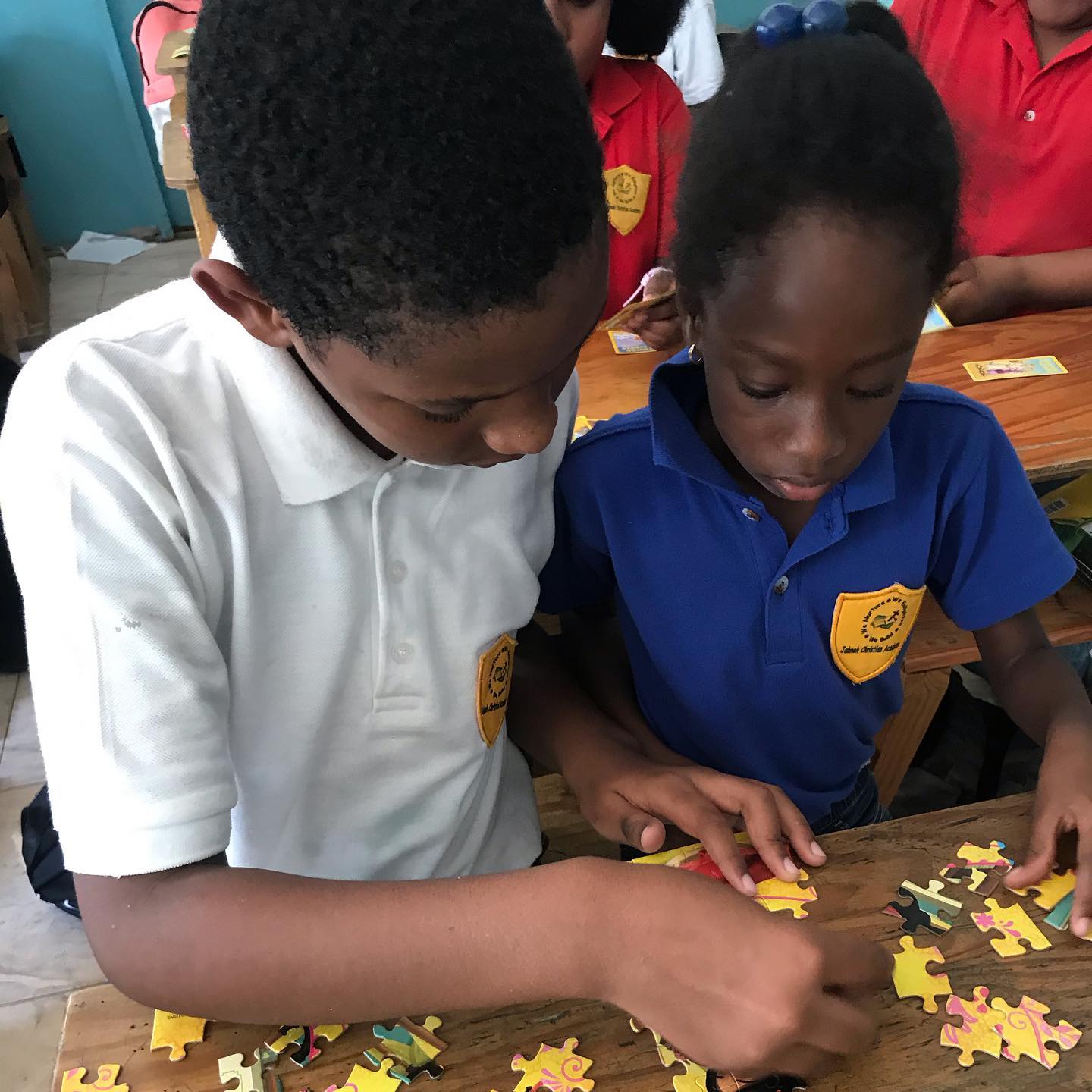
  • sorting items and puzzles
  • using spoons and forks
  • opening and closing water and juice containers
  • screwing lids
  • unscrewing lids
  • spreading peanut butter, jam, butter, etc

Can Children have trouble with fine motor Skills?

Certainly, underdeveloped fine motor skills will pose  challenges in students completing many of the action listed above.  It can also influence academic setbacks.

This kind of struggle can be termed as developmental coordination disorder.  Underdeveloped fine motor skills can also impact the gross motor skills negatively.

Parents can facilitate the development of fine motor skill by just being a tad more intentional about the activities mentioned about and so many others that are carried out in the homes almost daily.



Gold Digger Series – Episode 4

Interesting Salad Day

Rev. Dr. Natasha Francis-Campbell

September 20, 2021

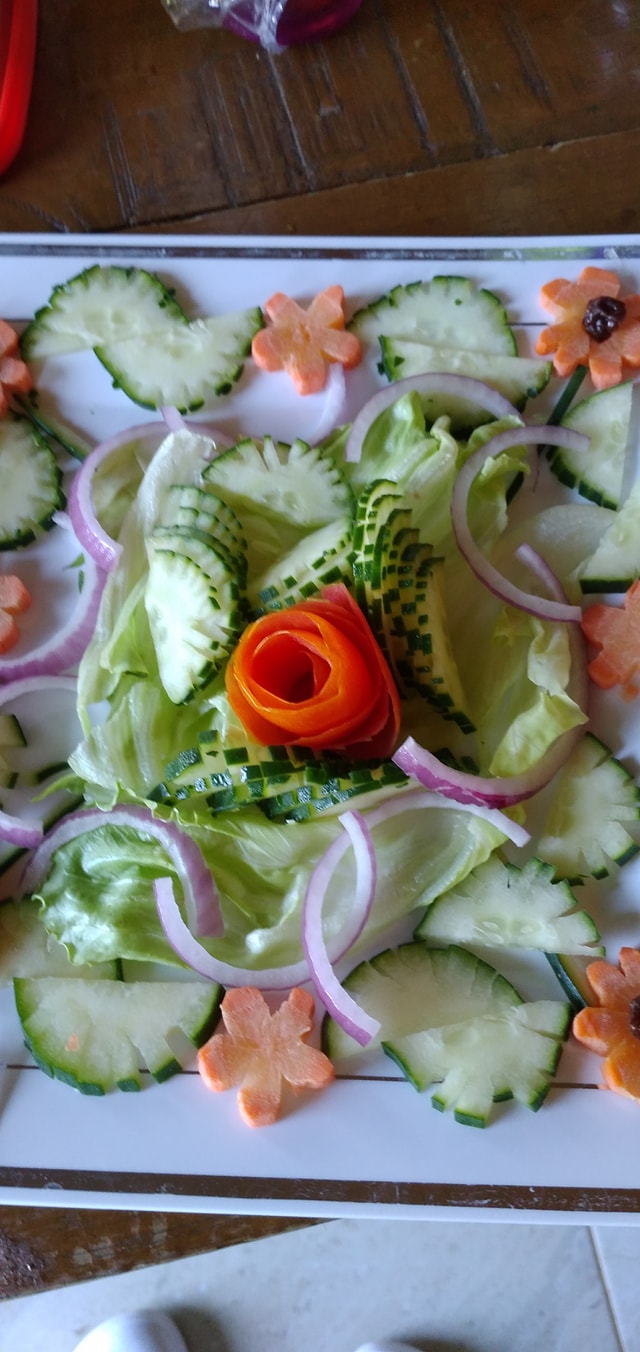
Since eating fruits and vegetables in mandatory at Jabneh Christian Academy, Interesting Salad Day is one of our favourite calendar items.  Our icons must have a serving of fruits, vegetables or a mixture of both as snack for break while at school. (We hope that eventually all our parents will see the benefits and limit or eliminate the bags of sugar, salt and hydrogenated oils culturally accepted as snacks and replace them with fruits and vegetables in the homes.)

Every child needs more that one serving of fruits daily.  The benefits are far reaching. The lack of sufficient intake of fruits have far reaching negative effects too. Some grown ups are struggle with maladies that should not have been our portion had fruits been considered important and “must haves”.

Of all the benefits of having fruits we would like to highlight the role fruits and vegetable play in improving cognitive/academic performance. 

We send our children to school and hope to see improvement in academic performance term after term.  Is it not empowering to note that this journey begins in the home? 

A well-balanced diet is necessary for proper brain development.  Fresh fruits and vegetables, if consumed by children will boosts academic performance thorough their schooling.

We are in an era where focus in the learning environment is a rare treasure.  Did you know that the consumption of fruits and vegetables in focus? What is more, focus helps students gain and retain information.

As we dig to unearth the golden treasures in our children, let us make the necessary, responsible adjustments to our shopping lists, shopping carts and experiences.  Let us slow down at the sections of the supermarkets where the fruits and vegetables are displayed rather than hastening to the “killer” shelves for ‘SNACKS’.

Benefits of Interesting Salad Day

All level learners can  and should benefit greatly from event if carefully considerations are engaged. 

  • The learner can name fruits and vegetables as well as other ingredients used.
  • Name the letters that begin the name of the items.
  • Give the sound of the letters.
  • Identify the blends heard at the beginning of the name of the items.
  • Identify final consonant sounds.
  • Spell the names of fruits and vegetables.
  • Sort fruits and vegetables into colours, shapes, sizes, textures, and groups.  Vegetables are divided into five groups.
  • Count items.
  • Weigh items.
  • Cut items into fractional parts.
  • Perform additions and subtractions.
  • Draw pictures of fruits and vegetables.
  • Make fruits and vegetables using modelling dough or any other type of suitable materials.
  • Write sentences, blogs, stories, etc.
  • Share with neighbours and families.
  • Develop a love and  an appetite for fruits and vegetables
  • Develop photography skills by taking photos of the process and final product.
  • Do a vlog
  • Do research to determine where the different  fruits and vegetables come from.
  • Do a Bible reading about the day God created vegetables and fruits.

Subscribe and tell us if this episode was beneficial.

Gold Diggers Series – Episode 3

Rest Time

Rev. Dr. Natasha Francis-Campbell

September, 2021

Rest time provides the icons with a time to slow down, recharge and process what they have learnt.

Though rest time can include napping, many of our icons are terrified to nap.  They feel as though it is punishment.  They do not see it as a needful component in their growth and development.  Children from age 3 to 5 years need 10 to 13 hours of sleep each night and may still need additional daily naps.

Have you structured things in your home to afford your icon enough sleep?

Is your icon sleep depraved?  Sleep depravity has many consequences.  As you dig for gold, you will need to deal with this issue if is out of order in your home.

If you are using sleep time to punish your icons, please stop.  It is harming your icon.

While some icons are terrified to sleep, other can hardly stay awake once a seat is provided.  Without some indication of an issue on the medical form, we  will assume that the icon is sleep depraved.  Of course, you can see that this will lead to challenges in the learning environment.

During rest time we aim to please all.  Sleeping areas are prepared for those who will sleep, and alternative activities are provided for those who will not sleep but need to slow down, recharge and process.

Rest Time Activities

Rest time or quiet time activities includes:

  • reading
  • being read to
  • colouring
  • doing puzzles
  • drawing
  • painting
  • writing
  • the use of special toys
  • screen time
  • listening to music
  • playing music

The school day is much shorter  these days as we employ innovative skills to bolster  our resilience.  Rest or nap time will not be facilitated at school.  We are encouraging our parents and caregivers to facilitate rest or nap time once the icons have returned to your care daily.

Memory Verse

In peace I will lie down and sleep, for you alone, Lord, make me dwell in safety.

Psalm 4:8

Subscribe!!!!!

Gold Digger Series – Episode 2

Guided Learning

September 4, 2021

This session affords the facilitators the  opportunity to support and challenge learners as well as focus on the learning needs of individual icons or small groups.  This is still possible with virtual schooling.  Small groups can be accommodated.  Since our platform of choice is Zoom, we use breakout rooms to facilitate small groups.

Concepts previously introduced during Circle Time can now be reinforced or explored. 

Learning tools are also employed such as textbooks, electronic devices, charts, worksheets, and whatever apparatus becomes necessary to reinforce a concept or  to make it stick.

Each icon gets personalised instruction from the facilitator.  Pre- COVID-19, the facilitator would sit with each icon at different times throughout the day for individualised consultation.  Lines are known violations as they prevent the icons from benefitting from the privacy   personalised time affords.

Since we are still observing the COVID-19 protocols, we must maintain our distance without compromising the  programme.  The icons are now invited to the facilitator’s station one at a time for  the individualised interaction.

We love this time.  The icons can’t wait for their turn in the chair.  Usually, they are eager to share all sorts of stories and experiences. 

“Learning is not attained by chance; it must be sought for with ardour and attended to with diligence.” Abigail Adams

Gold Digger Series – Episode 1

Circle Time at Jabneh Christian Academy

Rev. Dr. Natasha Francis-Campbell

August 2021

Circle time has been a segment on our timetables in our Early Stimulation Unit.  As I worked on the timetables this time around, I wondered if all our parents understood what this segment is about. If you do, here goes a reminder. If you didn’t, here goes new information.  Let us dig in!

Pre-COVID-19, the icons and teachers would sit on mats on the floor in a circle for this session.  Getting students to sit in a circle is not as easy as it sounds initially.  You try it.

COVID-19 is still around, therefore, the icons will remain in their seats.

Circle time is a well-anticipated session for the icons for several reasons including the following.

  • they get to take turns in leading activities.
  • it provides opportunities for social interactions.  This was always important but now more so in an era where we are forced to be socially distanced.
  • It aids in the development of positive relationships.
  • Each icon is celebrated at some point of the session.
  • they can get loud.
  • they get to laugh their socks off.
  • it sets the tone for the rest of the day.
  • they get to learn more about themselves in this session.
  • they get a chance to earn stars.

What do we do during Circle Time?

  1. Complete Routine Tasks
    • Set the calendar
      • recite the days
      • identify the day
      • determine the day that passed
      • determine the day to come next
      • recite the months
      • tell the current month
      • determine how old the month is on that day
    • celebrate birthdays
    • highlight upcoming events.
    • celebrate each other
      • new hairdo’s/haircuts
      • missing tooth
      • missing tooth photo shoot
      • most punctual , etc
  • Icons are engaged in numeracy using games, songs and dramatic expressions.
    • How old are you?
    • number of the day
    • number members in the families, etc
    • the number of letters in one’s name
  • Literacy
    • reciting the alphabet
    • learning letter names and letter sounds using the Auntie Nats videos.
    • learning blends and other phonetic elements according to readiness in literacy.
    • syllabication
  • Listening Skills
    • Icons listen to facilitators and classmates and carry out tasks
  • Language Development
  1. learning to introduce self.
    • develop feeling vocabulary and learn to label their feelings correctly.
    • describe nouns- show and tell
    • Role play- community helpers
    • develop dexterity and agility
    • promote gross motor skills.
  2. Covid Management education
    • masking
    • unmasking
    • sanitising
    • handwashing
    • social distancing
  • Introduction of new concepts

Circle time is usually immediately after Christian Education daily.

Icons are at a disadvantage when they arrive late or are absent.

A Win-Win Situation

Your child deserves to be enrolled at Jabneh Christian Academy:

I. where children are achieving developmentally.

II. where experiences are created that allow children to undertake activities that will lead them steadily and continuously to succeed.

III. where best instructional practices are developed to meet the needs of students, rather than a slavish adherence to curriculum guides.

Click the link below to apply.

https://forms.gle/yY99PRzUq7NMv6AEA

Soul Care

Most of us are gearing up for the new school term. Of course, why not? Good parenting involves getting children properly educated.
Today, I would briefly like to draw your attention to an important element in great parenting. Great parenting involves gearing up for the saving of our children’s souls.

You may not know how to do this effectively on your own just like schooling them. However, you can have then join a Sunday school class. Sunday school teachers are capable and willing to help you and your children.

Mark 8:36 NLT
And what do you benefit if you gain the whole world but lose your own soul?

Yea, how will children benefit gaining the highest degrees and recognition possible in their academics but not the saving of their souls.

Parents, are you preparing your children to meet the Saviour as you are preparing them to meet the teachers? Selah.

If you need help in this area, contact us.