Do My Actions Agree with My Words?”

Do My Actions Agree with My Words?

The Courage to Be Honest with Ourselves

By Rev. Dr. Natasha R. Francis-Campbell (Auntie Nats)

Can you honestly say that your actions agree with your words?

It sounds like a simple question, doesn’t it? One that should require very little thought before answering. After all, who knows us better than we know ourselves?

Well, perhaps the answer is not as straightforward as we would like to believe.

Recently, at Jabneh Christian Academy, our icons, staff and I examined this very question during our devotion: “Do My Actions Agree with My Words?”

What unfolded was both revealing and thought-provoking.

As we explored the question, we discovered something that deserves far more attention than we sometimes give it. Being honest with ourselves can be surprisingly difficult, even for children.

Some found it challenging to answer. Others appeared to wrestle with what an honest response would reveal. The question required more than remembering what they had said. It required them to examine what they had actually done.

And therein lies the challenge.

We Are Often More Comfortable with Our Intentions Than Our Actions

Most of us would like to believe that we are honest, kind, respectful, responsible and dependable.

We say that we value truth, but do we always tell it?

We say that we respect others, but what happens when someone disagrees with us?

We tell our children that kindness matters, but how do we speak to them when we are frustrated?

We encourage our children to apologise, but how readily do we acknowledge our own mistakes?

We tell others that we can be trusted, but do we consistently honour our commitments?

These are not questions intended to condemn us. They are invitations to examine ourselves.

There is often a gap between who we believe we are, who we aspire to become and what our actions actually demonstrate.

The difficulty is not always that we do not know what is right. Sometimes, the difficulty is admitting that we have not done what we know is right.

Self-Honesty Is a Skill We Must Teach Our Children

One of the most significant discoveries from our discussion was that children, too, can struggle with self-honesty.

We often assume that because children are young, they are naturally open about their behaviour. Yet children, like adults, can find it uncomfortable to acknowledge a contradiction between their words and actions.

A child may insist, “I am kind,” while struggling to acknowledge having spoken unkindly to a friend.

Another may say, “I always listen,” even though following instructions remains a challenge.

A child may sincerely believe, “I am responsible,” while regularly neglecting assigned responsibilities.

Sometimes, children answer according to what they wish were true rather than what is consistently demonstrated.

This does not necessarily mean they are deliberately dishonest. Some may lack the maturity to evaluate their own behaviour accurately. Others may fear disappointing an adult, losing approval or facing consequences.

That is why teaching self-honesty requires more than telling children to speak the truth.

We must create environments in which children feel safe enough to recognise the truth about themselves.

If every admission of wrongdoing is met with humiliation, excessive anger or harsh criticism, we should not be surprised when children become skilled at defending themselves rather than examining themselves.

A child who says, “I was wrong,” has taken an important step towards growth.

Our response can either encourage that honesty or make the child reluctant to practise it again.

As educators and parents, we must help children understand that acknowledging a mistake does not make them bad people. It provides an opportunity to make a better choice.

But What About the Adults?

Here is where our discussion becomes particularly uncomfortable.

We cannot expect children to practise a level of self-honesty that we are unwilling to demonstrate.

What happens when a parent demands respect but regularly speaks disrespectfully?

What happens when a teacher insists on punctuality but consistently arrives late?

What happens when a Christian speaks passionately about love but treats others with contempt?

What happens when a leader promotes accountability but refuses correction?

Children observe these contradictions.

They may not always have the vocabulary to explain what they notice, but they are learning.

Our actions can reinforce our words, or they can undermine them.

Perhaps one of the most powerful lessons we can teach a child is to say:

“I said one thing, but I did something different. I recognise that, and I need to do better.”

Imagine the impact of a parent, teacher or leader demonstrating that kind of humility.

We would be teaching children that honesty is not merely something we demand of others. It is a discipline we practise ourselves.

The Biblical Call to Examine Ourselves

As a Christian educator, I cannot separate this discussion from the Word of God.

James 1:22 reminds us:

“But be ye doers of the word, and not hearers only, deceiving your own selves.” (KJV)

What a powerful warning!

Notice that the Scripture does not speak only about deceiving other people. It identifies the possibility of deceiving ourselves.

We can become so comfortable hearing, discussing and even teaching what is right that we fail to recognise when our own conduct contradicts it.

We may know the Scriptures, quote them confidently and encourage others to obey them, yet neglect to examine whether we are living according to those same truths.

David’s prayer in Psalm 139:23–24 offers another important perspective:

“Search me, O God, and know my heart: try me, and know my thoughts: And see if there be any wicked way in me, and lead me in the way everlasting.” (KJV)

This is a prayer of someone willing to be examined.

Not simply by others, but by God.

Self-honesty, from a Christian perspective, requires humility. It means being willing to acknowledge what God reveals about our character, motives and behaviour.

It is not enough to say that we love truth. We must be willing to confront the truth, even when it exposes something within us that needs to change.

Self-Honesty Is Not Self-Condemnation

I believe we must make this distinction, especially when working with children.

Being honest about our shortcomings does not mean defining ourselves by them.

A child who admits to being unkind is not declaring, “I am an unkind person.”

A parent who acknowledges impatience is not declaring, “I am a terrible parent.”

A teacher who recognises an area of weakness is not admitting to being an ineffective educator.

We are acknowledging behaviours that need attention.

There is a significant difference between saying, “I made a poor choice,” and believing, “I am incapable of making good choices.”

Self-honesty should lead us towards responsibility, correction and growth, not shame and hopelessness.

This is why the way we facilitate reflection matters.

Instead of merely asking a child, “Were you kind today?” we might ask, “Can you tell me about a time today when you showed kindness? Was there a time when you could have responded differently?”

Instead of demanding, “Do you always tell the truth?” we might ask, “Have you ever found it difficult to tell the truth? What made it difficult?”

These conversations encourage children to reflect on actual experiences rather than simply provide the answers they believe adults want to hear.

And we must be willing to ask ourselves equally searching questions.

The Courage to Answer Honestly

Our discussion at Jabneh reminded me that self-honesty is not necessarily automatic. It requires intentional development.

We must learn to examine ourselves without immediately making excuses, blaming others or defending our intentions.

We must learn to recognise the difference between what we profess and what we practise.

We must be willing to say, “I need to change.”

This kind of honesty takes courage.

It requires us to move beyond appearances and acknowledge what is actually happening in our lives.

And perhaps that is why the question proved difficult for so many of us to explore.

It demanded more than a correct answer.

It demanded personal examination.

My Challenge to You

Today, I invite you to revisit the question that challenged our icons and staff:

Do my actions agree with my words?

Think about your relationships, your parenting, your marriage, your work, your ministry and your daily interactions.

Consider the promises you make, the values you promote and the example you set.

Are there areas in which your conduct consistently reinforces what you profess?

Are there areas in which your behaviour tells a different story?

And perhaps most importantly, when you recognise a contradiction, are you willing to acknowledge it and do something about it?

I am not asking whether you are perfect. None of us is.

I am asking whether you are willing to be truthful with yourself.

Our children need adults who demonstrate integrity, not merely adults who talk about it. They need to see that admitting mistakes, accepting correction and making changes are essential parts of becoming responsible individuals.

At Jabneh Christian Academy, we are committed to nurturing more than academic competence. We want our icons to develop the character, courage and discipline necessary to live responsibly and truthfully.

And that development must begin with us.

Here is my thought for you to carry away:

“The courage to tell the truth about ourselves is often the first step towards becoming the people we say we want to be.”

Can you answer the question honestly?

And if your answer is no, are you courageous enough to begin making your actions agree with your words?

With Auntie Nats

A reflection on parenting, education, Christian character and intentional personal growth.
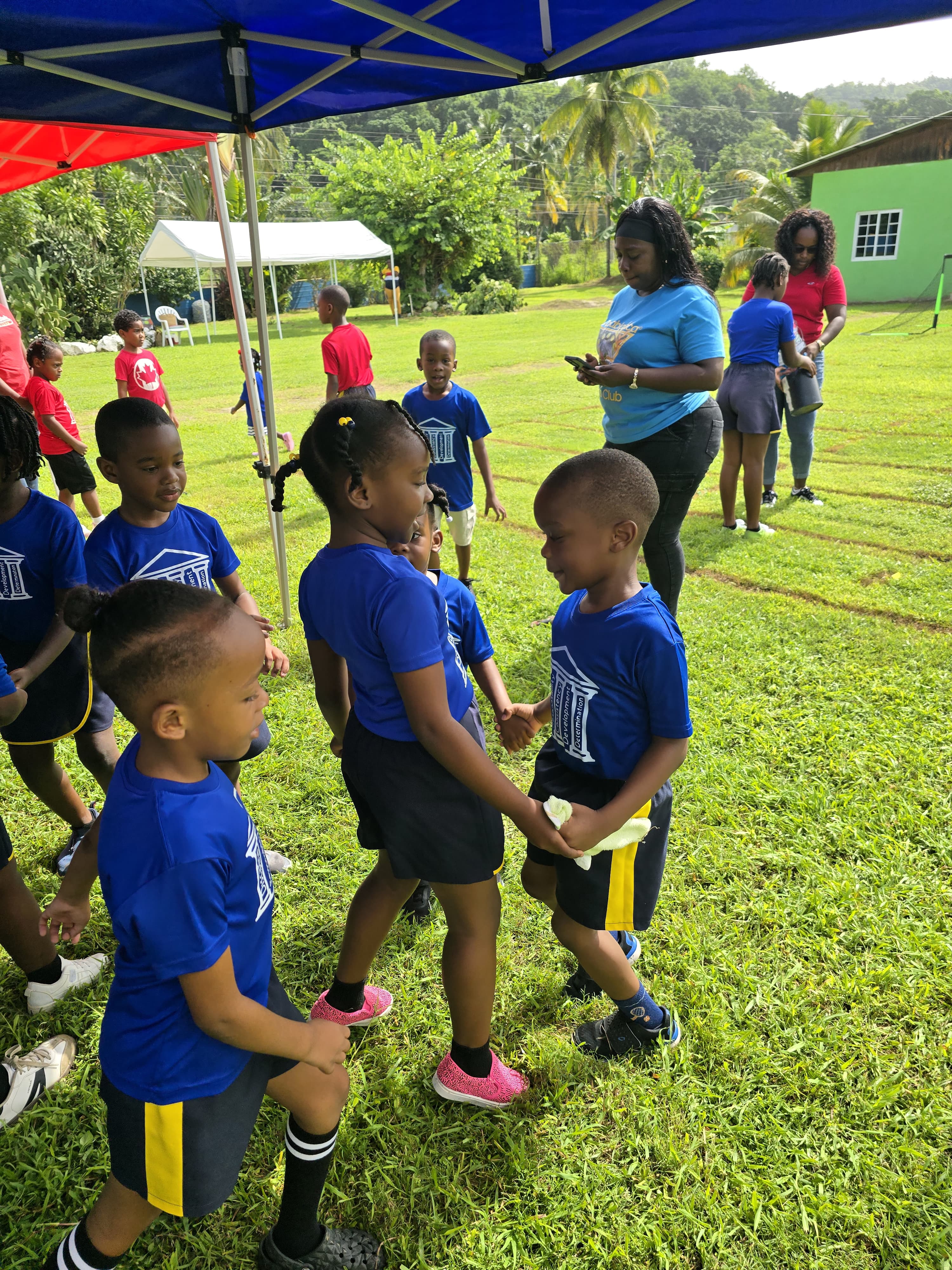
Sports Day the Jabneh Way

At Jabneh Christian Academy, everything we do is intentional, every moment, every event, every icon. Sports Day is no different. While it is filled with fun and excitement—even happening on the last day of school—our focus remains on development, inclusion, and celebrating growth. For us, Sports Day is a platform to highlight abilities, build capacity, and reinforce key developmental goals.

As a school, we begin planning immediately and prayerfully, drawing on the creative nature of our God to inspire us to do better with each passing year. We are inviting our parents to join us in this effort. Consider incorporating some of the developmental activities you saw on Sports Day into your home routines. Revisit the posts and updates we’ve shared throughout the school year. Let’s work together to strengthen the icons’ growth beyond the classroom.

We are incredibly proud of every icon who participated. Even those who didn’t win in every race displayed tremendous effort, and we saw their abilities. At Jabneh, inclusion is not optional; it is our culture. We celebrate every icon.

To the parents who came out, you were like sparks of joy and encouragement. Thank you.

To our tuck shop supporters, thank you for your contributions to the day’s success.

To Uncle Mark, who stayed behind to ensure everything was secured, thank you.

To our PTA President, Auntie Christina, who took the time to clean the classroom, thank you.

To Auntie Kerry-Ann D., thank you for returning to wash items used during the day.

To Auntie Chriss-Ann, our dedicated volunteer marshal, thank you.

To Uncle Jakim, who prepared the entire track and football field on his own days leading up to the event and assisted in training the icons for the events, then on the day, managed the music, jumping events, ball throws, refereed the football match, and even handled the digital finish line, thank you for your tireless and passionate service.

To Auntie Jurlyn, thank you for that delicious pudding!

To Uncle Kirk—word has it the Avoiding the Way of Fools mocktail was refreshing and uplifting. Thank you, and thank you to Auntie Nicola for your labour of love in the cafeteria.

Auntie Rita, our faithful fritters maker, your hard work, humility, and love for Jabneh do not go unnoticed. Thank you.

Auntie Roshelle—juggling work and Sports Day, and assisted in making snow cones, thank you.

Indeed, we are one big family. We give thanks for every effort made in love, every task completed in excellence, and every hand extended in support.

See you all on Tuesday at the Prize-giving and Award Ceremony.  Come out and support your icons, The Jabneh Way.

Mango Moments & Life Lessons: Growing Hearts One Fruit at a Time

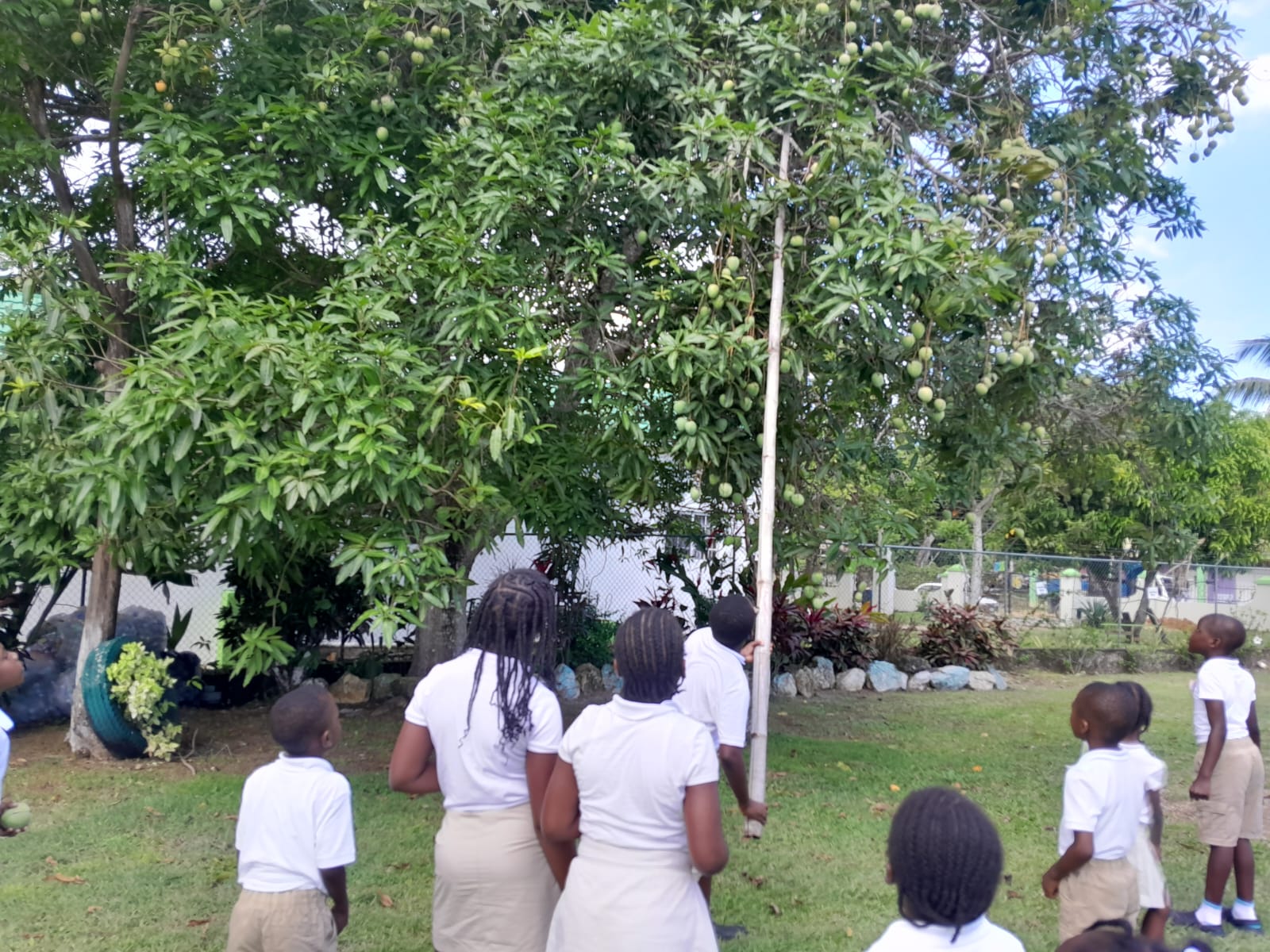
At Jabneh Christian Academy, learning often happens beyond the classroom walls. One such unforgettable experience took place under the golden sunshine as our icons ventured outdoors to pick mangoes. What may have seemed like a simple fruit-picking activity quickly unfolded into a powerful, hands-on lesson in patience, stewardship, fairness, and the beauty of God’s provision.

As the icons approached the mango tree, excitement bubbled over. Some jumped joyfully at the sight of ripe mangoes hanging low, while others eagerly pointed out the larger ones perched just out of reach. However, an important value-based structure was introduced before any fruit could be picked: take turns, share, and ensure everyone receives before taking more.

This simple guideline turned fruit-picking into a classroom of character-building. Icons learned to wait patiently, cheer each other on, and celebrate everyone’s little victories. Some even became mango spotters and pickers, helping others find the best ones within reach. Others stood guard to protect the younger mangoes and budding limbs from being damaged.

In a time when instant gratification is the norm, this experience reminded our icons that not everything good comes quickly. They had to assess each mango’s readiness—Was it mature enough? Was it too green? Could it ripen at home? Through this, they engaged in critical thinking and discernment while learning how to appreciate natural growth and timing.

Beyond the mango tree, this moment opened the door to discussions about:

Fruits in Season: Icons began to understand the rhythm of nature—how every fruit has its season and why eating fruits in their season is healthier, more sustainable, and budget-friendly.

Planting Trees at Home: If space allows, planting fruit trees at home gives icons the chance to nurture something that gives back. Caring for a tree instils responsibility, a connection to creation, and an appreciation for food sources beyond the supermarket. Imagine each icon waking up to check his/her tree’s progress—watering it, shielding it from harm, and joyfully anticipating the fruits of their labour.

Caring for the Earth: Through this one tree, they learned the more significant lesson of stewardship—taking care of what we have, not just for ourselves, but for others and for future generations.

As they walked back, mangoes in hand and hearts full of joy, one could see it clearly—this wasn’t just about fruit. It was about fruitfulness in every sense of the word. Kindness was harvested. Patience was plucked. Responsibility bloomed. Joy overflowed.

So, let’s keep planting—not just trees, but seeds of wisdom, care, and compassion. One mango moment at a time.

Have you bought the Courageous Hearts book for your icon? If not, today is a good.

See you in the next blog or in one of the Avoiding the Way of Fools books.

Rev. Dr. Natasha Francis-Campbell

April 6, 2025

Little Hands at Work: The Power of Ripping Paper to Develop Fine Motor Skills

At Jabneh Christian Academy, the zone of optimal performance, we believe that every moment holds the potential for learning—and that even the simplest activities can lay a powerful foundation for lifelong growth. One such activity that often goes unnoticed, yet plays a crucial role in early childhood development, is ripping paper.

Yes, you read that right! That crumpled piece of scrap paper or yesterday’s newspaper can become a tool of transformation in your child’s hands.

What Are Fine Motor Skills and Why Do They Matter?

Fine motor skills involve the use of small muscles in the hands and fingers. These skills are essential for tasks such as writing, buttoning, tying shoelaces, and even feeding oneself. When children strengthen these muscles early, they are better prepared for academic tasks like pencil grip and handwriting—and for confidently navigating everyday life.

How Ripping Paper Helps

Ripping paper may look like play, but it’s actually a valuable sensory and muscle-building activity. It:

  • Builds hand and finger strength
  • Enhances hand-eye coordination
  • Encourages bilateral coordination (using both hands together)
  • Stimulates creativity and focus

At school, we incorporate this activity during art, letter formation exercises, and even in calming sensory play. The joy on the children’s faces as they tear and explore is matched by the quiet progress they are making in their developmental journey.

Ideas for Parents: Turn Tearing Into Teaching

We encourage our Resilient Parents to support this learning at home! Here are some fun, simple ways to do that:

  • Tear and Paste Art: Give your child different coloured paper to tear and glue onto shapes, letters, or numbers.
  • Texture Play: Use materials like tissue, newspaper, construction paper, cereal boxes and cardboard to explore how different papers tear.
  • Tear to Create: Make flowers, animals, or even collages—no scissors needed!
  • Bible Story Collage: After reading a story, let your child create a scene using torn paper to retell it.

A Word of Encouragement

In a world filled with screens and fast-paced routines, pausing for a paper-tearing session may seem small—but it’s a beautiful invitation for your child to explore, engage, and grow. Let’s partner together in these tiny, intentional moments that shape our icons into confident, capable learners.

Together, at school and at home, we are raising mighty builders—one little rip at a time.

With grace and growth,
Rev. Dr. Natasha Francis-Campbell
“Train up a child in the way he should go…” – Proverbs 22:6

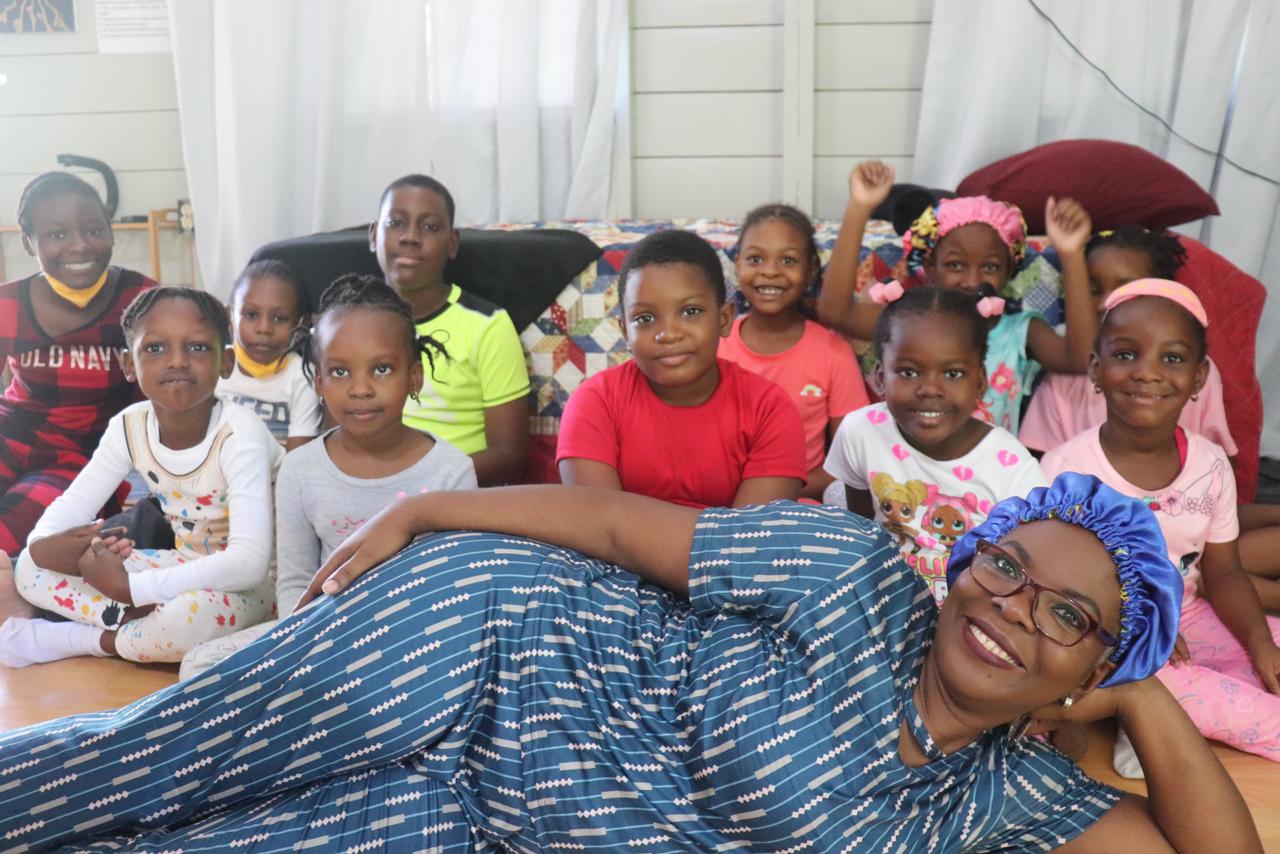
Pajama Day 2023 | Bedtime Activities

Pajama Day is another one of our anticipated events in term one. We are aware of the difficulties that are likely to arise in homes over bedtime or getting children to relax into a sleepy state.

Let us consider that children are coming off the summer holiday where bedtime routines were probably relaxed somewhat. For those kindergarteners who have just started to interact with the world around them and learn new things, it can be daunting and cause them to experience difficulties relaxing before bedtime. Some children do find the rigors of daily life stressful and anxiety-laden which can result in sleeping challenges.

With that said, we can surmise that adults should be more mindful about bedtime for children and try to do their very best to make it enjoyable and beneficial to their children. There are many important things to consider to achieve this, however, in this article, I want to pay attention to suitable activities that children could be engaged in to prepare them for bedtime.

Here are a few examples:

  • Shower/bath – This serves several purposes. It could cool and calm children down, It certainly will clean them up and could prepare them for my next point.
  • Massages- Gentle massages can help children to relax; reduce tension in muscles and help the muscles become stronger; reduce fatigue and maintain healthy muscles. What’s more is that it provides an opportunity for them to be touched. Are you aware that some children are not touched by their parents often although they live with them?
  • Lotioning is a good way to introduce massages to children. Massage their hands and feet, paying attention to those little fingers. They are used during a school day.
  • Treading beads for older children.
  • Puzzles
  • Colour and trace
  • Listen to or play music
  • blow bubbles
  • read books including the Bible
  • Listen to books being read to them
  • listen to audio-books
  • breathing exercises
  • pray for others
  • eat a healthy bedtime snack

Which of the above have you been doing? Which one will you try?

Rev. Dr. Natasha R. Francis-Campbell

October 2023

Photo credit: Jakim Campbell

Joy! We’ve Got Joy.

Our value word for the month of June is JOY. 

We have intentionally pulled joy to the foreground as it can get lost in the myriad of disappointments, challenges, anxious moments, and lawlessness that appears to occupy the scene constantly.

Joy is not happiness.

Joy is not the result of being healthy, wealthy, or smart.

A friend of mine lost her beloved mother this week. We started conversing a few hours after and though it was obvious she was mourning she exuded such joy.  As a matter of fact, she told me that she was mourning not mournful.  Can you imagine that!

We can, if we understand James 1:2-3 which states,

“Dear brothers and sisters,[a] when troubles of any kind come your way, consider it an opportunity for great joy. 3 For you know that when your faith is tested, your endurance has a chance to grow.”

Weeping is not indicative of the absence of joy.  Joy is rooted in Christ Jesus.  The fullness of joy is found in Him.

No matter what comes, we have joy.  For the month of June, we pray that you will experience the fullness of joy.

Joy Overflow- We do not own the rights to the song. Dancer- Icon Ajahne Reid

Gold Digger Series – Episode 2

Guided Learning

September 4, 2021

This session affords the facilitators the  opportunity to support and challenge learners as well as focus on the learning needs of individual icons or small groups.  This is still possible with virtual schooling.  Small groups can be accommodated.  Since our platform of choice is Zoom, we use breakout rooms to facilitate small groups.

Concepts previously introduced during Circle Time can now be reinforced or explored. 

Learning tools are also employed such as textbooks, electronic devices, charts, worksheets, and whatever apparatus becomes necessary to reinforce a concept or  to make it stick.

Each icon gets personalised instruction from the facilitator.  Pre- COVID-19, the facilitator would sit with each icon at different times throughout the day for individualised consultation.  Lines are known violations as they prevent the icons from benefitting from the privacy   personalised time affords.

Since we are still observing the COVID-19 protocols, we must maintain our distance without compromising the  programme.  The icons are now invited to the facilitator’s station one at a time for  the individualised interaction.

We love this time.  The icons can’t wait for their turn in the chair.  Usually, they are eager to share all sorts of stories and experiences. 

“Learning is not attained by chance; it must be sought for with ardour and attended to with diligence.” Abigail Adams

Saying No to Learning Loss

What is learning loss?

This term refers to any  specific or general loss of knowledge and skills or regression in academic  development. One  of  the issues  resulting in  learning loss is breaks in the learning process.  There are myriads of reasons for a student to experience breaks in the learning process.  Holidays contribute significantly to learning loss. COVID-19 has already caused many children to be suffering from the effects of learning loss globally. The issues include inaccessibility to internet, devices or fear of engaging in the face-to-face modality based on the severity of the spread of the virus in an area.

Parents play a vital role in preventing learning loss always, and especially this time around. This can be done intentionally and effortlessly by employing various non-school-like techniques.

Here are a few suggestions:

  • If you are baking for Christmas, have you children engaged in weighing , measuring , counting and estimating and reasoning. They can:
    • count out eggs
    • measure liquids
    • weigh ingredients
    • learn units of measure
    • learn the difference between dry measuring equipment and liquid measuring equipment
    • interface with textures
    • distinguish shapes
    • explore different tastes and add the taste umami to their vocabulary
    • make inferences
    • draw conclusions
  • If you are not baking, but will have cake, your children could be engaged in weighing, estimating, sharing/apportioning, adding and subtracting. They can:
    • learn fractions
    • understand halves, quarters, etc
    • compare pieces of cake as light or heavy
    • calculating circumferences, radii, diameters
    • determine how many slices a cake should be cut into to satisfy the need of the family.
    • understand fractions – 1/4 means one out of four pieces.
  • Reading skills can be developed as well regardless of the activity at hand. Children can:
    • read labels
    • read tags
    • read prices
    • name numbers
    • name letters
    • identify vowels
    • identify consonants
    • find opposites
    • identify nouns, verbs, adjectives, etc
    • read recipes
    • read manuals
    • make menu card
    • prepare and send messages -written and or verbal
    • write shopping lists and more.

I hope that you will find the suggestions useful.

One of our icons released his debut EP today. An EP is an album with tracks. It is available for purchase on ITunes @ https://music.apple.com/us/album/spirit-of-jesus-ep/1542551811?uo=4

Amazon @ https://www.amazon.com/dp/B08PB5J3GW

To stream for free on Dezeer @ https://www.deezer.com/us/album/189807932

Have a merry Christmas!