At Jabneh Christian Academy, learning often happens beyond the classroom walls. One such unforgettable experience took place under the golden sunshine as our icons ventured outdoors to pick mangoes. What may have seemed like a simple fruit-picking activity quickly unfolded into a powerful, hands-on lesson in patience, stewardship, fairness, and the beauty of God’s provision.
As the icons approached the mango tree, excitement bubbled over. Some jumped joyfully at the sight of ripe mangoes hanging low, while others eagerly pointed out the larger ones perched just out of reach. However, an important value-based structure was introduced before any fruit could be picked: take turns, share, and ensure everyone receives before taking more.
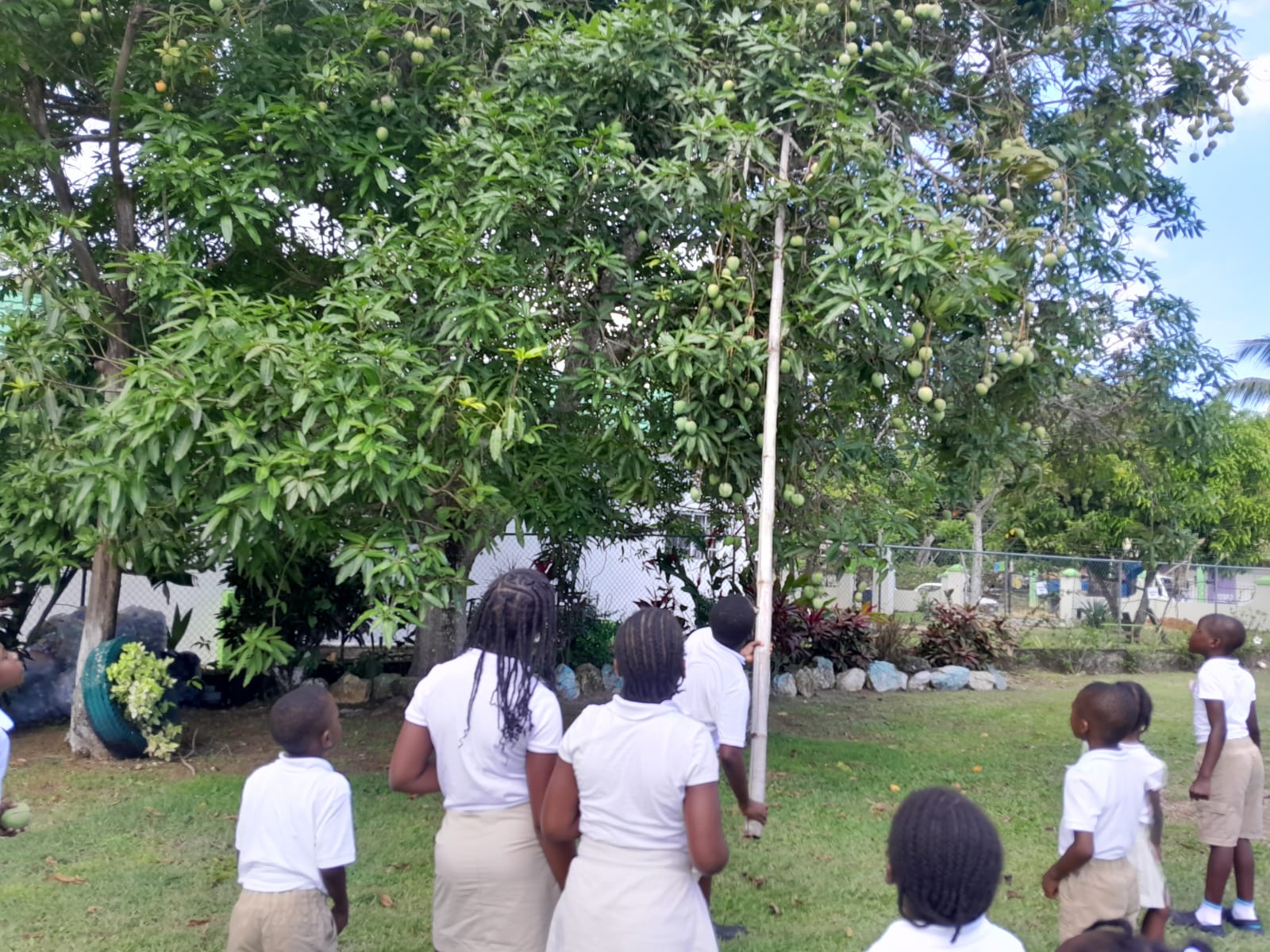
This simple guideline turned fruit-picking into a classroom of character-building. Icons learned to wait patiently, cheer each other on, and celebrate everyone’s little victories. Some even became mango spotters and pickers, helping others find the best ones within reach. Others stood guard to protect the younger mangoes and budding limbs from being damaged.
In a time when instant gratification is the norm, this experience reminded our icons that not everything good comes quickly. They had to assess each mango’s readiness—Was it mature enough? Was it too green? Could it ripen at home? Through this, they engaged in critical thinking and discernment while learning how to appreciate natural growth and timing.
Beyond the mango tree, this moment opened the door to discussions about:
Fruits in Season: Icons began to understand the rhythm of nature—how every fruit has its season and why eating fruits in their season is healthier, more sustainable, and budget-friendly.
Planting Trees at Home: If space allows, planting fruit trees at home gives icons the chance to nurture something that gives back. Caring for a tree instils responsibility, a connection to creation, and an appreciation for food sources beyond the supermarket. Imagine each icon waking up to check his/her tree’s progress—watering it, shielding it from harm, and joyfully anticipating the fruits of their labour.
Caring for the Earth: Through this one tree, they learned the more significant lesson of stewardship—taking care of what we have, not just for ourselves, but for others and for future generations.
As they walked back, mangoes in hand and hearts full of joy, one could see it clearly—this wasn’t just about fruit. It was about fruitfulness in every sense of the word. Kindness was harvested. Patience was plucked. Responsibility bloomed. Joy overflowed.
So, let’s keep planting—not just trees, but seeds of wisdom, care, and compassion. One mango moment at a time.
Have you bought the Courageous Hearts book for your icon? If not, today is a good.
See you in the next blog or in one of the Avoiding the Way of Fools books.
Rev. Dr. Natasha Francis-Campbell
April 6, 2025

 Jabneh Christian Academy