How Our Time Detective Task Builds Executive Functioning at Home – Auntie Nats

At Jabneh Christian Academy, we do not assign tasks simply to complete a curriculum requirement. We design learning experiences that shape the mind, strengthen character, and prepare our icons for life.

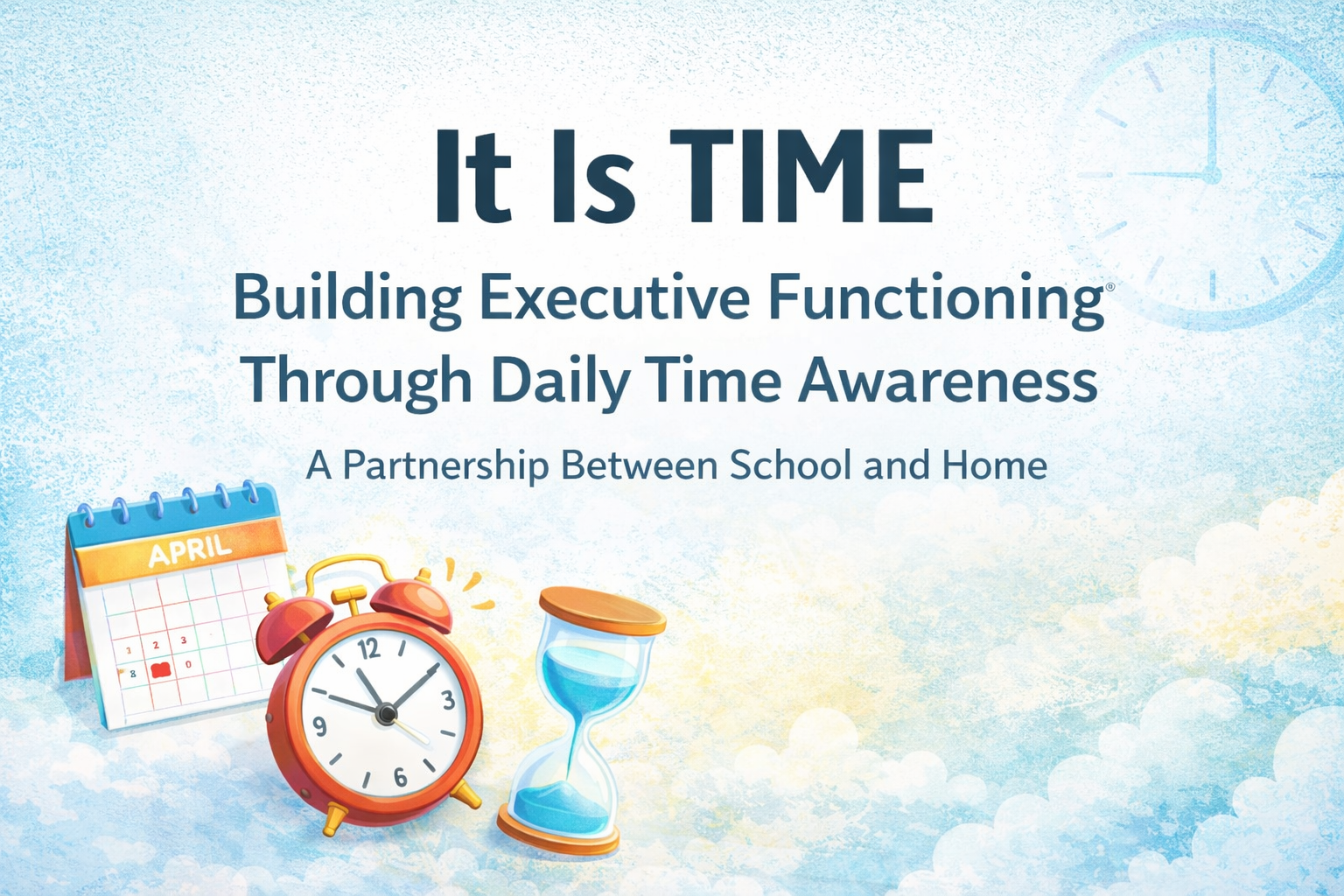
This week, our Grade 1 and 2 icons are becoming Time Detectives. On the surface, it may look like vocabulary practice. Words such as hour, minute, past, present, future, calendar, breakfast, noon, and midnight may seem simple. However, beneath the list of words lies something far deeper.

We are developing executive functioning.

Executive functioning refers to the brain-based skills that help children plan, organise, remember, regulate themselves, and manage time. These are the skills that determine whether a child can transition smoothly, follow instructions, wait their turn, and think before responding.

Let us examine what is really happening when your icon practises time words at home.

When your child identifies the date each morning, they are strengthening working memory. They must recall the month, remember yesterday’s date, and process today’s change.

When they explain what happened in the past, what is happening in the present, and what will happen in the future, they are practising cognitive flexibility. Their brain shifts between time frames and organises events in sequence.

When they plan a simple Saturday schedule or describe their bedtime routine, they are building planning and organisational skills. These are foundational executive functions.

When they understand that lunch comes after morning and dinner comes after afternoon, they develop a sense of time awareness. Time awareness reduces anxiety and improves self-regulation because the child begins to anticipate what comes next.

This is not just vocabulary. This is brain architecture.

In our recent parent meeting, we discussed executive functioning and its impact on learning. The Time Detective task is one practical way we can strengthen these skills together. The school introduces the structure. Home reinforces it in real life.

Here is how you can support effectively:

Allow your icon to think before answering.
Resist correcting too quickly.
Ask open-ended questions.
Encourage them to explain their reasoning.

Five to ten intentional minutes daily can build habits that support long-term academic success.

Time language builds order.
Order builds regulation.
Regulation builds confidence.

At Jabneh, we intentionally nurture minds. We enlighten understanding thoughtfully. We build foundations that last.

Resilient Parents, it is time. Not simply to learn about time, but to shape the executive skills that will serve your icon for life.

Let us build together.

Executive Functioning: The Hidden Skill Guarding Your Icon’s Future with Auntie Nats

At Jabneh Christian Academy, we often speak of guarding the future. Many parents immediately think of reading levels, mathematics scores, or vocabulary growth. Those matter deeply. However, another layer of development determines whether academic knowledge can actually be applied.

That layer is executive functioning.

Executive functioning is the brain’s management system. It is the set of mental skills that allows a child to plan, focus, remember instructions, regulate emotions, and complete tasks. Intelligence provides potential. Executive functioning determines performance.

A child may be “bright”, yet unable to sustain attention. A child may understand mathematics, yet forget the steps required to solve a problem. A child may read well, yet struggle to complete assignments. These are not always knowledge deficits. Often, they are executive functioning gaps.

Between the ages of six and nine, executive functioning is rapidly developing. This is why milestone readiness at Grade 1+ must go beyond academic content.

There are three core components parents should understand.

Working memory is the ability to hold and use information in the mind. When your icon remembers a two-step instruction, keeps track of story details, or mentally calculates an answer, working memory is active. When you frequently hear, “I forgot,” this area may need strengthening.

Inhibitory control is the ability to manage impulses. It is seen when a child raises a hand before speaking, waits a turn, or resists distraction. Without it, learning becomes fragmented.

Cognitive flexibility is the ability to adjust to changing circumstances. It allows a child to accept correction, shift strategies, and move smoothly from play to structured work.

Beyond these three, children are developing planning skills, organisation, emotional regulation, task initiation, and persistence. These are not optional skills. They are foundational.

Executive functioning determines whether knowledge becomes achievement.

At Jabneh Christian Academy, we intentionally build these skills through structured routines, responsibility expectations, guided independence, and meaningful correction. We require icons to think, to organise, to complete, and to reflect. This is part of guarding the future.

Parents play a decisive role in strengthening executive functioning at home.

Limit overstimulation, particularly excessive screen exposure.
Establish predictable routines.
Assign age-appropriate responsibilities.
Encourage task completion before reward.
Allow children to struggle appropriately rather than rescuing too quickly.

Executive functioning matures through practise. It is built, not assumed.

When we guard vocabulary, we guard thought.
When we guard reasoning, we guard decision-making.
When we guard executive functioning, we guard destiny.

As intentional families, our work is alignment. School and home must reinforce one another.

We would value your feedback.

Was this article helpful in deepening your understanding of executive functioning?
Would you like more practical strategies for strengthening these skills at home?
Are there specific areas where you would appreciate further guidance?

Kindly share your thoughts in the comments. Your feedback helps us serve you and your icons with excellence.

Jabneh Christian Academy
We nurture. We enlighten. We build.

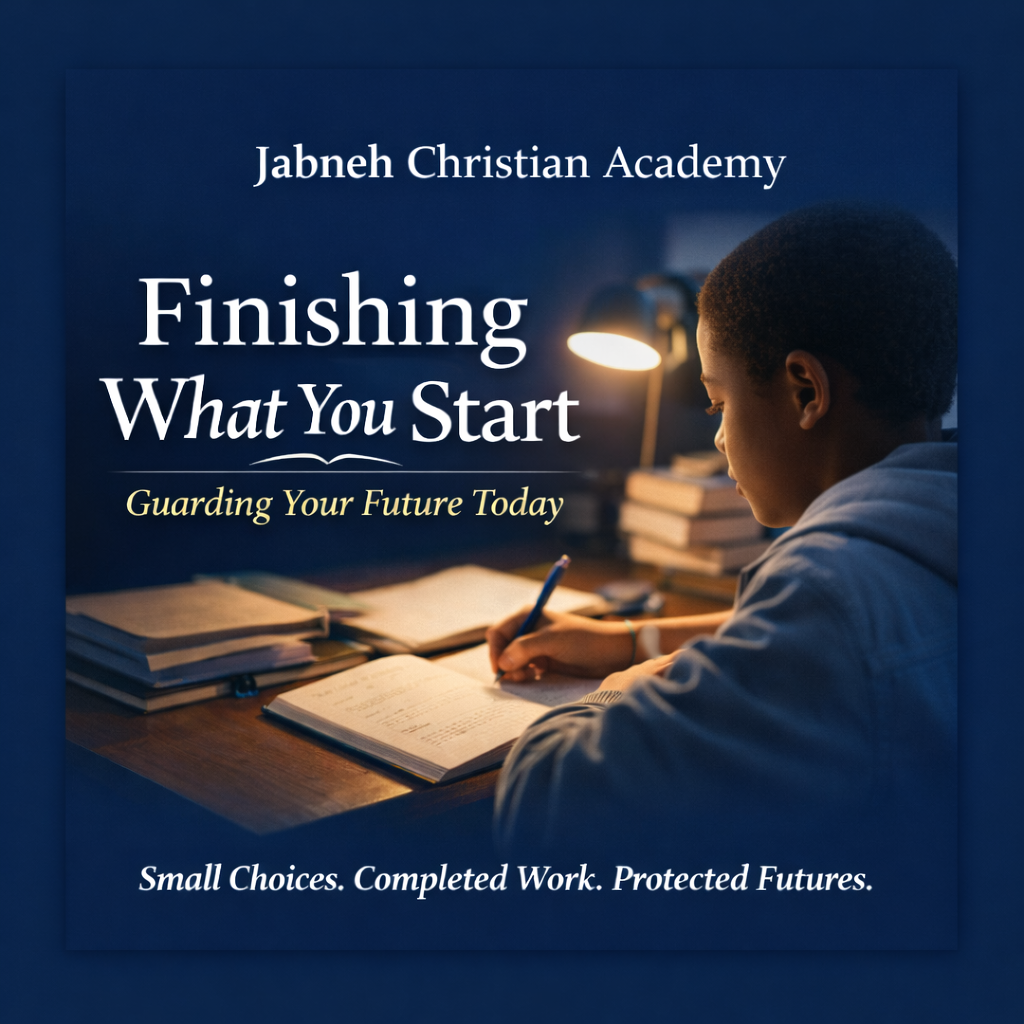
Finishing What You Start: A Discipline That Guards Your Future

One of the most powerful habits a person can develop, whether a student or an adult, is the discipline of finishing what they start. Many people begin with excitement, strong intentions, and hopeful plans, yet only a few follow through to completion. The future, however, is not shaped by what we start. It is shaped by what we finish.

The Bible reminds us of this principle clearly:
“Being confident of this, that he who began a good work in you will carry it on to completion until the day of Christ Jesus.” (Philippians 1:6, NIV)

God Himself is a finisher. He does not abandon what He begins, and He invites us to reflect that same character in our daily lives.

Why Finishing Matters

Every unfinished assignment, abandoned goal, or half completed responsibility quietly trains the mind to accept incompletion as normal. Over time, this weakens discipline and creates gaps between potential and performance. Finishing, on the other hand, builds integrity. It teaches patience, resilience, and responsibility, qualities that are essential for guarding the future.

For students, finishing what you start might look like completing an assignment even when it feels difficult, practising a skill consistently, or preparing properly for an exam instead of cutting corners. Those small decisions accumulate and determine long-term outcomes. A single unfinished task may seem insignificant, yet repeated patterns of incompletion can close doors to future opportunities.

For adults, the same principle applies. Relationships, commitments, studies, projects, and even personal growth journeys require follow through. Many regrets are not rooted in failure, but in abandonment. What was started had promise, yet it was never carried through to maturity.

Finishing Guards the Future

The future is closer than we often realise. It is not a distant place waiting years ahead. It is built in the choices we make today. When we finish what we start, we protect tomorrow from the consequences of today’s neglect. Discipline today prevents regret tomorrow.

Consider a student who cheats because preparation was delayed or abandoned. That momentary decision may cost examinations, reputation, and future opportunities. In contrast, a student who perseveres through discomfort and completes the work honestly safeguards their future with integrity intact.

Scripture warns us against careless beginnings without thoughtful endings:
“Suppose one of you wants to build a tower. Won’t you first sit down and estimate the cost to see if you have enough money to complete it?” (Luke 14:28, NIV)

Wisdom plans with completion in mind. Starting well is important, but finishing well is what truly matters.

A Personal Reflection: When Incompletion Costs Opportunity

I learned this principle personally in a very real way. Many years ago, I completed a literacy text that I was deeply proud of. Alongside it, I had begun writing a teacher and parent guide that would include lesson plans for every page. The purpose of the guide was clear. It would help users understand the author’s intent and apply the strategies effectively, so learners could achieve the best results.

The text was completed. The guide was started. Yet, I did not finish it.

Then COVID-19 arrived. Private schools were hit hard. Many parents struggled to understand the value of continuing to pay fees amid constant adjustments and uncertainty. In response, I had to find a strategy that would keep the school community together and functioning. That strategy involved using the very guide I had never completed.

Since the guide was unfinished, I ended up selling individual guide pages to parents based on what their children needed to cover each week. Instead of confidently marketing a complete, well-structured product, I was forced to write continuously just to meet immediate demand. What could have been a season of expansion and impact became a season of pressure and catch-up.

The opportunity was there. The need was real. The product had potential. Yet my failure to finish what I started limited how fully I could step into that moment. Incompletion did not stop progress entirely, but it reduced effectiveness, reach, and long-term gain.

That experience taught me a lasting lesson. Finishing is not just about closure. It is about readiness. When you do not finish, you may still move forward, but often with unnecessary strain, missed opportunities, and delayed growth.

This is why finishing what you start is so important. It guards the future by ensuring that when opportunity comes, you are prepared to meet it fully, confidently, and without regret.

Cultivating the Habit of Completion

Finishing what you start does not require perfection. It requires consistency. It means returning to the task even after enthusiasm fades. It means choosing effort over excuses and responsibility over convenience. This habit strengthens character and creates stability in both academic and personal life.

When we practise finishing, we align ourselves with God’s nature as a faithful finisher. We become people who can be trusted, relied upon, and entrusted with greater responsibility.

A Call to Action

Whether you are a student learning foundational habits or an adult shaping legacy decisions, let this principle guide you.

Start with intention.

Continue with discipline.

 Finish with integrity.

In doing so, you are not just completing tasks. You are guarding your future.

At Jabneh Christian Academy, we encourage our icons and our wider community to develop habits that protect tomorrow. Finishing what you start is one of those habits. Choose it daily, and watch how it shapes your path forward.