Helping Children Navigate When They Feel Unsafe

Dealing with Personal Safety from another angle.

Mrs Christina N. Rankine, PTA President-Jabneh Christian Academy

The United Nations Convention on the Rights of the Child states in Article 19 that every child has the right to be protected from violence, abuse, and neglect. This includes protection from all forms of physical or mental violence, injury, abuse, neglect, exploitation, and harm.

Children should never be expected to protect themselves alone. Their safety is first and foremost the responsibility of trusted, responsible adults. That is why adults must do everything within their power to protect children, while also equipping them with clear, age-appropriate words they can use to advocate for themselves when we are not present.

Let us give our children the words before they need them. Let us teach them to recognize when something is wrong, move toward safety at the first safe opportunity, seek the right adult, speak clearly, keep asking for help when necessary, and trust God through the process.

So that when they face a difficult situation, they can confidently say:

“I don’t feel safe, and I know what to do.”

As parents, we are always preparing our children for life. We teach them how to cross the road safely, how to make good decisions, and how to become increasingly independent. But there comes a time when we must release them into environments where we cannot always be there watching over them.

That is why it is so important that we prepare our children to recognize when they feel unsafe, speak up, seek help, and advocate appropriately for themselves.

This preparation cannot apply only to the classroom. Our children need to know what to do if they feel unsafe at school, while commuting to or from school, in the community, at an activity, visiting someone else’s home, online, or in any other setting.

The First Line of Defence: Get to Safety

We want to teach our children that the first line of defence when they feel unsafe is to remove themselves from the situation whenever it is possible and safe to do so.

The goal is not to confront the person.

The goal is not to fight back.

The goal is not to prove that they are brave.

The goal is to get to safety.

Teach your child:

“If you feel unsafe, at the first safe opportunity, move away from the situation and go directly to a safe and responsible adult.”

When they move away, they should have one clear intention: get to the first safe and responsible adult they can find.

Once they reach that adult, we want our children to be able to clearly communicate what is happening.

They can say:

“Miss/Sir, I feel unsafe. I feel afraid. [Name] said this to me. [Name] did this to me. My parent told me that if this should ever happen, I should report it to an adult immediately. I need help.”

This statement also gives the schools the opportunity to exercise its own policies, and this gives the opportunity for parental awareness.

Request to Have Your Parent Contacted

We also need to teach our children that it is okay to ask for their parent to be contacted when they feel unsafe or believe they need their parent’s assistance.

They can say:

“My parent told me that if I ever feel unsafe, I should ask for them to be contacted so they can help make sure that I get home safely.”

If they believe they cannot safely remain where they are, they should communicate that clearly:

“I feel unsafe being here. Please help me contact my parent and help me stay somewhere safe until they can assist me.”

This gives the child language to communicate their concern without escalating the situation.

What If the First Adult Dismisses Them?

We also need to prepare children for the possibility that the first adult they approach may not immediately understand the seriousness of what they are saying.

Our children should be taught not to give up simply because one person does not respond appropriately.

They can respectfully say:

“Miss/Sir, my parent told me that if this should ever happen, I should tell an adult and keep asking for help. I feel unsafe being here. Please help me get to the right person so that my parent can be contacted and I can be accompanied home safely.”

The child should continue seeking an appropriate, responsible adult until their concern has been heard and they are in a safe situation.

We are teaching persistence in seeking help and not confrontation.

We Are Teaching Them to Advocate, Not Escalate

There is an important difference between advocating for yourself and retaliating.

We want our children to know:

I can say, “Stop.”

I can move away.

I can seek help.

I can report what happened.

I can ask for my parent to be contacted.

I can continue asking for help if I do not feel safe.

Standing up for yourself does not always mean fighting back.

Sometimes standing up for yourself means knowing when to walk away, knowing who to tell, using your voice clearly, and refusing to allow fear or pressure to prevent you from seeking help.

We do not want the first response to be fighting or retaliation when there is an opportunity to move away and seek adult assistance.

STOP — MOVE — TELL — REQUEST — PRAY — REMEMBER

Give your children a simple routine they can practise until it becomes familiar.

STOP

“Something doesn’t feel right.”

Recognize the feeling and take it seriously.

MOVE

“At the first safe opportunity, I will move away and go to a safe adult.”

Move toward a safe place and a responsible adult.

 TELL

“I feel unsafe. I feel afraid. This person said/did ____.”

Clearly explain what happened.

REQUEST

“I would like my parent to be contacted, please.”

If they still feel unsafe, they can say:

“I feel unsafe being here. Please help me get to the right person and contact my parent.”

 PRAY

“God, I am afraid. Please help me. Give me wisdom and courage and keep me safe.”

 REMEMBER

“God is with me. I am not alone.”

Parents: Give Your Children the Words Before They Need Them

Children often struggle to communicate when they are frightened. That is why we should practise these words with them before they need them.

Have conversations at home:

•⁠  ⁠“What would you do if you felt unsafe at school?”

•⁠  ⁠“What would you do if you felt unsafe walking home?”

•⁠  ⁠“What would you do if you felt unsafe on the bus or while commuting?”

•⁠  ⁠“Who would you go to?”

•⁠  ⁠“What would you say?”

•⁠  ⁠“How would you ask for me to be contacted?”

•⁠  ⁠“What would you do if the first person you told did not help?”

•⁠  ⁠“How would you let us know what happened?”

Role-Play

Role-play different scenarios with your children so that seeking help becomes a familiar response rather than something they must figure out while frightened.

Practise situations involving:

•⁠  ⁠School

•⁠  ⁠Walking to or from school

•⁠  ⁠Public transportation

•⁠  ⁠Public places

•⁠  ⁠Activities and extracurricular programs

•⁠  ⁠Another person’s home

•⁠  ⁠Online interactions

Our children may not always have us physically beside them.

But they can carry our instructions, our confidence, our voice, and God’s Word with them.

Teach Them to Remember What Happened

Children should also be taught to remember the basic facts surrounding an incident:

•⁠  ⁠When did it happen?

•⁠  ⁠Where did it happen?

•⁠  ⁠Who was involved?

•⁠  ⁠Who did I tell?

•⁠  ⁠What did I tell them?

•⁠  ⁠What did the adult say or do?

This does not mean that we are asking children to investigate, gather evidence, or manage the situation themselves.

Rather, we are teaching them to communicate accurately and remember the steps they took to seek help.

What is my Child is feeling unsafe at school?

Parents Must Know the School’s Policies

Parents also have a responsibility to educate themselves.

We need to understand the school’s policies regarding:

•⁠  ⁠Bullying

•⁠  ⁠Fighting and physical aggression

•⁠  ⁠Reporting incidents

•⁠  ⁠Student safety

•⁠  ⁠Communication with parents

•⁠  ⁠Emergency procedures

•⁠  ⁠Behavioural expectations

Attend PTA meetings. Get to know your child’s teachers. Know the appropriate members of the administration and understand the channels available for raising concerns.

When a situation arises, we should be able to advocate for our children respectfully and according to the established policies and procedures.

Our children also benefit when they know that their parents understand the school’s systems and will advocate for them appropriately.

Response of Schools

Parents should also understand that preparing children to speak up is only one part of the responsibility. Schools must have systems in place to respond when a report is made.

The Revised Safety & Security Manual, as referenced in the Statement by the Honourable Minister of Education on Bullying in Schools, July 18, 2026, stipulates the following response:

•⁠  Create awareness and establish clear expectations: School administrators should provide guidelines for creating awareness about bullying in schools and identify sanctions to be applied where there are breaches.

•⁠  ⁠Document reports: All reports of bullying must be documented and appropriate data kept on reported incidents.

•⁠  ⁠Address both the victim and offender: Steps must be taken to treat with both victims and offenders where a case has been reported.

•⁠  ⁠Escalate criminal matters: Where bullying involves matters of a criminal nature, such as extortion or any activity likely to develop into criminal activity, the School Resource Officer or local Police must be notified.

What This Means for Parents

This reinforces why we teach our children to speak up, report what happened, identify who they reported it to, and continue seeking help if they do not feel safe.

Our children should not be expected to resolve serious situations on their own.

At the same time, reporting an incident does not mean that a child is responsible for determining the punishment or outcome. Their responsibility is to recognize when something is wrong, move toward safety, tell a responsible adult, and provide accurate information.

The responsibility of the adults and the school is to listen, document, assess, respond, protect, and take appropriate action in accordance with established policies and procedures.

We Are Not Teaching Children to Handle Serious Matters Alone

We are not teaching children to investigate, confront, punish, or resolve serious situations themselves.

We are teaching them how to get the matter into the hands of responsible adults.

We teach the child to speak.

The school must be prepared to listen.

We teach the child to seek help.

The adults must be prepared to respond.

We teach the child to advocate appropriately.

The school must have systems that allow concerns to be reported, documented, addressed, and escalated when necessary. This is why the partnership between home, school, and the child is so important.

We prepare the child to speak.

The school must be prepared to listen and respond.

We teach the child to seek help.

The adults must be prepared to provide help.

We teach the child to advocate.

The adults must be prepared to act appropriately.

Teach Them to Stand on the Word of God

Parents, while we teach our children practical strategies for navigating situations where they feel unsafe, we must also teach them where their ultimate source of strength comes from.

There will be moments when our children are away from us. We may not be physically present. We may not be able to answer the phone immediately.

But God is always present.

Teach them Scripture before the difficult moment comes:

•⁠  ⁠Joshua 1:9: “The Lord your God is with you wherever you go.”

•⁠  ⁠Matthew 28:20: “I am with you always, even to the end of the age.”

•⁠  ⁠Isaiah 41:10: “Fear not, for I am with you.”

•⁠  ⁠Deuteronomy 31:6: “He will not leave you or forsake you.”

•⁠  ⁠Psalm 46:1: “God is our refuge and strength, always ready to help in times of trouble.”

These should not simply be verses they memorize for school.

They should become words they know how to use.

Teach your children to pray when they are afraid. Teach them to declare God’s Word. Teach them that they can call upon God for wisdom and courage.

But also teach them that trusting God does not mean refusing to seek human help.

Prayer and action can work together.

Pray and move toward safety.

Pray and tell a responsible adult.

Pray and ask for your parent to be contacted.

A Five-Minute Practice at Home

Parents, make this part of your regular family routine.

Once a week, take five minutes and say:

“Let’s practise what you would do if you felt unsafe.”

Give your child a simple scenario.

Parent: “You are at school and someone is making you feel unsafe. What do you do?”

Child: “STOP. I recognize that I don’t feel safe.”

Parent: “What next?”

Child: “MOVE. At the first safe opportunity, I move away and go to a safe adult.”

Parent: “What do you say?”

Child: “TELL. I say, ‘I feel unsafe. I feel afraid. This is what happened.’”

Parent: “What if you need me?”

Child: “REQUEST. ‘Please contact my parent. I need help.’”

Parent: “What can you do while you are waiting for help?”

Child: “PRAY. God, please help me and keep me safe.”

Parent: “And what do you remember?”

Child: “God is with me. I am not alone.”

Practise this routine in different environments so that your child understands that the same basic principles apply wherever they are.

Preparing Our Children Before They Need Us

The purpose is not to make our children fearful.

The purpose is to make them prepared.

We are not teaching our children to be afraid of the world.

We are teaching them how to navigate the world safely when we are not there.

We may not always be able to stand beside our children. But we can equip them with the knowledge, language, confidence, practical strategies, and faith they need to know what to do when they are not safe.

As parents, we have a great responsibility, it is our Job to ensure that we equip our children with the right information as we prepare them to navigate the world safely when we are not standing beside them.

Let us give our children the words before they need them. Let us teach them to recognize when something is wrong, move toward safety at the first safe opportunity, seek the right adult, speak clearly, keep asking for help when necessary, and trust God through the process.

So that when they face a difficult situation, they can confidently say:

“I don’t feel safe, and I know what to do.”

———————————————————————————————-

Many Blessings.

I pray for your strength and resilience as you choose to parent with wisdom.
How Our Time Detective Task Builds Executive Functioning at Home – Auntie Nats

At Jabneh Christian Academy, we do not assign tasks simply to complete a curriculum requirement. We design learning experiences that shape the mind, strengthen character, and prepare our icons for life.

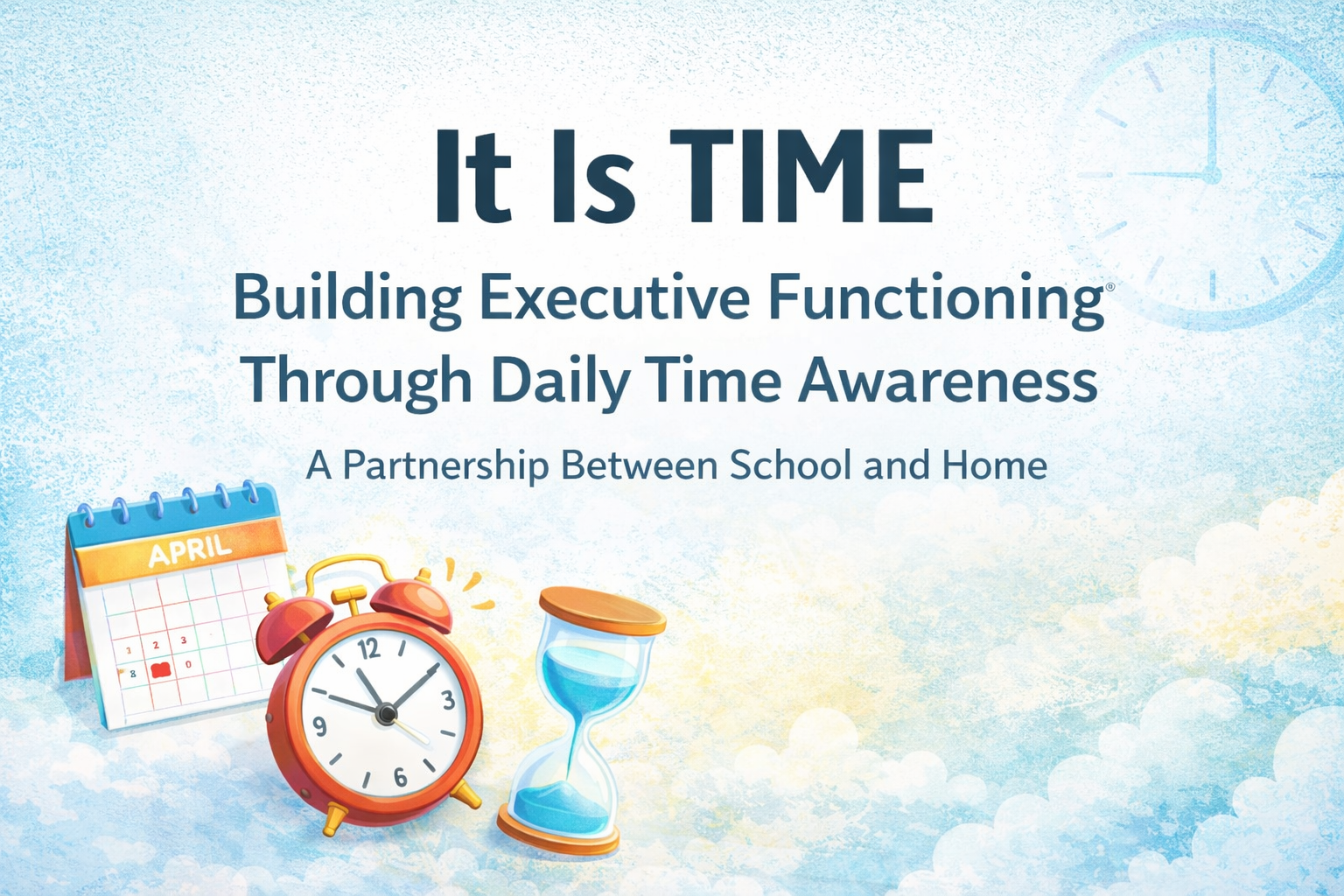
This week, our Grade 1 and 2 icons are becoming Time Detectives. On the surface, it may look like vocabulary practice. Words such as hour, minute, past, present, future, calendar, breakfast, noon, and midnight may seem simple. However, beneath the list of words lies something far deeper.

We are developing executive functioning.

Executive functioning refers to the brain-based skills that help children plan, organise, remember, regulate themselves, and manage time. These are the skills that determine whether a child can transition smoothly, follow instructions, wait their turn, and think before responding.

Let us examine what is really happening when your icon practises time words at home.

When your child identifies the date each morning, they are strengthening working memory. They must recall the month, remember yesterday’s date, and process today’s change.

When they explain what happened in the past, what is happening in the present, and what will happen in the future, they are practising cognitive flexibility. Their brain shifts between time frames and organises events in sequence.

When they plan a simple Saturday schedule or describe their bedtime routine, they are building planning and organisational skills. These are foundational executive functions.

When they understand that lunch comes after morning and dinner comes after afternoon, they develop a sense of time awareness. Time awareness reduces anxiety and improves self-regulation because the child begins to anticipate what comes next.

This is not just vocabulary. This is brain architecture.

In our recent parent meeting, we discussed executive functioning and its impact on learning. The Time Detective task is one practical way we can strengthen these skills together. The school introduces the structure. Home reinforces it in real life.

Here is how you can support effectively:

Allow your icon to think before answering.
Resist correcting too quickly.
Ask open-ended questions.
Encourage them to explain their reasoning.

Five to ten intentional minutes daily can build habits that support long-term academic success.

Time language builds order.
Order builds regulation.
Regulation builds confidence.

At Jabneh, we intentionally nurture minds. We enlighten understanding thoughtfully. We build foundations that last.

Resilient Parents, it is time. Not simply to learn about time, but to shape the executive skills that will serve your icon for life.

Let us build together.

Executive Functioning: The Hidden Skill Guarding Your Icon’s Future with Auntie Nats

At Jabneh Christian Academy, we often speak of guarding the future. Many parents immediately think of reading levels, mathematics scores, or vocabulary growth. Those matter deeply. However, another layer of development determines whether academic knowledge can actually be applied.

That layer is executive functioning.

Executive functioning is the brain’s management system. It is the set of mental skills that allows a child to plan, focus, remember instructions, regulate emotions, and complete tasks. Intelligence provides potential. Executive functioning determines performance.

A child may be “bright”, yet unable to sustain attention. A child may understand mathematics, yet forget the steps required to solve a problem. A child may read well, yet struggle to complete assignments. These are not always knowledge deficits. Often, they are executive functioning gaps.

Between the ages of six and nine, executive functioning is rapidly developing. This is why milestone readiness at Grade 1+ must go beyond academic content.

There are three core components parents should understand.

Working memory is the ability to hold and use information in the mind. When your icon remembers a two-step instruction, keeps track of story details, or mentally calculates an answer, working memory is active. When you frequently hear, “I forgot,” this area may need strengthening.

Inhibitory control is the ability to manage impulses. It is seen when a child raises a hand before speaking, waits a turn, or resists distraction. Without it, learning becomes fragmented.

Cognitive flexibility is the ability to adjust to changing circumstances. It allows a child to accept correction, shift strategies, and move smoothly from play to structured work.

Beyond these three, children are developing planning skills, organisation, emotional regulation, task initiation, and persistence. These are not optional skills. They are foundational.

Executive functioning determines whether knowledge becomes achievement.

At Jabneh Christian Academy, we intentionally build these skills through structured routines, responsibility expectations, guided independence, and meaningful correction. We require icons to think, to organise, to complete, and to reflect. This is part of guarding the future.

Parents play a decisive role in strengthening executive functioning at home.

Limit overstimulation, particularly excessive screen exposure.
Establish predictable routines.
Assign age-appropriate responsibilities.
Encourage task completion before reward.
Allow children to struggle appropriately rather than rescuing too quickly.

Executive functioning matures through practise. It is built, not assumed.

When we guard vocabulary, we guard thought.
When we guard reasoning, we guard decision-making.
When we guard executive functioning, we guard destiny.

As intentional families, our work is alignment. School and home must reinforce one another.

We would value your feedback.

Was this article helpful in deepening your understanding of executive functioning?
Would you like more practical strategies for strengthening these skills at home?
Are there specific areas where you would appreciate further guidance?

Kindly share your thoughts in the comments. Your feedback helps us serve you and your icons with excellence.

Jabneh Christian Academy
We nurture. We enlighten. We build.

Finishing What You Start: A Discipline That Guards Your Future

One of the most powerful habits a person can develop, whether a student or an adult, is the discipline of finishing what they start. Many people begin with excitement, strong intentions, and hopeful plans, yet only a few follow through to completion. The future, however, is not shaped by what we start. It is shaped by what we finish.

The Bible reminds us of this principle clearly:
“Being confident of this, that he who began a good work in you will carry it on to completion until the day of Christ Jesus.” (Philippians 1:6, NIV)

God Himself is a finisher. He does not abandon what He begins, and He invites us to reflect that same character in our daily lives.

Why Finishing Matters

Every unfinished assignment, abandoned goal, or half completed responsibility quietly trains the mind to accept incompletion as normal. Over time, this weakens discipline and creates gaps between potential and performance. Finishing, on the other hand, builds integrity. It teaches patience, resilience, and responsibility, qualities that are essential for guarding the future.

For students, finishing what you start might look like completing an assignment even when it feels difficult, practising a skill consistently, or preparing properly for an exam instead of cutting corners. Those small decisions accumulate and determine long-term outcomes. A single unfinished task may seem insignificant, yet repeated patterns of incompletion can close doors to future opportunities.

For adults, the same principle applies. Relationships, commitments, studies, projects, and even personal growth journeys require follow through. Many regrets are not rooted in failure, but in abandonment. What was started had promise, yet it was never carried through to maturity.

Finishing Guards the Future

The future is closer than we often realise. It is not a distant place waiting years ahead. It is built in the choices we make today. When we finish what we start, we protect tomorrow from the consequences of today’s neglect. Discipline today prevents regret tomorrow.

Consider a student who cheats because preparation was delayed or abandoned. That momentary decision may cost examinations, reputation, and future opportunities. In contrast, a student who perseveres through discomfort and completes the work honestly safeguards their future with integrity intact.

Scripture warns us against careless beginnings without thoughtful endings:
“Suppose one of you wants to build a tower. Won’t you first sit down and estimate the cost to see if you have enough money to complete it?” (Luke 14:28, NIV)

Wisdom plans with completion in mind. Starting well is important, but finishing well is what truly matters.

A Personal Reflection: When Incompletion Costs Opportunity

I learned this principle personally in a very real way. Many years ago, I completed a literacy text that I was deeply proud of. Alongside it, I had begun writing a teacher and parent guide that would include lesson plans for every page. The purpose of the guide was clear. It would help users understand the author’s intent and apply the strategies effectively, so learners could achieve the best results.

The text was completed. The guide was started. Yet, I did not finish it.

Then COVID-19 arrived. Private schools were hit hard. Many parents struggled to understand the value of continuing to pay fees amid constant adjustments and uncertainty. In response, I had to find a strategy that would keep the school community together and functioning. That strategy involved using the very guide I had never completed.

Since the guide was unfinished, I ended up selling individual guide pages to parents based on what their children needed to cover each week. Instead of confidently marketing a complete, well-structured product, I was forced to write continuously just to meet immediate demand. What could have been a season of expansion and impact became a season of pressure and catch-up.

The opportunity was there. The need was real. The product had potential. Yet my failure to finish what I started limited how fully I could step into that moment. Incompletion did not stop progress entirely, but it reduced effectiveness, reach, and long-term gain.

That experience taught me a lasting lesson. Finishing is not just about closure. It is about readiness. When you do not finish, you may still move forward, but often with unnecessary strain, missed opportunities, and delayed growth.

This is why finishing what you start is so important. It guards the future by ensuring that when opportunity comes, you are prepared to meet it fully, confidently, and without regret.

Cultivating the Habit of Completion

Finishing what you start does not require perfection. It requires consistency. It means returning to the task even after enthusiasm fades. It means choosing effort over excuses and responsibility over convenience. This habit strengthens character and creates stability in both academic and personal life.

When we practise finishing, we align ourselves with God’s nature as a faithful finisher. We become people who can be trusted, relied upon, and entrusted with greater responsibility.

A Call to Action

Whether you are a student learning foundational habits or an adult shaping legacy decisions, let this principle guide you.

Start with intention.

Continue with discipline.

 Finish with integrity.

In doing so, you are not just completing tasks. You are guarding your future.

At Jabneh Christian Academy, we encourage our icons and our wider community to develop habits that protect tomorrow. Finishing what you start is one of those habits. Choose it daily, and watch how it shapes your path forward.

Putting the Pieces Back Together: Learning, Healing and Rebuilding After Melissa with Auntie Nats

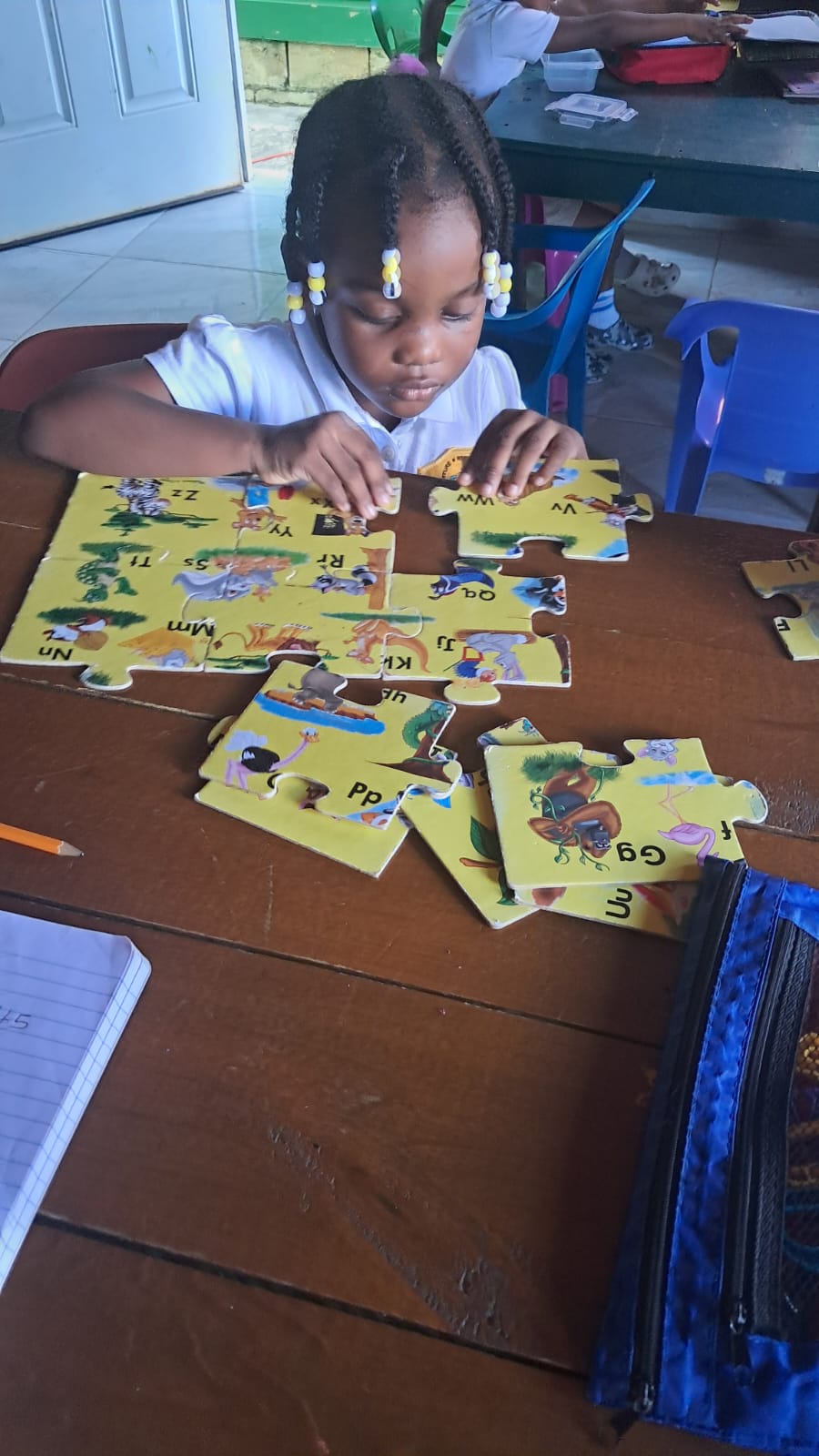
Yesterday as two of our icons quietly completed puzzles, the moment became more than just an early childhood activity. It became a living symbol of our journey as a school community as we put the pieces back together in the aftermath of Hurricane Melissa.

Melissa, a fierce category 5 hurricane, did not simply scatter debris. She scattered routines, learning spaces, teaching materials, emotional stability and the familiar rhythms of school life. For educational institutions like Jabneh Christian Academy that were ravaged by her angry winds and torrential rainfall, recovery has been a puzzle in every sense of the word.

Some pieces fit easily.

Some pieces are harder to place.

Some pieces are still missing.

Yet the picture is slowly taking shape again.

What Rebuilding Looks Like in Education After a Storm

1. Learning Continues in Unfamiliar Spaces

Classrooms may be gone, but the mission remains. Cafeterias become learning hubs, porches become reading corners and makeshift spaces become sanctuaries of resilience. Children adapt faster than adults, reminding us that a classroom is defined by purpose, not walls.

2. Emotional Restoration Takes Centre Stage

Icons are processing fear, confusion and loss. Teachers are not only delivering lessons but also providing stability, reassurance, counselling and calm. A simple puzzle becomes therapy. A conversation becomes healing. A smile becomes a victory.

3. Teaching Resources Must Be Recreated

Books were soaked, charts destroyed and learning tools blown away. What remains is creativity, resourcefulness and a determination to rebuild. Teachers lean on partnership, donations and innovation to restore what was lost.

4. Safety Becomes a Daily Priority

Every day begins and ends with risk assessment. Where can the icons sit? Which areas are secure? What repairs must be prioritised? Reopening school becomes an act of faith, planning and collective effort.

5. Community Support Becomes a Lifeline

Parents, volunteers, churches, neighbours and well-wishers form the framework that holds the school together. Rebuilding is a communal task because recovery cannot be done in isolation.

6. Hope Becomes an Educational Value

Our icons learn that storms come, but storms pass. Their little hands planting seeds, colouring storm stories, or completing puzzles are reminders that life can be rebuilt one piece at a time.

The Puzzle Metaphor: Why It Matters

A puzzle teaches patience.

A puzzle teaches focus.

A puzzle teaches that brokenness can become beauty again.

Every piece matters.

Every effort counts.

Every small win is a step forward.

Just as our icons’ puzzles came together piece by piece, so will our buildings, our programmes, our mental well-being and our sense of normalcy. We are not where we want to be yet, but we are putting the picture back together.

Moving Forward With Courage

Educational institutions across the hurricane belt know this truth well: rebuilding takes time, but rebuilding is possible. Melissa did not erase our excellence, our calling or our commitment. She only revealed the strength within us.

Piece by piece, we rise.

Piece by piece, we rebuild.

Piece by piece, we become stronger than before.

Let’s Make National Children’s Day 2024 Memorable for our Little Ones!

Tip: Celebrate your children today by treating them.

As we strive to make this day extraordinary for our children, I’m excited to share some unique ways we can treat them, going beyond the usual gifts and activities.

Here are some treats that will take your children into the future that they will thank us for:

Apply for their TRN: Gather the necessary documents today, set a day next week when they are on mid-term break, take them to the tax office, and complete the process.

Apply for their passport: Download and fill out the application today; it’s available online.

Ensure full immunization: If your child is not fully immunized, take them to the nearest health centre. The amazing nurses are eager to assist you, such as those at the Grange Hill Health Centre. You may also choose to use a private paediatrician.

Open a savings account or investment: Consider the Sammy Saver’s Club offer by the Credit Union or other suitable options to start saving for their future.

Family connections: Take your children to meet family members. Utilise video calls for instances where distance is a challenge.

Seek the best educational opportunities: Make a decision to seek the best educational opportunities for the children for the new school term.

Plan summer experiences: Begin to plan their summer experiences to ensure they are enriching and enjoyable.

Teach future skills: Teach your children skills that will benefit them in the future, such as coding, financial literacy, or problem-solving.

Dental check-ups: Ensure they visit the dentist regularly to maintain good oral health.

Specialised medical care: For those who are ill, take them to the paediatrician rather than a general practitioner to ensure they receive specialised care.

Learning and personality assessments: Guide your children in taking the following tests, which will provide relevant insights:

A learning style test – https://www.lovetoknow.com/parenting/kids/learning-style-test-children

A personality test- -https://www.proprofs.com/quiz-school/story.php?title=your-kids-personality-type

Special needs assessment: If you suspect that your child has special needs, seek to get him/her assessed.

Educational resources: For worksheets that are age-appropriate, visit With Auntie Nats. www.withauntienats.com

Church involvement: Get your children involved in church to help them develop a sense of community and spiritual growth.

These treats will help prepare your children for the future, equipping them with essential documents, skills, and experiences they will appreciate as they grow.

From Auntie Nats with love.

Understanding the Impact of Attachment Relationships on Children’s Emotional Development: Building Secure Foundations for Lifelong Well-being

Rev. Dr Natasha R. Francis-Campbell, April 22, 2024

Attachment relationships are crucial in children’s emotional
development, providing a foundation for their sense of security, trust, and
emotional well-being. Attachment theory, developed by John Bowlby and
expanded upon by Mary Ainsworth, emphasizes the importance of early
relationships with caregivers in shaping children’s emotional and social
development. Here’s how attachment relationships impact children’s
emotional development:

Formation of Secure Base: Attachment relationships serve as a secure
base from which children can explore the world and develop
independence. When caregivers are responsive, consistent, and
emotionally available, children feel safe and secure, allowing them to
confidently explore their environment and interact with others.
Emotional Regulation: Secure attachment relationships provide a
buffer against stress and promote the development of emotional
regulation skills. When children feel securely attached to their
caregivers, they are better able to regulate their emotions, manage
stress, and cope with challenging situations. Caregivers serve as
emotional regulators, providing comfort, reassurance, and support
during times of distress.
Formation of Internal Working Models: Attachment relationships
shape children’s internal working models of themselves, others, and
relationships. Securely attached children develop positive internal
working models, believing themselves to be worthy of love and capable
of forming close relationships with others. These internal working models
influence children’s expectations about how relationships should function
and guide their interactions with others throughout life.
Social and Emotional Competence: Secure attachment relationships
provide a foundation for the development of social and emotional
competence. Children who feel securely attached to their caregivers
tend to have better social skills, empathy, and emotional intelligence.
They are more likely to form positive relationships with peers,
communicate effectively, and resolve conflicts constructively.

Resilience and Coping Skills: Secure attachment relationships
contribute to children’s resilience and ability to cope with adversity.
When children have a secure base of support from caregivers, they are
better equipped to navigate life’s challenges, setbacks, and transitions.
They develop confidence in their ability to seek help and support when
needed, fostering resilience and adaptive coping strategies.
Impact on Mental Health: Secure attachment relationships are
associated with positive mental health outcomes in children. Research
has shown that children who experience secure attachment tend to have
lower rates of anxiety, depression, and behavioural problems. They are
also more likely to develop a positive sense of self-esteem and self-
worth.
Continuity into Adulthood: The quality of attachment relationships
established in childhood continues to influence emotional development
into adulthood. Securely attached individuals tend to have healthier
relationships, higher levels of emotional well-being, and greater overall
life satisfaction. Conversely, insecure attachment patterns may persist
into adulthood and contribute to difficulties in forming and maintaining
close relationships.
Attachment relationships play a critical role in children’s emotional
development, providing a secure base for exploration, promoting
emotional regulation, shaping internal working models, fostering social
and emotional competence, building resilience, and influencing mental
health outcomes. By understanding the importance of attachment
relationships, caregivers, educators, and policymakers can support
children’s emotional well-being and promote positive developmental
outcomes from infancy through adulthood.