We cannot focus on the development of children and exclude play. Play enables children to use their creativity while at the same time enhance their imaginative skills, emotional strength, dexterity, cognitive ability and social skills.
Play is important to healthy brain development. Did you know?
Board Games
What is your favourite board game? I love scrabble. Over the last two weeks, I have been playing Bingo with sight words to develop my learners’ vocabulary. I have found it to be very relaxing for the adult me.
Benefits of Board Games
Here are a few benefits of board games.
Regular use of board games can :
increase brain functions
teach patience
reduce stress
enhance creativity,
provide opportunities for learning,
boosts language skills’
promote the value of teamwork
reduce screen time,
teach the value of taking turn
boosts social skills
reduce the risk of mental disease,
grow the immune system because it reduces stress and negativity which are factors that reduce the body’s ability to fight diseases.
develop motor skills
Suggestion
Set aside a day of the week for the family to be engaged in playing board games.
Have you ever thought about the whole matter of firefighting and fire prevention? Well, as my icons (students) and were discussing the concepts, we realised that it is more meaningful for us to focus intently on fire prevention as the only persons who are trained and equipped to fight fires are the firefighters who on several instances are no match for some fires. It seems, therefore, that we stand to lose if we take the fight against fire if we attempt to take on such a fate.
Fire Prevention is Everybody’s Business!
Fires that will need fighting are destructive. At the end of a fire battle so much can be lost including lives. Since we are aiming at development, giving attention to this matter of fire prevention seems pertinent. Development gives the sense of building on or increasing what you already have. The things you and your children possess are necessary if you intend to achieve the goals within a specific time frame.
Think about loosing your house, or even a part of it, the icons tools and clothes and other things to fire. What do you see? I see setbacks.
Every member of the family should be involved in the fire prevention process.
How Can Fires be Prevented?
There are a number of ways fires can be prevented. this post may not contain them all. However, you may find enough content here that can change the trajectory for you.
First, I would suggest a family meeting to discuss the terms- firefighting and fire prevention. Do emphasize how powerless you all are against fires should one occur. You will have to seek safety, leaving everything behind.
In this meeting establish a fire escape plan, just in case. Identify an assemble area. This is the area where the person will go when he or she makes it out of the fire. This is a lifesaving mechanism that is worth emphasis. Not being able to account for all the occupants of a house in the event of a fire, makes others, especially parent want to re-enter the building that is on fire to retrieve the missing person. Did you know that many times the person who re-enters the build do not make out alive? What is sad is the fact that the person they might have gone for was already outside.
Here are some other things that you can do.
keep matches and lighters out of the reach of children.
plug out chargers and extension wire when they are not in use.
avoid using defective electric wire/cords/ extension cords.
avoid leaving computers on beds and surface where the air flow of the laptops becomes blocked and so can overheat and cause fires.
ensure that a match is properly put out before it is discarded.
Smoking is already a bad idea, but if you or those around you are so inclined, pay attention to where what is being smoked is place and ensure that the fire is complete put out before it is thrown away.
do remember the pots on the stove.
tie hair back or cover it to prevent it from getting caught in fire while cooking.
be careful with those false nails when cooking- this should not be a point since nails should be short and free of polish when preparing food. False nails are more easily ignited that natural fingernails without polish.
Avoid unattended and careless use of candles.
keep kerosene lamps and candles away from curtains and children.
Place candles on a material that will not be ignited in the case it is forgotten.
It could be especially useful to install smoke detectors in the home.
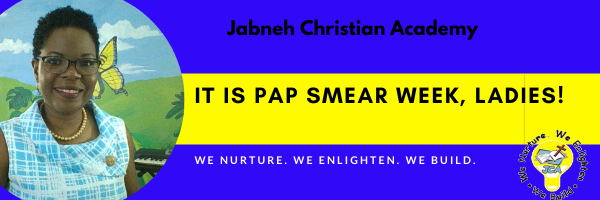
Yes, April 24th – 30th is declared Pap Smear Week by the
Minister of Health and Wellness, Dr. the Hon. Christopher Tufton, MP. Just in case you missed it, April is observed as Cervical Cancer Awareness month.
This certainly should have our attention, ladies. We are the ones blessed with the cervix. Let us be. Fear is not allowed in this matter. Knowledge is power.
Did you know that cervical cancer can be prevented, treated and cured?
Did you know that cervical cancer is the second leading cause of cancer-related deaths among Jamaican women? This is incredibly sad. No woman should die from cervical cancer. This includes you.
Be proactive and get your pap smear done this week. Here is a bit more information that we should keep in mind. Pap smears are not 100% full proof though necessary. Ask your doctor about the HPV test which is done every five years.
3 John1:2
Beloved, I wish above all things that thou mayest prosper and be in good health, even as thy soul prospereth.
There is a clear mechanism for responding to complaints. Complaints are documented with information on the person making complaint, nature of complaint, investigation of complaint and outcome.
Introduction
It is the aim of Jabneh Christian Academy Early Stimulation Unit to provide a good education for all our icons, and that the principal and other staff work very hard to build positive relationships with all stakeholders in order to work harmoniously as a school family. However, conflicts may arise and can lead to misunderstandings and concerns that may escalate. Hence, the school is required by the Early Childhood Act to have procedures in place to deal with complaints by parents, icons or other community members. As such, the institution will give careful consideration to all complaints and deal with them as swiftly as possible. The institution also pledges to be fair, open and honest when dealing with all complaints and aims to resolve complaints through dialogue and mutual understanding. Hence, we will provide sufficient opportunity for all complaints to be fully discussed, and then resolved where we will ensure that the interest of the icon above all other issues is taken into full consideration.
Aims and objectives of the policy
This complaints policy aims to:
Encourage the resolution of problems by informal means wherever possible.
Ensure that concerns are dealt with quickly, fully and fairly and within clearly defined time limits.
Provide effective responses and appropriate redress.
Maintain good working relationships between all people involved with the school.
The Early Childhood Act states that schools must have in place a procedure to deal with complaints relating to the school or services that it provides. Outlined below are the guiding principles for the Jabneh Christian Academy Early Stimulation Unit complaints procedure:
Encourage resolution of problems by informal means wherever possible, including making use of mediation services where necessary or appropriate.
Be impartial and non-adversarial.
Allow swift handling with established time limits for action and keeping people informed of the progress.
Ensure a full and fair investigation by an independent person where necessary.
Respect people’s desire for confidentiality.
Address all the points at issue and provide an effective response and an appropriate redress, where necessary
Provide information to the Early Childhood Commission so that services can be improved, and the matter resolved at a higher level.
The complaints procedure
The institution is clear about the difference between a concern and a complaint. As such, the institution will always try to handle and bring any concerns to successful resolutions without the need for any formal complaint to be made. However, all concerns and complaints will be documented and kept for future reference.
The school expects that in significant cases, the class teacher or individual directly employed by the school will initiate the first approach to make every effort to resolve the issue. If an informal complaint fails to resolve the matter, a formal complaint will be made to the management body or Board by the person making the complaint. This complaint must be made in writing, stating the nature of the complaint and how the school has handled it so far.
The management body must consider all written complaints within three weeks of receipt. The Board is required to arrange a meeting to discuss the complaint. The person making the complaint and all other persons involved will be invited to attend the meeting and explain the complaint in more detail. The school is also required to give the complainant at least three days’ notice of the meeting.
After hearing all the evidence, the Board should consider their decision and make an informed decision in writing to the person making the complaint and the school.
However, the institution also recognise that further steps will need to be invoked when all initial attempts to resolve issues are unsuccessful and the person raising the concern remains dissatisfied and wishes to take the matter further. It is then recommended that a formal complaint be made to the Early Childhood Commission in writing if a person has reason to believe that the early childhood institution has contravened any provision of the Early Childhood Act or if an icon at the early childhood institution has been abused or has suffered injury or harm as a result of the act or negligence of the operator, a person acting as an agent, or any person employed in the operation, of the early childhood institution.
The Complaints Procedure, according to the Early Childhood Act, is outlined below:
Upon receiving a complaint, the Commission shall refer the complaint to an inspector who shall, with a view to preparing the report, make such inquiries as he thinks fit and conduct discussions with the complaining party, the operator of the early childhood institution and, where appropriate, any employee of the early childhood institution involved in the complaint.
The inspector shall submit to the Commission a report containing the following information:
(a) the grounds of the complaint, noting any facts in dispute between the relevant parties.
(b) whether, in the opinion of the inspector, the matter can be remedied.
(c) if the inspector is of the opinion that the matter can be remedied, the measures recommended by the inspector to effect the remedy; and
(d) the time period that the inspector considers to be reasonably sufficient to effect the remedy.
Upon receiving a report under subsection (3), the Commission shall:
give notice in writing of its intention to consider the report, to:
(i) the operator of the early childhood institution and any employee of such institution who is involved in the complaint, together with a copy of the complaint and a copy of the report.
(ii) the complaining party, together with a copy of the report.
in such notice, specify a period, being not less than seven days, during which any of the persons referred to in paragraph (a) shall be entitled to attend before the Commission, to make representations concerning the complaint.
After the expiry of the period, the Commission may:
(a) Dismiss the complaint; or
(b) Confirm the complaint and direct the implementation of the recommendations contained in the report, subject to such variations (if any) as the Commission thinks fit.
A person who attends before the Commission under subsection (4) shall be entitled to be accompanied by his attorney-at-law.
This section is without prejudice to any other proceedings that may be brought in relation to the complaint by virtue of any other law.
Moses’ mother had an inclination that her baby boy was destined for greatness and did all she could to keep him alive- to become. “The woman became pregnant and had a son. She saw that there was something special about him and hid him. She hid him for three months.” Exodus 2:2 Message
Our children are here for defined reasons. They must be protected and guided to become that which was purposed before they were born.
Your child already has a path. There is a career path for your child. Do you know? Intentionally make this week more than a costumed occasion where your child dresses up in some garb for a day, poses for the camera and then life goes on. Instead or in addition to, seek the Lord who intentionally created your child and gifted him/her to you. In addition, observe your child, find out the meaning of his/her name, recall words of prophesies spoken over your child, speak the child’s Sunday or Sabbath School teacher who would have been watching over your child in prayer. Talk with the child’s class teacher and friends.
Your child is not just becoming that person, he/she is already marked. He/she just needs to be molded efficiently. That is where you come in. Protect your child form all kinds of destiny altering initiatives – spiritually, cognitively, emotionally, nutritionally, physically, culturally and for some generationally.
When you have an early insight regarding your child’s career path you are better able to provide toys, books, varying forms of media, expose them to resource persons where they can learn how to benchmark themselves as well as find mentors and or role models.
The time will come when like Moses’ mom, you will have to release your child on the Nile- school, daycare or the workforce. Ensure that you have waterproofed the basket; find a way to be involved integrally in your child’s development.
Since we have a whole week to so focus, let us keep the conversation going.
Motor development includes fine and gross motor skills.
This article aims at:
providing information about fine motor skills that will sensitise and encourage parents about activities that will foster such development.
highlighting the relevance of the fostering of fine motor skills development in the icons.
engendering cooperation in the home that is multifunctional.
What are fine Motor Skills?
Fine motor skills are the ability to make movements employing the small muscles in our hands and wrist. (“Local Offer Jargon Buster”) They are developed in children as they grow.
Are Fine Motor Skills Important?
School-aged children depend on fine motor skills to master many tasks. Some of the skills that depend on well-developed fine motor skills includes:
Turning the pages of a book
Colouring
Drawing and painting
holding pens, pens, crayons or markers
Tracing
Writing
Cutting with scissors
Pasting and gluing
using erasers
Measuring with a ruler
Typing and using a computer mousepad
Playing musical instruments
The development of fine motor skills also promotes self-help skills in children. They will be able to perform activities including:
pressing keypads
turning doorknobs
turning locks and keys
tying shoelaces
buttoning and unbuttoning clothes
zipping and unzipping
fastening snaps and buckles
using floss
brushing teeth
taking a bath
Using the toilet
sorting items and puzzles
using spoons and forks
opening and closing water and juice containers
screwing lids
unscrewing lids
spreading peanut butter, jam, butter, etc
Can Children have trouble with fine motor Skills?
Certainly, underdeveloped fine motor skills will pose challenges in students completing many of the action listed above. It can also influence academic setbacks.
This kind of struggle can be termed as developmental coordination disorder. Underdeveloped fine motor skills can also impact the gross motor skills negatively.
Parents can facilitate the development of fine motor skill by just being a tad more intentional about the activities mentioned about and so many others that are carried out in the homes almost daily.
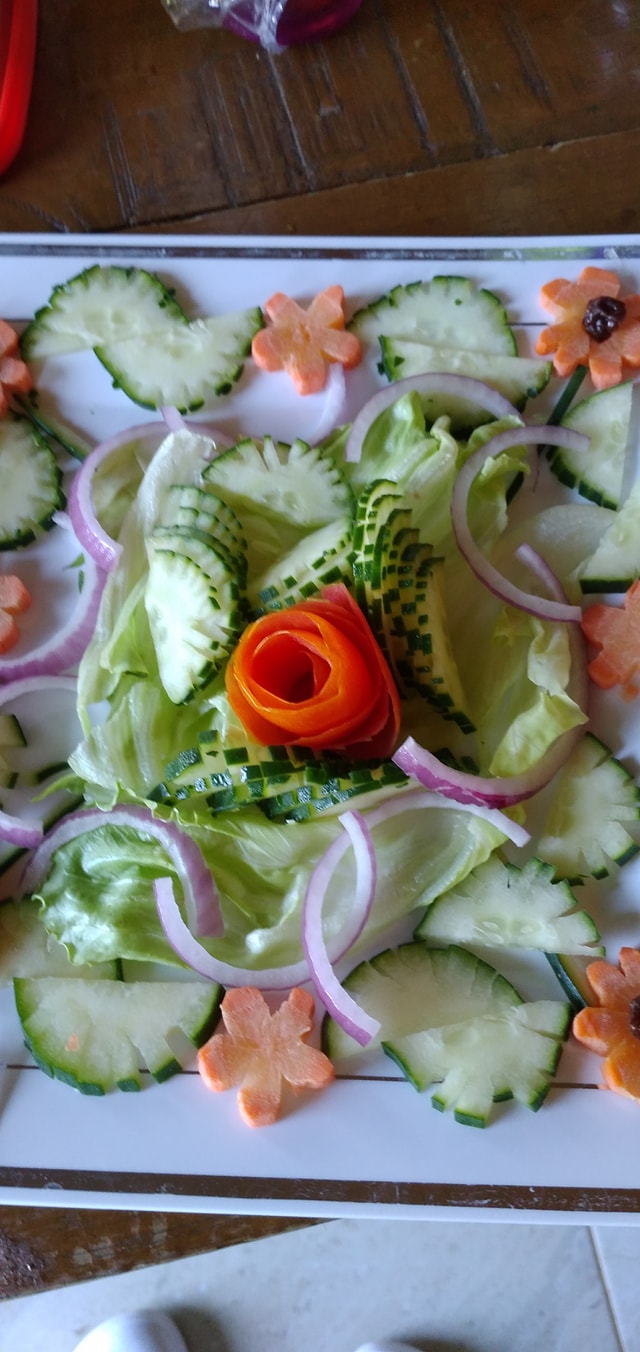
Since eating fruits and vegetables in mandatory at Jabneh Christian Academy, Interesting Salad Day is one of our favourite calendar items. Our icons must have a serving of fruits, vegetables or a mixture of both as snack for break while at school. (We hope that eventually all our parents will see the benefits and limit or eliminate the bags of sugar, salt and hydrogenated oils culturally accepted as snacks and replace them with fruits and vegetables in the homes.)
Every child needs more that one serving of fruits daily. The benefits are far reaching. The lack of sufficient intake of fruits have far reaching negative effects too. Some grown ups are struggle with maladies that should not have been our portion had fruits been considered important and “must haves”.
Of all the benefits of having fruits we would like to highlight the role fruits and vegetable play in improving cognitive/academic performance.
We send our children to school and hope to see improvement in academic performance term after term. Is it not empowering to note that this journey begins in the home?
A well-balanced diet is necessary for proper brain development. Fresh fruits and vegetables, if consumed by children will boosts academic performance thorough their schooling.
We are in an era where focus in the learning environment is a rare treasure. Did you know that the consumption of fruits and vegetables in focus? What is more, focus helps students gain and retain information.
As we dig to unearth the golden treasures in our children, let us make the necessary, responsible adjustments to our shopping lists, shopping carts and experiences. Let us slow down at the sections of the supermarkets where the fruits and vegetables are displayed rather than hastening to the “killer” shelves for ‘SNACKS’.
Benefits of Interesting Salad Day
All level learners can and should benefit greatly from event if carefully considerations are engaged.
The learner can name fruits and vegetables as well as other ingredients used.
Name the letters that begin the name of the items.
Give the sound of the letters.
Identify the blends heard at the beginning of the name of the items.
Identify final consonant sounds.
Spell the names of fruits and vegetables.
Sort fruits and vegetables into colours, shapes, sizes, textures, and groups. Vegetables are divided into five groups.
Count items.
Weigh items.
Cut items into fractional parts.
Perform additions and subtractions.
Draw pictures of fruits and vegetables.
Make fruits and vegetables using modelling dough or any other type of suitable materials.
Write sentences, blogs, stories, etc.
Share with neighbours and families.
Develop a love and an appetite for fruits and vegetables
Develop photography skills by taking photos of the process and final product.
Do a vlog
Do research to determine where the different fruits and vegetables come from.
Do a Bible reading about the day God created vegetables and fruits.
Subscribe and tell us if this episode was beneficial.
Rest time provides the icons with a time to slow down, recharge and process what they have learnt.
Though rest time can include napping, many of our icons are terrified to nap. They feel as though it is punishment. They do not see it as a needful component in their growth and development. Children from age 3 to 5 years need 10 to 13 hours of sleep each night and may still need additional daily naps.
Have you structured things in your home to afford your icon enough sleep?
Is your icon sleep depraved? Sleep depravity has many consequences. As you dig for gold, you will need to deal with this issue if is out of order in your home.
If you are using sleep time to punish your icons, please stop. It is harming your icon.
While some icons are terrified to sleep, other can hardly stay awake once a seat is provided. Without some indication of an issue on the medical form, we will assume that the icon is sleep depraved. Of course, you can see that this will lead to challenges in the learning environment.
During rest time we aim to please all. Sleeping areas are prepared for those who will sleep, and alternative activities are provided for those who will not sleep but need to slow down, recharge and process.
Rest Time Activities
Rest time or quiet time activities includes:
reading
being read to
colouring
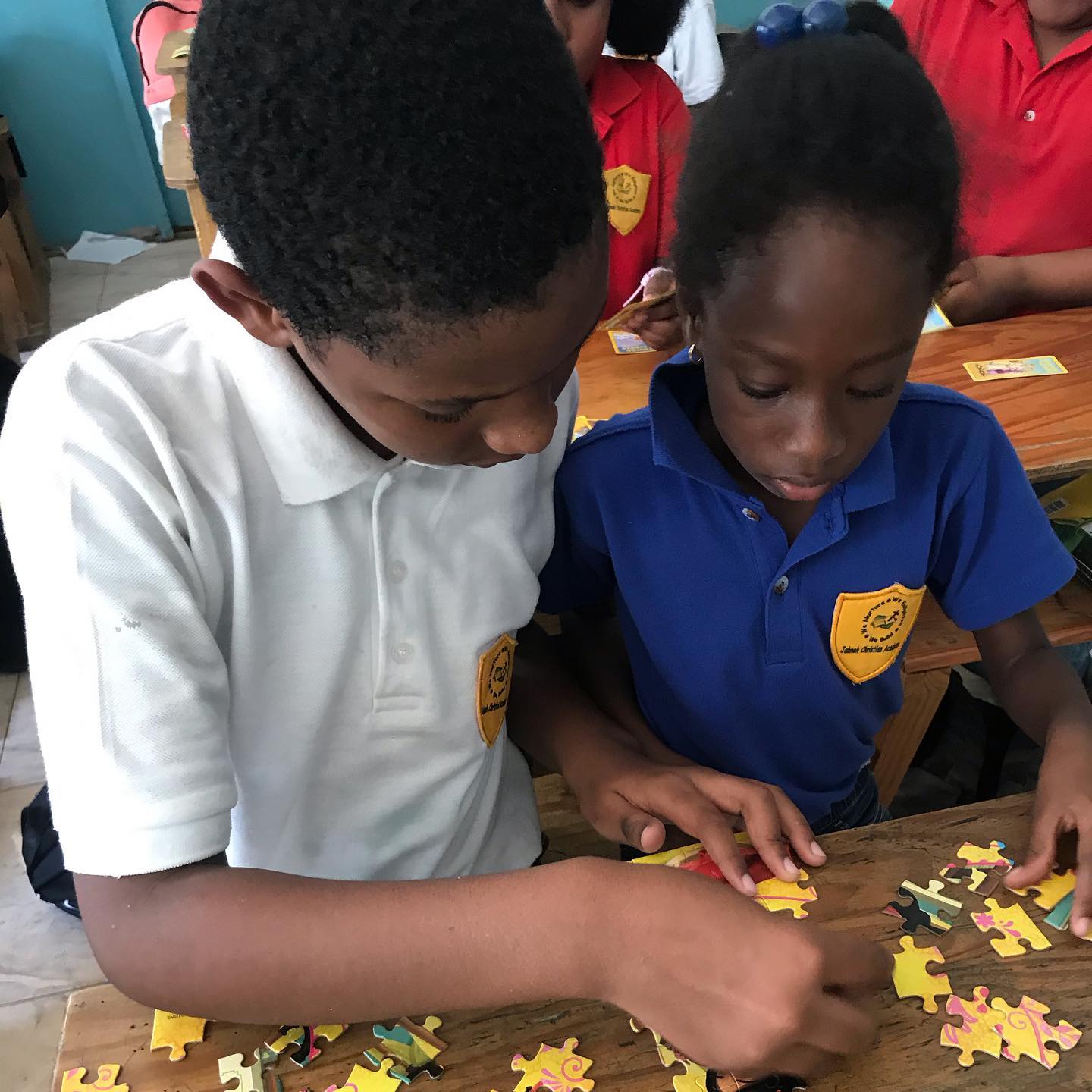
doing puzzles
drawing
painting
writing
the use of special toys
screen time
listening to music
playing music
The school day is much shorter these days as we employ innovative skills to bolster our resilience. Rest or nap time will not be facilitated at school. We are encouraging our parents and caregivers to facilitate rest or nap time once the icons have returned to your care daily.
Memory Verse
In peace I will lie down and sleep, for you alone, Lord, make me dwell in safety.
This session affords the facilitators the opportunity to support and challenge learners as well as focus on the learning needs of individual icons or small groups. This is still possible with virtual schooling. Small groups can be accommodated. Since our platform of choice is Zoom, we use breakout rooms to facilitate small groups.
Concepts previously introduced during Circle Time can now be reinforced or explored.
Learning tools are also employed such as textbooks, electronic devices, charts, worksheets, and whatever apparatus becomes necessary to reinforce a concept or to make it stick.
Each icon gets personalised instruction from the facilitator. Pre- COVID-19, the facilitator would sit with each icon at different times throughout the day for individualised consultation. Lines are known violations as they prevent the icons from benefitting from the privacy personalised time affords.
Since we are still observing the COVID-19 protocols, we must maintain our distance without compromising the programme. The icons are now invited to the facilitator’s station one at a time for the individualised interaction.
We love this time. The icons can’t wait for their turn in the chair. Usually, they are eager to share all sorts of stories and experiences.
“Learning is not attained by chance; it must be sought for with ardour and attended to with diligence.” Abigail Adams
Circle time has been a segment on our timetables in our Early Stimulation Unit. As I worked on the timetables this time around, I wondered if all our parents understood what this segment is about. If you do, here goes a reminder. If you didn’t, here goes new information. Let us dig in!
Pre-COVID-19, the icons and teachers would sit on mats on the floor in a circle for this session. Getting students to sit in a circle is not as easy as it sounds initially. You try it.
COVID-19 is still around, therefore, the icons will remain in their seats.
Circle time is a well-anticipated session for the icons for several reasons including the following.
they get to take turns in leading activities.
it provides opportunities for social interactions. This was always important but now more so in an era where we are forced to be socially distanced.
It aids in the development of positive relationships.
Each icon is celebrated at some point of the session.
they can get loud.
they get to laugh their socks off.
it sets the tone for the rest of the day.
they get to learn more about themselves in this session.
they get a chance to earn stars.
What do we do during Circle Time?
Complete Routine Tasks
Set the calendar
recite the days
identify the day
determine the day that passed
determine the day to come next
recite the months
tell the current month
determine how old the month is on that day
celebrate birthdays
highlight upcoming events.
celebrate each other
new hairdo’s/haircuts
missing tooth
missing tooth photo shoot
most punctual , etc
Icons are engaged in numeracy using games, songs and dramatic expressions.
How old are you?
number of the day
number members in the families, etc
the number of letters in one’s name
Literacy
reciting the alphabet
learning letter names and letter sounds using the Auntie Nats videos.
learning blends and other phonetic elements according to readiness in literacy.
syllabication
Listening Skills
Icons listen to facilitators and classmates and carry out tasks
Language Development
learning to introduce self.
develop feeling vocabulary and learn to label their feelings correctly.
describe nouns- show and tell
Role play- community helpers
develop dexterity and agility
promote gross motor skills.
Covid Management education
masking
unmasking
sanitising
handwashing
social distancing
Introduction of new concepts
Circle time is usually immediately after Christian Education daily.
Icons are at a disadvantage when they arrive late or are absent.









 Jabneh Christian Academy