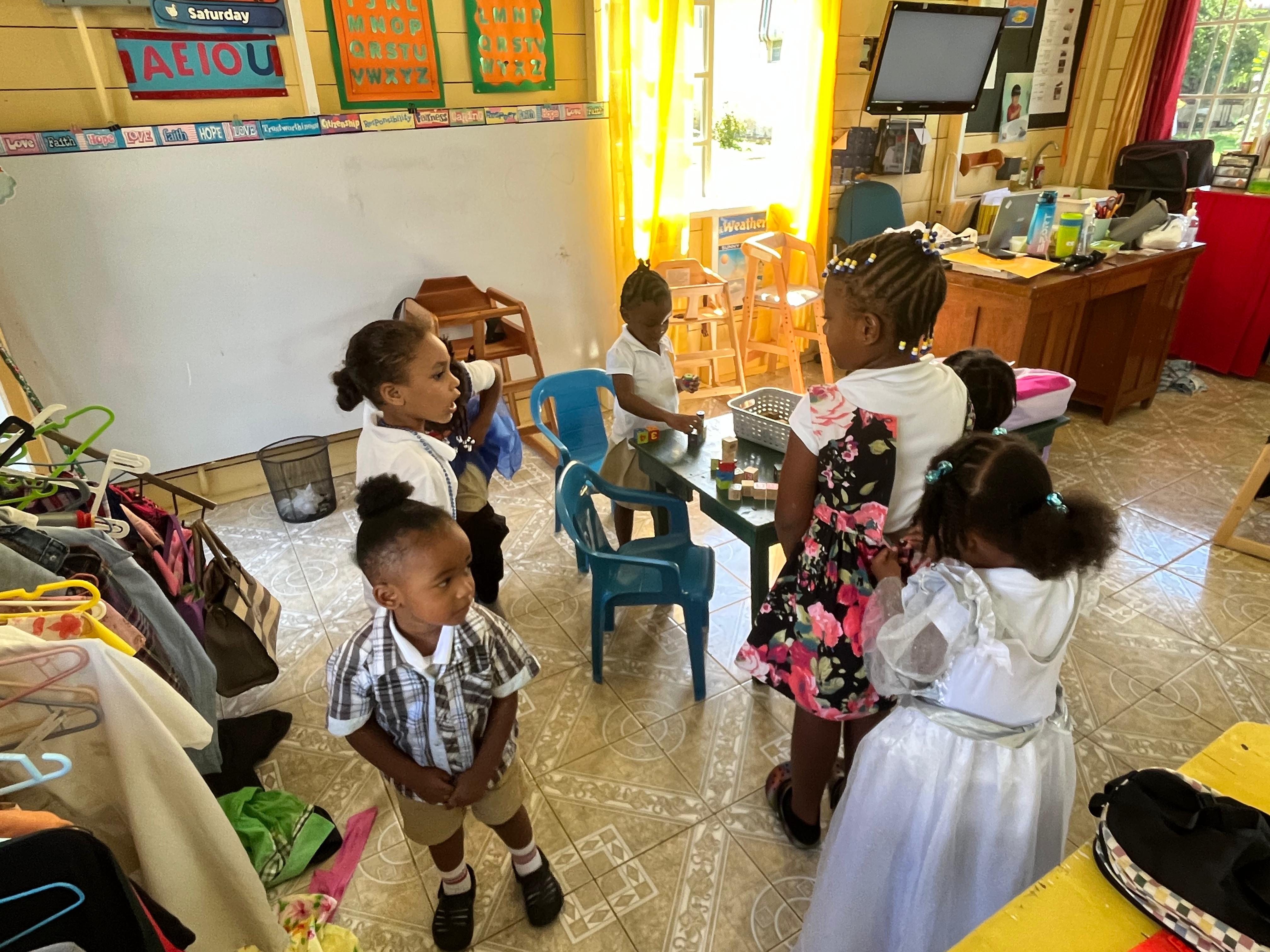
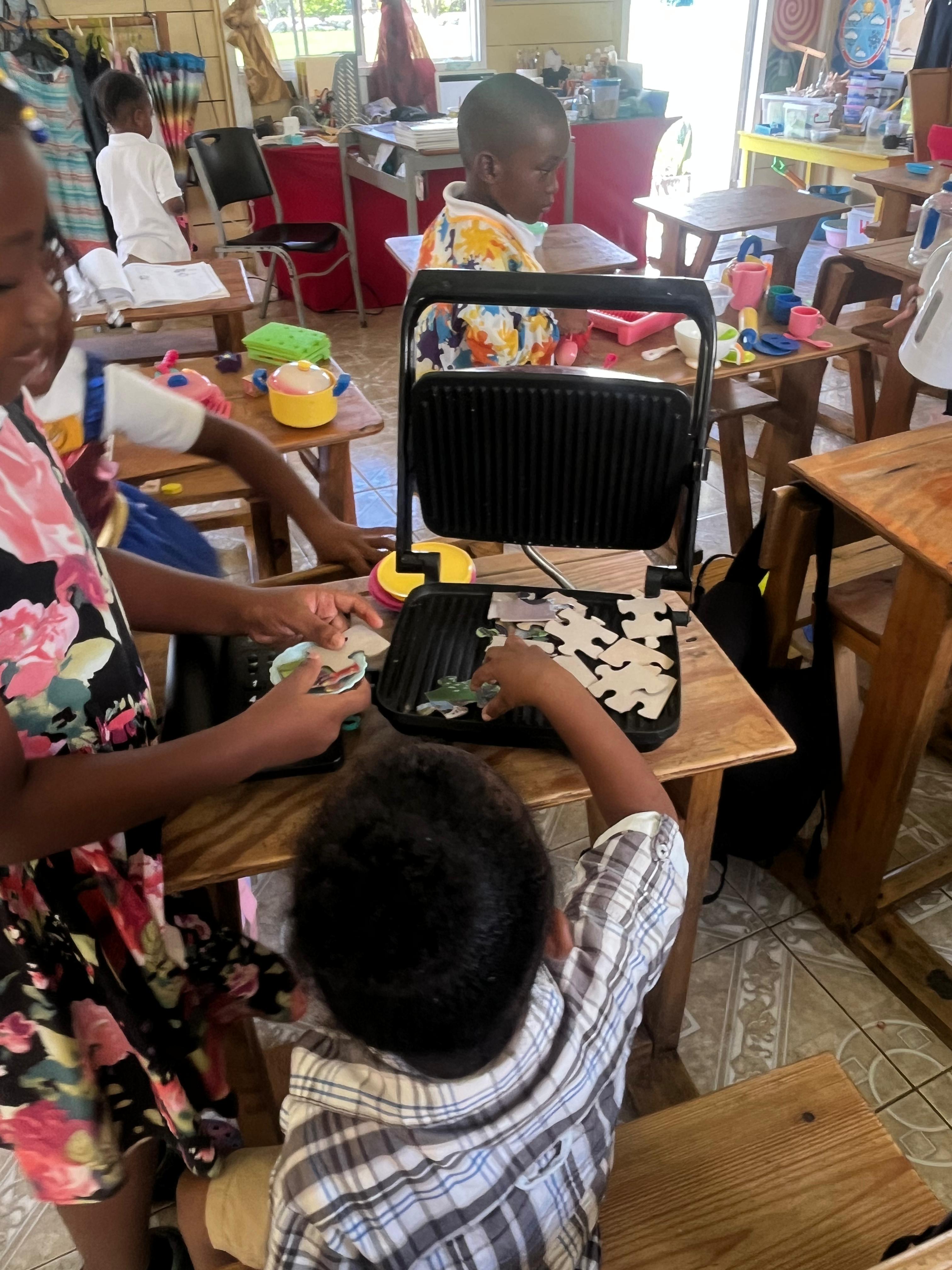
The Power of Pretend Play: Unlocking Learning in the Dress-Up Corner with Auntie Nats

Pretend play, particularly through the simple yet impactful dress-up corner, is one of the most enjoyable ways young children learn. This fun, engaging activity allows learners to step into different roles, explore various professions, and imagine a world beyond their everyday lives. But the benefits go well beyond a child’s delightful giggles and inventive stories; let’s explore why the dress-up corner is a wonderful space for learning and growth.

1. Boosts Imagination and Creativity

Dressing up as a doctor, firefighter, chef, explorer or for different occasions allows children to create entire worlds within their minds. This kind of imaginative play is crucial as it pushes learners to think outside the box, make up stories, and develop characters. The dress-up corner becomes a stage where they can perform, dream, and expand their creative horizons.

2. Develops Social and Emotional Skills

Through role-playing, children practice empathy and understand different perspectives. For example, by playing a doctor, they explore the role of a caregiver, practising kindness and problem-solving. They also learn to cooperate with others, share costumes, and communicate effectively, building emotional intelligence that supports future relationships.

3. Enhances Language and Communication

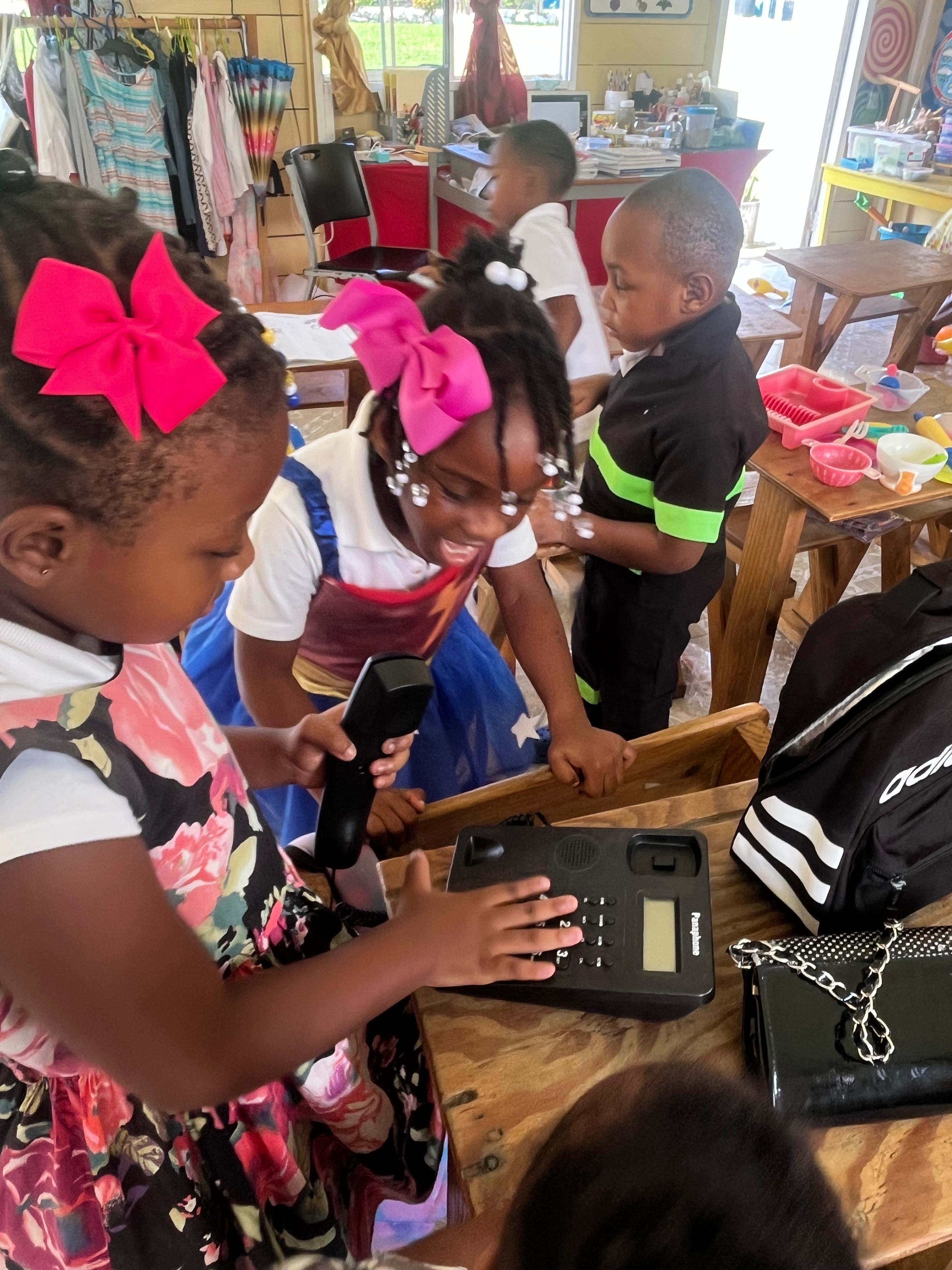
Pretend play often includes dialogues and storytelling, which enhances vocabulary and sentence structure. As children describe who they are and what they’re doing, they practice language in context, building strong communication skills. This is particularly helpful for young learners, as they engage in conversations that expand their expressive language.

4. Improves Problem-Solving Skills

Pretend play scenarios often present “problems” to solve: How will the chef serve the hungry customers? What does the firefighter do in an emergency? These imaginary situations encourage children to think critically and make decisions, strengthening their ability to handle challenges in real-life situations.

5. Builds Confidence and Self-Esteem

Trying on various roles helps children build confidence as they discover new strengths and abilities. Playing a leader, a helper, or a brave hero helps them feel empowered and capable. Over time, these experiences can reinforce a child’s belief in their potential, making them more self-assured in other areas of life.

6. Encourages Fine and Gross Motor Skills Development

From buttoning a jacket to tying a scarf or slipping shoes, dressing up encourages children to practice fine motor skills. Moving around, acting out roles, or pretending to carry items helps develop gross motor skills, strengthening their coordination and physical abilities.

Creating Your Own Dress-Up Corner as a Parent

Setting up a dress-up corner is simple and can be done with a few costumes or even repurposed household items. Offer clothes representing different characters or professions, and let the child’s imagination do the rest! With various options and gentle guidance, a dress-up corner can become an inspiring learning environment, sparking joy and supporting essential childhood development at school and home.
Empowering Minds: Navigating Addition with a Student on the Autism Spectrum

Today’s focus was on continuing our exploration of addition. With my student demonstrating a solid grasp of numbers from 1 to 9 and a budding number sense, I saw it as the perfect opportunity to introduce the concept of addition.

Navigating the Fundamentals of Addition in the World of Autism

In our first lesson, we began by familiarizing ourselves with the plus sign, an essential symbol in the world of addition. Through repetition and visual aids, my student began to recognize and name the symbol with increasing confidence.

Moving forward to our second lesson, we delved into reading the first half of addition equations. We practiced identifying the numbers involved in the addition process, such as in 3 + 4 or 7 + 2, laying a foundational understanding.

In lesson three, we introduced the concept of the equal sign, a pivotal step in comprehending the balance inherent in addition equations. After revisiting the skills learned in the previous lesson, we incorporated the equal sign into our equation readings, such as in 3 + 4 =.

During this journey, my student encountered challenges, as is common in the learning process. There were moments of difficulty differentiating between the plus and equal signs, leading to moments of frustration. However, through supportive guidance and reassurance, we navigated these obstacles together.

I vividly recall one such moment when my student looked at me with a mixture of determination and desperation, seeking assistance in remembering. It was a powerful reminder of the importance of personalized support and encouragement in the learning process.

Although we encountered setbacks along the way, we celebrated small victories, such as the one captured in the video from today’s session. Witnessing my student’s progress and sense of accomplishment serves as a testament to the effectiveness of breaking down concepts into manageable segments.

Teaching learners in small, digestible segments has proven to be an effective approach, allowing for incremental progress and meaningful engagement. As we continue our journey together, I am inspired by the resilience and determination demonstrated by my student, reinforcing my commitment to providing tailored support and fostering a love for learning.

Engaging my student with autism has been a rewarding journey of patience, understanding, and tailored instruction.

Today’s focus was on continuing our exploration of addition. With my student demonstrating a solid grasp of numbers from 1 to 9 and a budding number sense, I saw it as the perfect opportunity to introduce the concept of addition.

In our first lesson, we began by familiarizing ourselves with the plus sign, an essential symbol in the world of addition. Through repetition and visual aids, my student began to recognize and name the symbol with increasing confidence.

Moving forward to our second lesson, we delved into reading the first half of addition equations. We practiced identifying the numbers involved in the addition process, such as in 3 + 4 or 7 + 2, laying a foundational understanding.

In lesson three, we introduced the concept of the equal sign, a pivotal step in comprehending the balance inherent in addition equations. After revisiting the skills learned in the previous lesson, we incorporated the equal sign into our equation readings, such as in 3 + 4 =.

During this journey, my student encountered challenges, as is common in the learning process. There were moments of difficulty differentiating between the plus and equal signs, leading to moments of frustration. However, through supportive guidance and reassurance, we navigated these obstacles together.

I vividly recall one such moment when my student looked at me with a mixture of determination and desperation, seeking assistance in remembering. It was a powerful reminder of the importance of personalized support and encouragement in the learning process.

Although we encountered setbacks along the way, we celebrated small victories, such as the one captured in the video from today’s session. Witnessing my student’s progress and sense of accomplishment serves as a testament to the effectiveness of breaking down concepts into manageable segments.

Teaching learners in small, digestible segments has proven to be an effective approach, allowing for incremental progress and meaningful engagement. As we continue our journey together, I am inspired by the resilience and determination demonstrated by my student, reinforcing my commitment to providing tailored support and fostering a love for learning.

Gold Digger Series – Episode 2

Guided Learning

September 4, 2021

This session affords the facilitators the  opportunity to support and challenge learners as well as focus on the learning needs of individual icons or small groups.  This is still possible with virtual schooling.  Small groups can be accommodated.  Since our platform of choice is Zoom, we use breakout rooms to facilitate small groups.

Concepts previously introduced during Circle Time can now be reinforced or explored. 

Learning tools are also employed such as textbooks, electronic devices, charts, worksheets, and whatever apparatus becomes necessary to reinforce a concept or  to make it stick.

Each icon gets personalised instruction from the facilitator.  Pre- COVID-19, the facilitator would sit with each icon at different times throughout the day for individualised consultation.  Lines are known violations as they prevent the icons from benefitting from the privacy   personalised time affords.

Since we are still observing the COVID-19 protocols, we must maintain our distance without compromising the  programme.  The icons are now invited to the facilitator’s station one at a time for  the individualised interaction.

We love this time.  The icons can’t wait for their turn in the chair.  Usually, they are eager to share all sorts of stories and experiences. 

“Learning is not attained by chance; it must be sought for with ardour and attended to with diligence.” Abigail Adams