Putting the Pieces Back Together: Learning, Healing and Rebuilding After Melissa with Auntie Nats

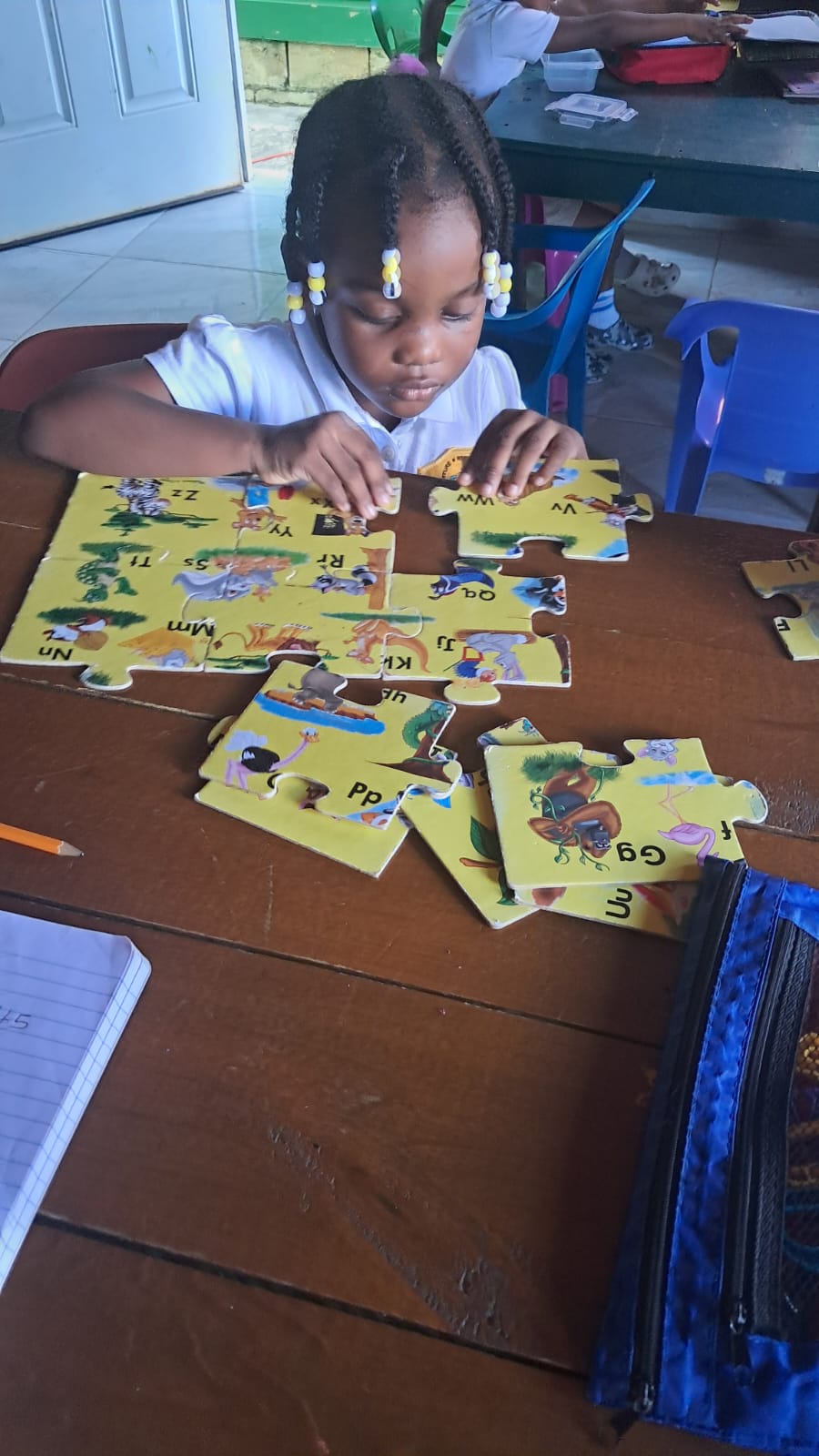
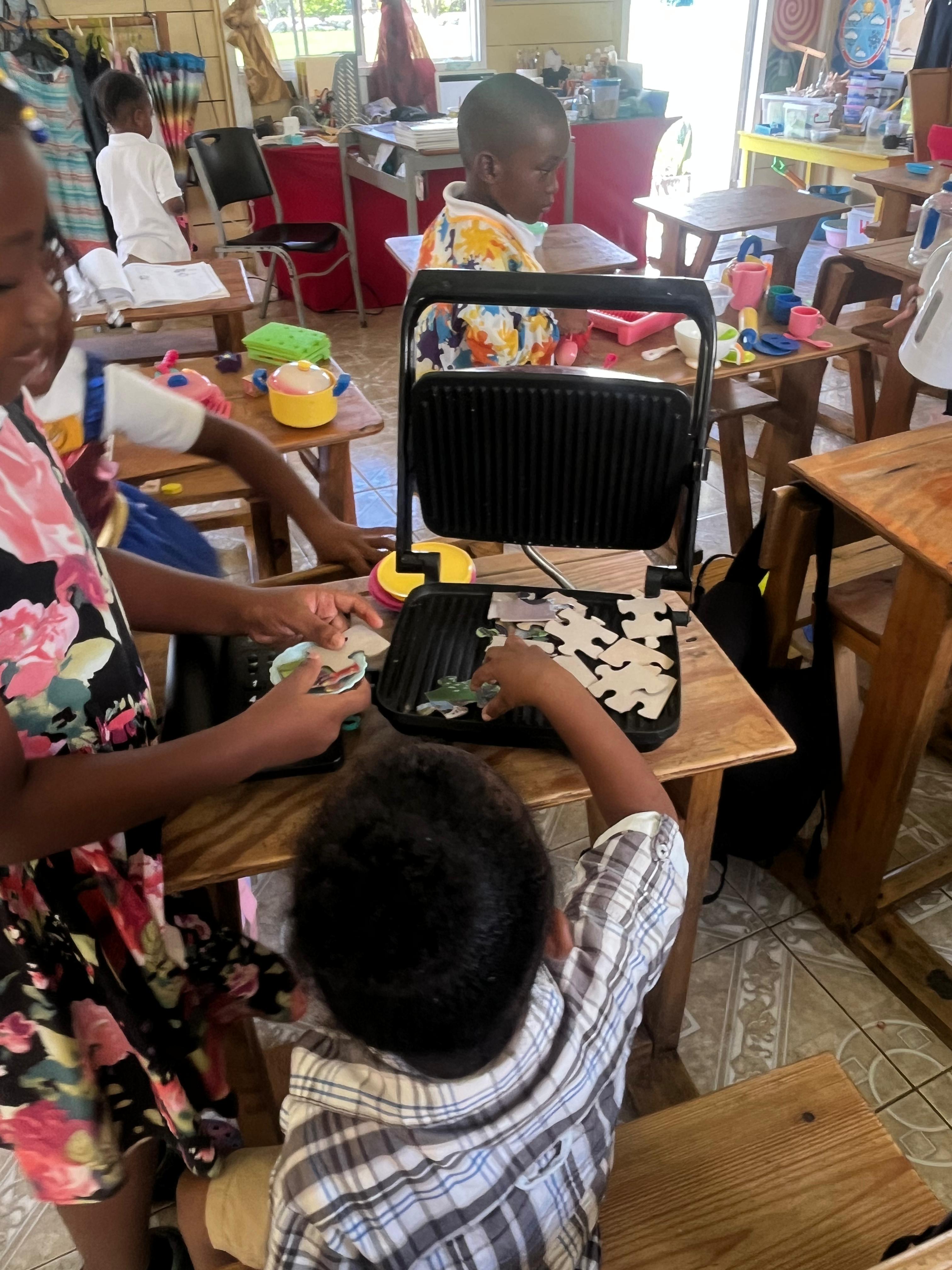
Yesterday as two of our icons quietly completed puzzles, the moment became more than just an early childhood activity. It became a living symbol of our journey as a school community as we put the pieces back together in the aftermath of Hurricane Melissa.

Melissa, a fierce category 5 hurricane, did not simply scatter debris. She scattered routines, learning spaces, teaching materials, emotional stability and the familiar rhythms of school life. For educational institutions like Jabneh Christian Academy that were ravaged by her angry winds and torrential rainfall, recovery has been a puzzle in every sense of the word.

Some pieces fit easily.

Some pieces are harder to place.

Some pieces are still missing.

Yet the picture is slowly taking shape again.

What Rebuilding Looks Like in Education After a Storm

1. Learning Continues in Unfamiliar Spaces

Classrooms may be gone, but the mission remains. Cafeterias become learning hubs, porches become reading corners and makeshift spaces become sanctuaries of resilience. Children adapt faster than adults, reminding us that a classroom is defined by purpose, not walls.

2. Emotional Restoration Takes Centre Stage

Icons are processing fear, confusion and loss. Teachers are not only delivering lessons but also providing stability, reassurance, counselling and calm. A simple puzzle becomes therapy. A conversation becomes healing. A smile becomes a victory.

3. Teaching Resources Must Be Recreated

Books were soaked, charts destroyed and learning tools blown away. What remains is creativity, resourcefulness and a determination to rebuild. Teachers lean on partnership, donations and innovation to restore what was lost.

4. Safety Becomes a Daily Priority

Every day begins and ends with risk assessment. Where can the icons sit? Which areas are secure? What repairs must be prioritised? Reopening school becomes an act of faith, planning and collective effort.

5. Community Support Becomes a Lifeline

Parents, volunteers, churches, neighbours and well-wishers form the framework that holds the school together. Rebuilding is a communal task because recovery cannot be done in isolation.

6. Hope Becomes an Educational Value

Our icons learn that storms come, but storms pass. Their little hands planting seeds, colouring storm stories, or completing puzzles are reminders that life can be rebuilt one piece at a time.

The Puzzle Metaphor: Why It Matters

A puzzle teaches patience.

A puzzle teaches focus.

A puzzle teaches that brokenness can become beauty again.

Every piece matters.

Every effort counts.

Every small win is a step forward.

Just as our icons’ puzzles came together piece by piece, so will our buildings, our programmes, our mental well-being and our sense of normalcy. We are not where we want to be yet, but we are putting the picture back together.

Moving Forward With Courage

Educational institutions across the hurricane belt know this truth well: rebuilding takes time, but rebuilding is possible. Melissa did not erase our excellence, our calling or our commitment. She only revealed the strength within us.

Piece by piece, we rise.

Piece by piece, we rebuild.

Piece by piece, we become stronger than before.

Never Underestimate a Learner: The Power of Multigrade Classrooms

By Auntie Nats | Jabneh Christian Academy Blog

At Jabneh Christian Academy, we believe that every child is capable of greatness when placed in a nurturing, value-rich environment. One of the unique aspects of our learning culture is our multigrade classroom setting, where learners of varying ages share the same space, engage with the same environment, and often encounter the same challenges, each at his or her own level of readiness.

Recently, a beautiful moment captured the heart of what we believe. During a lesson designed for our 5-year-old icons focused on understanding the concept of a dozen, the class was asked to complete a culminating task: Draw twelve triangles.

In the same room sat one of our three-year-old icons—a quiet observer, not expected to complete the task. Though he has not yet mastered the art of writing his name, he attentively listened, watched, and participated fully. When the task was completed, there on his page were twelve carefully drawn triangles, his best attempt, and a successful one.

This wasn’t just an exercise in shapes. It was a profound reminder:
Never underestimate a learner. Growth doesn’t always announce itself with fanfare. Sometimes, it shows up humbly, in a triangle drawn by a three-year-old.

What Multigrade Learning Offers

1. Exposure Breeds Expansion
Younger learners benefit from hearing advanced vocabulary, witnessing higher-level thinking, and absorbing rhythms of instruction beyond their current level. The 3-year-old’s ability to grasp the concept of a dozen was sparked by exposure.

2. Peer Modelling Encourages Progress
Older students naturally model behaviours, language, and strategies that younger ones observe and imitate. It creates a learning loop where leadership and growth thrive simultaneously.

3. Confidence and Independence Grow
In multigrade settings, students take initiative, challenge themselves, and step into tasks even when not directly instructed. This self-starting behaviour is a critical life skill.

4. Differentiated Learning is the Norm
Rather than rigid grade expectations, multigrade learning emphasises readiness. Students progress based on capability, not age.

5. Development Is Multi-Dimensional
Beyond academics, learners gain emotional resilience, social adaptability, and fine motor coordination. This task developed counting, shape recognition, and visual-motor skills—all unprompted.

More Than a Triangle

This icon may not yet write his name independently, but in that moment, he demonstrated initiative, understanding, and ability. In a traditional setting, this may have been missed. In our multigrade environment, it was celebrated.

At Jabneh, we teach beyond grade levels—we teach hearts, minds, and potential.

Multigrade classrooms remind us that teaching is not about holding children back until they’re “ready,” but about inviting them forward into possibility. Every child is on a journey. Every moment is a chance to rise.

To parents, educators, and caregivers:
May this be your reminder to pay attention to what your child is becoming, not just what they can already do.

There’s greatness growing quietly in every corner of the room.

Little Hands at Work: The Power of Ripping Paper to Develop Fine Motor Skills

At Jabneh Christian Academy, the zone of optimal performance, we believe that every moment holds the potential for learning—and that even the simplest activities can lay a powerful foundation for lifelong growth. One such activity that often goes unnoticed, yet plays a crucial role in early childhood development, is ripping paper.

Yes, you read that right! That crumpled piece of scrap paper or yesterday’s newspaper can become a tool of transformation in your child’s hands.

What Are Fine Motor Skills and Why Do They Matter?

Fine motor skills involve the use of small muscles in the hands and fingers. These skills are essential for tasks such as writing, buttoning, tying shoelaces, and even feeding oneself. When children strengthen these muscles early, they are better prepared for academic tasks like pencil grip and handwriting—and for confidently navigating everyday life.

How Ripping Paper Helps

Ripping paper may look like play, but it’s actually a valuable sensory and muscle-building activity. It:

  • Builds hand and finger strength
  • Enhances hand-eye coordination
  • Encourages bilateral coordination (using both hands together)
  • Stimulates creativity and focus

At school, we incorporate this activity during art, letter formation exercises, and even in calming sensory play. The joy on the children’s faces as they tear and explore is matched by the quiet progress they are making in their developmental journey.

Ideas for Parents: Turn Tearing Into Teaching

We encourage our Resilient Parents to support this learning at home! Here are some fun, simple ways to do that:

  • Tear and Paste Art: Give your child different coloured paper to tear and glue onto shapes, letters, or numbers.
  • Texture Play: Use materials like tissue, newspaper, construction paper, cereal boxes and cardboard to explore how different papers tear.
  • Tear to Create: Make flowers, animals, or even collages—no scissors needed!
  • Bible Story Collage: After reading a story, let your child create a scene using torn paper to retell it.

A Word of Encouragement

In a world filled with screens and fast-paced routines, pausing for a paper-tearing session may seem small—but it’s a beautiful invitation for your child to explore, engage, and grow. Let’s partner together in these tiny, intentional moments that shape our icons into confident, capable learners.

Together, at school and at home, we are raising mighty builders—one little rip at a time.

With grace and growth,
Rev. Dr. Natasha Francis-Campbell
“Train up a child in the way he should go…” – Proverbs 22:6

The Power of Pretend Play: Unlocking Learning in the Dress-Up Corner with Auntie Nats

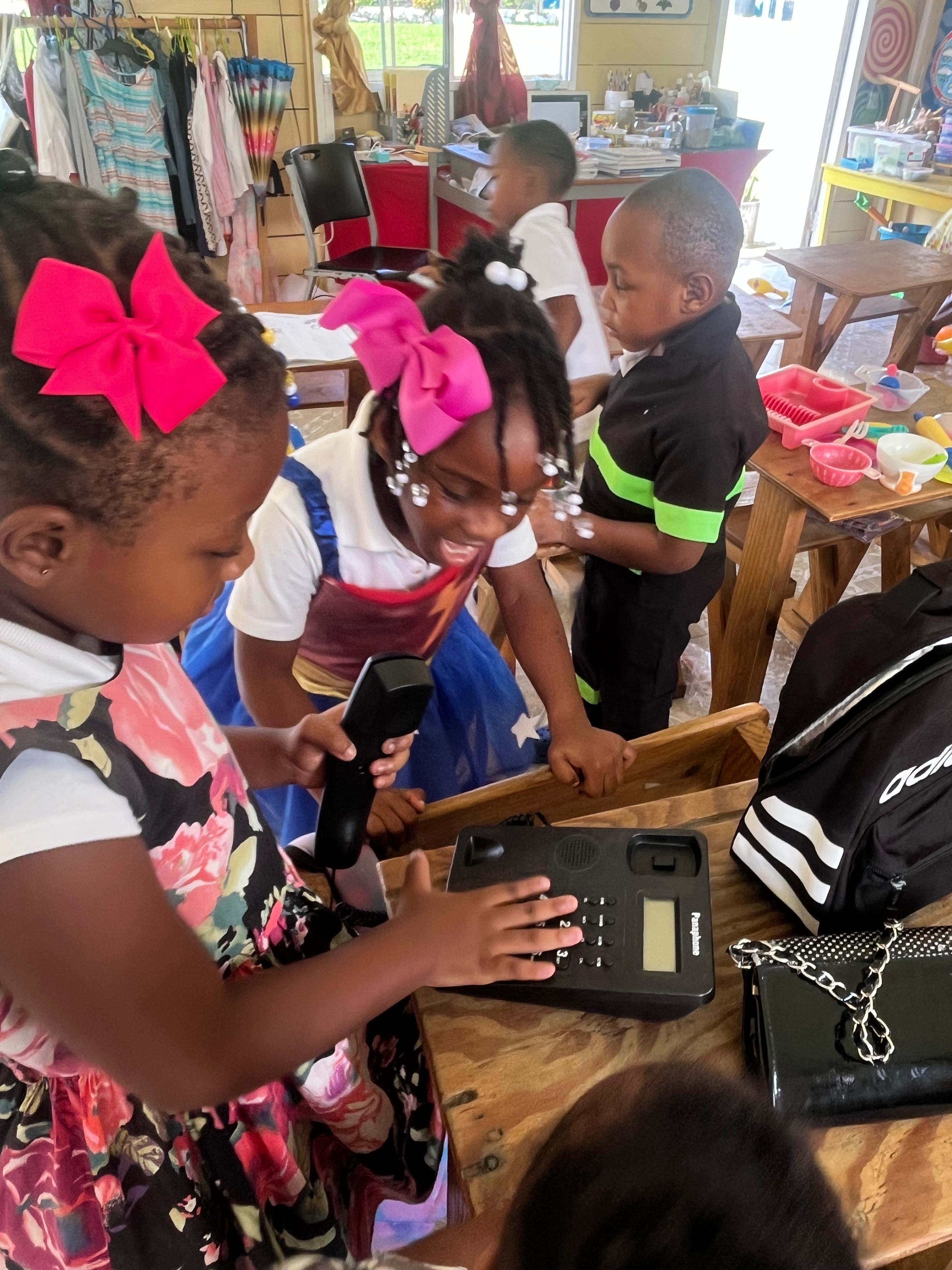
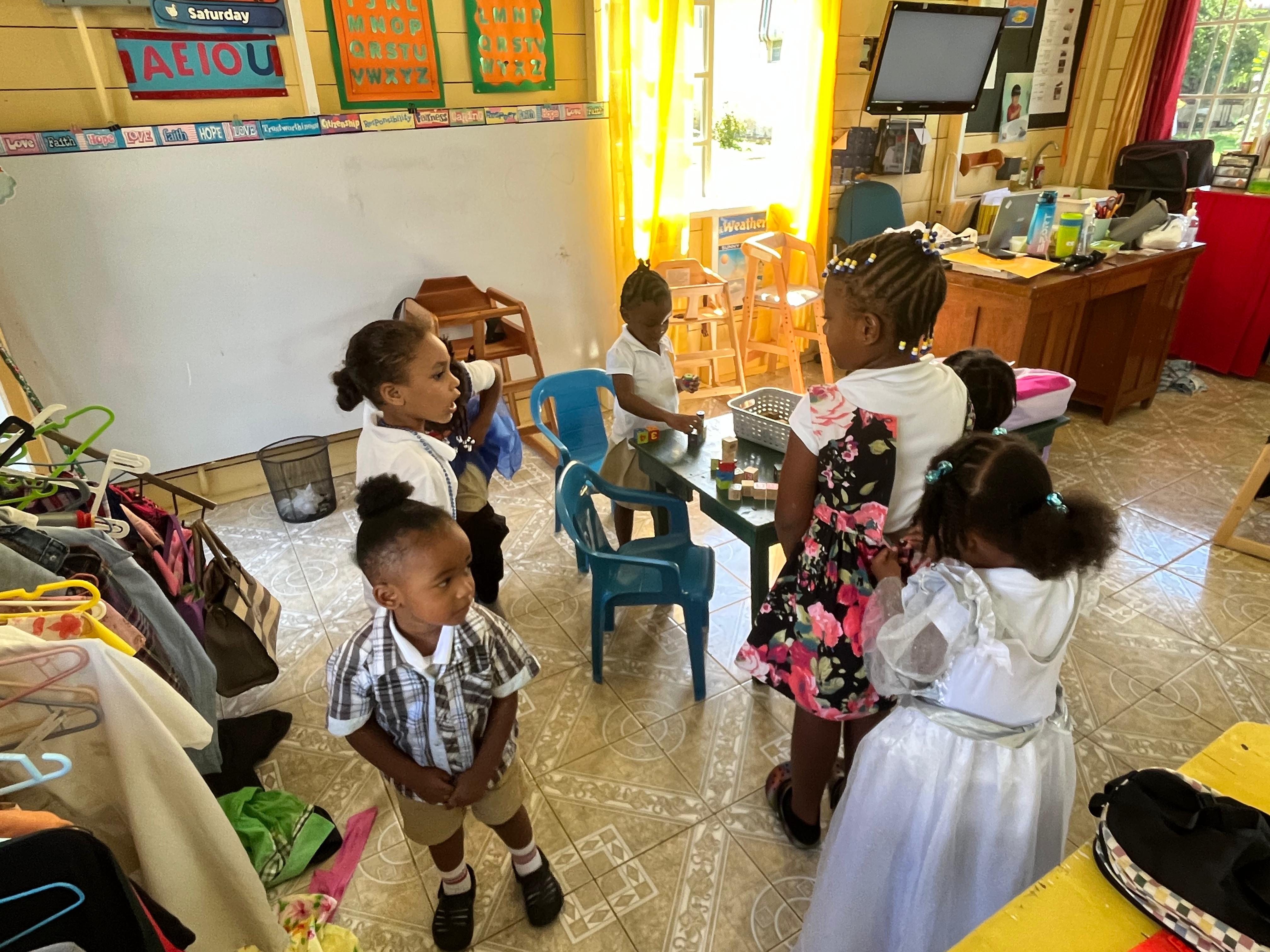
Pretend play, particularly through the simple yet impactful dress-up corner, is one of the most enjoyable ways young children learn. This fun, engaging activity allows learners to step into different roles, explore various professions, and imagine a world beyond their everyday lives. But the benefits go well beyond a child’s delightful giggles and inventive stories; let’s explore why the dress-up corner is a wonderful space for learning and growth.

1. Boosts Imagination and Creativity

Dressing up as a doctor, firefighter, chef, explorer or for different occasions allows children to create entire worlds within their minds. This kind of imaginative play is crucial as it pushes learners to think outside the box, make up stories, and develop characters. The dress-up corner becomes a stage where they can perform, dream, and expand their creative horizons.

2. Develops Social and Emotional Skills

Through role-playing, children practice empathy and understand different perspectives. For example, by playing a doctor, they explore the role of a caregiver, practising kindness and problem-solving. They also learn to cooperate with others, share costumes, and communicate effectively, building emotional intelligence that supports future relationships.

3. Enhances Language and Communication

Pretend play often includes dialogues and storytelling, which enhances vocabulary and sentence structure. As children describe who they are and what they’re doing, they practice language in context, building strong communication skills. This is particularly helpful for young learners, as they engage in conversations that expand their expressive language.

4. Improves Problem-Solving Skills

Pretend play scenarios often present “problems” to solve: How will the chef serve the hungry customers? What does the firefighter do in an emergency? These imaginary situations encourage children to think critically and make decisions, strengthening their ability to handle challenges in real-life situations.

5. Builds Confidence and Self-Esteem

Trying on various roles helps children build confidence as they discover new strengths and abilities. Playing a leader, a helper, or a brave hero helps them feel empowered and capable. Over time, these experiences can reinforce a child’s belief in their potential, making them more self-assured in other areas of life.

6. Encourages Fine and Gross Motor Skills Development

From buttoning a jacket to tying a scarf or slipping shoes, dressing up encourages children to practice fine motor skills. Moving around, acting out roles, or pretending to carry items helps develop gross motor skills, strengthening their coordination and physical abilities.

Creating Your Own Dress-Up Corner as a Parent

Setting up a dress-up corner is simple and can be done with a few costumes or even repurposed household items. Offer clothes representing different characters or professions, and let the child’s imagination do the rest! With various options and gentle guidance, a dress-up corner can become an inspiring learning environment, sparking joy and supporting essential childhood development at school and home.

Let’s Make National Children’s Day 2024 Memorable for our Little Ones!

Tip: Celebrate your children today by treating them.

As we strive to make this day extraordinary for our children, I’m excited to share some unique ways we can treat them, going beyond the usual gifts and activities.

Here are some treats that will take your children into the future that they will thank us for:

Apply for their TRN: Gather the necessary documents today, set a day next week when they are on mid-term break, take them to the tax office, and complete the process.

Apply for their passport: Download and fill out the application today; it’s available online.

Ensure full immunization: If your child is not fully immunized, take them to the nearest health centre. The amazing nurses are eager to assist you, such as those at the Grange Hill Health Centre. You may also choose to use a private paediatrician.

Open a savings account or investment: Consider the Sammy Saver’s Club offer by the Credit Union or other suitable options to start saving for their future.

Family connections: Take your children to meet family members. Utilise video calls for instances where distance is a challenge.

Seek the best educational opportunities: Make a decision to seek the best educational opportunities for the children for the new school term.

Plan summer experiences: Begin to plan their summer experiences to ensure they are enriching and enjoyable.

Teach future skills: Teach your children skills that will benefit them in the future, such as coding, financial literacy, or problem-solving.

Dental check-ups: Ensure they visit the dentist regularly to maintain good oral health.

Specialised medical care: For those who are ill, take them to the paediatrician rather than a general practitioner to ensure they receive specialised care.

Learning and personality assessments: Guide your children in taking the following tests, which will provide relevant insights:

A learning style test – https://www.lovetoknow.com/parenting/kids/learning-style-test-children

A personality test- -https://www.proprofs.com/quiz-school/story.php?title=your-kids-personality-type

Special needs assessment: If you suspect that your child has special needs, seek to get him/her assessed.

Educational resources: For worksheets that are age-appropriate, visit With Auntie Nats. www.withauntienats.com

Church involvement: Get your children involved in church to help them develop a sense of community and spiritual growth.

These treats will help prepare your children for the future, equipping them with essential documents, skills, and experiences they will appreciate as they grow.

From Auntie Nats with love.

Empowering Minds: Navigating Addition with a Student on the Autism Spectrum

Today’s focus was on continuing our exploration of addition. With my student demonstrating a solid grasp of numbers from 1 to 9 and a budding number sense, I saw it as the perfect opportunity to introduce the concept of addition.

Navigating the Fundamentals of Addition in the World of Autism

In our first lesson, we began by familiarizing ourselves with the plus sign, an essential symbol in the world of addition. Through repetition and visual aids, my student began to recognize and name the symbol with increasing confidence.

Moving forward to our second lesson, we delved into reading the first half of addition equations. We practiced identifying the numbers involved in the addition process, such as in 3 + 4 or 7 + 2, laying a foundational understanding.

In lesson three, we introduced the concept of the equal sign, a pivotal step in comprehending the balance inherent in addition equations. After revisiting the skills learned in the previous lesson, we incorporated the equal sign into our equation readings, such as in 3 + 4 =.

During this journey, my student encountered challenges, as is common in the learning process. There were moments of difficulty differentiating between the plus and equal signs, leading to moments of frustration. However, through supportive guidance and reassurance, we navigated these obstacles together.

I vividly recall one such moment when my student looked at me with a mixture of determination and desperation, seeking assistance in remembering. It was a powerful reminder of the importance of personalized support and encouragement in the learning process.

Although we encountered setbacks along the way, we celebrated small victories, such as the one captured in the video from today’s session. Witnessing my student’s progress and sense of accomplishment serves as a testament to the effectiveness of breaking down concepts into manageable segments.

Teaching learners in small, digestible segments has proven to be an effective approach, allowing for incremental progress and meaningful engagement. As we continue our journey together, I am inspired by the resilience and determination demonstrated by my student, reinforcing my commitment to providing tailored support and fostering a love for learning.

Engaging my student with autism has been a rewarding journey of patience, understanding, and tailored instruction.

Today’s focus was on continuing our exploration of addition. With my student demonstrating a solid grasp of numbers from 1 to 9 and a budding number sense, I saw it as the perfect opportunity to introduce the concept of addition.

In our first lesson, we began by familiarizing ourselves with the plus sign, an essential symbol in the world of addition. Through repetition and visual aids, my student began to recognize and name the symbol with increasing confidence.

Moving forward to our second lesson, we delved into reading the first half of addition equations. We practiced identifying the numbers involved in the addition process, such as in 3 + 4 or 7 + 2, laying a foundational understanding.

In lesson three, we introduced the concept of the equal sign, a pivotal step in comprehending the balance inherent in addition equations. After revisiting the skills learned in the previous lesson, we incorporated the equal sign into our equation readings, such as in 3 + 4 =.

During this journey, my student encountered challenges, as is common in the learning process. There were moments of difficulty differentiating between the plus and equal signs, leading to moments of frustration. However, through supportive guidance and reassurance, we navigated these obstacles together.

I vividly recall one such moment when my student looked at me with a mixture of determination and desperation, seeking assistance in remembering. It was a powerful reminder of the importance of personalized support and encouragement in the learning process.

Although we encountered setbacks along the way, we celebrated small victories, such as the one captured in the video from today’s session. Witnessing my student’s progress and sense of accomplishment serves as a testament to the effectiveness of breaking down concepts into manageable segments.

Teaching learners in small, digestible segments has proven to be an effective approach, allowing for incremental progress and meaningful engagement. As we continue our journey together, I am inspired by the resilience and determination demonstrated by my student, reinforcing my commitment to providing tailored support and fostering a love for learning.