Little Hands at Work: The Power of Ripping Paper to Develop Fine Motor Skills

At Jabneh Christian Academy, the zone of optimal performance, we believe that every moment holds the potential for learning—and that even the simplest activities can lay a powerful foundation for lifelong growth. One such activity that often goes unnoticed, yet plays a crucial role in early childhood development, is ripping paper.

Yes, you read that right! That crumpled piece of scrap paper or yesterday’s newspaper can become a tool of transformation in your child’s hands.

What Are Fine Motor Skills and Why Do They Matter?

Fine motor skills involve the use of small muscles in the hands and fingers. These skills are essential for tasks such as writing, buttoning, tying shoelaces, and even feeding oneself. When children strengthen these muscles early, they are better prepared for academic tasks like pencil grip and handwriting—and for confidently navigating everyday life.

How Ripping Paper Helps

Ripping paper may look like play, but it’s actually a valuable sensory and muscle-building activity. It:

  • Builds hand and finger strength
  • Enhances hand-eye coordination
  • Encourages bilateral coordination (using both hands together)
  • Stimulates creativity and focus

At school, we incorporate this activity during art, letter formation exercises, and even in calming sensory play. The joy on the children’s faces as they tear and explore is matched by the quiet progress they are making in their developmental journey.

Ideas for Parents: Turn Tearing Into Teaching

We encourage our Resilient Parents to support this learning at home! Here are some fun, simple ways to do that:

  • Tear and Paste Art: Give your child different coloured paper to tear and glue onto shapes, letters, or numbers.
  • Texture Play: Use materials like tissue, newspaper, construction paper, cereal boxes and cardboard to explore how different papers tear.
  • Tear to Create: Make flowers, animals, or even collages—no scissors needed!
  • Bible Story Collage: After reading a story, let your child create a scene using torn paper to retell it.

A Word of Encouragement

In a world filled with screens and fast-paced routines, pausing for a paper-tearing session may seem small—but it’s a beautiful invitation for your child to explore, engage, and grow. Let’s partner together in these tiny, intentional moments that shape our icons into confident, capable learners.

Together, at school and at home, we are raising mighty builders—one little rip at a time.

With grace and growth,
Rev. Dr. Natasha Francis-Campbell
“Train up a child in the way he should go…” – Proverbs 22:6

The Power of Pretend Play: Unlocking Learning in the Dress-Up Corner with Auntie Nats

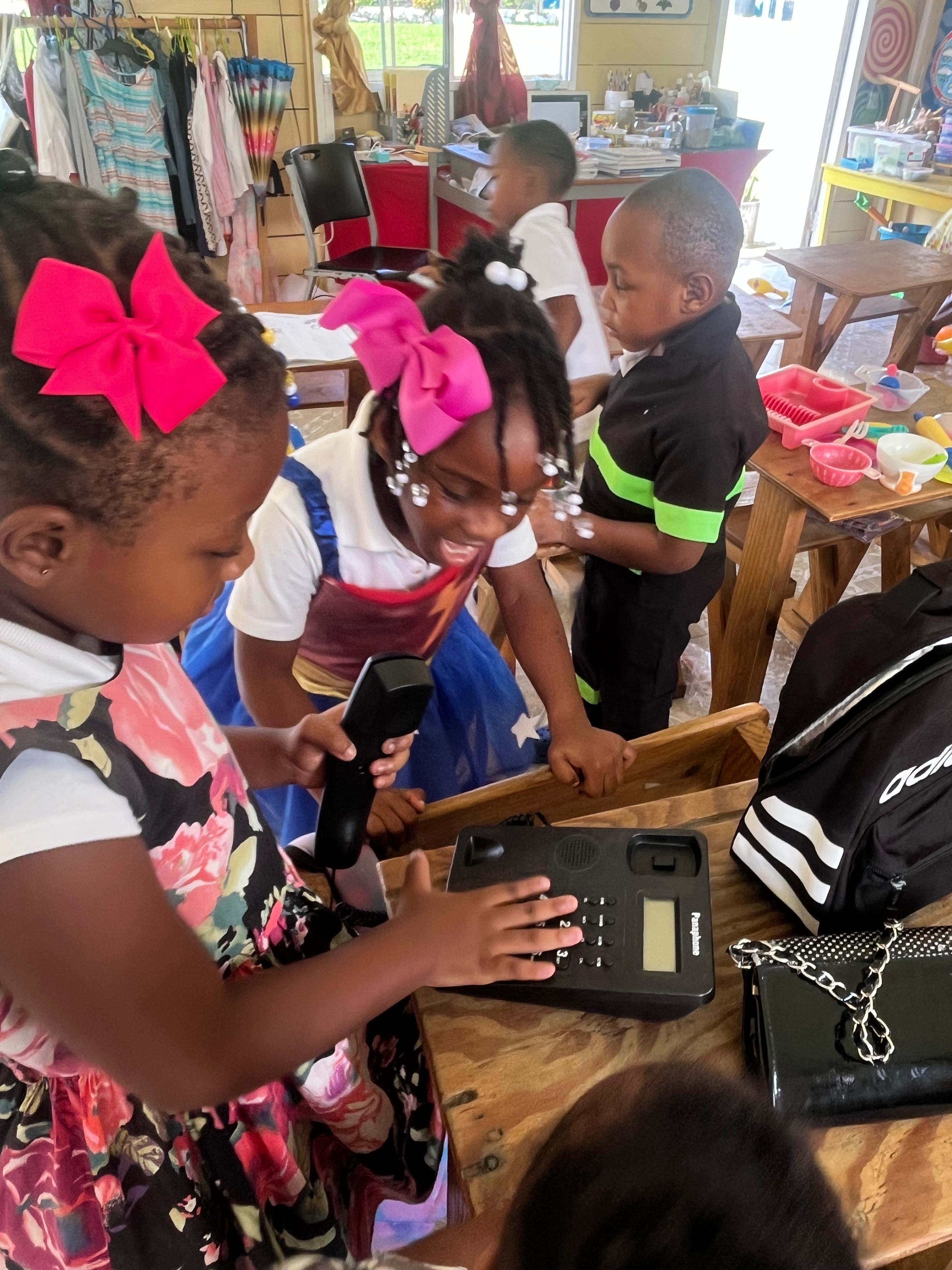
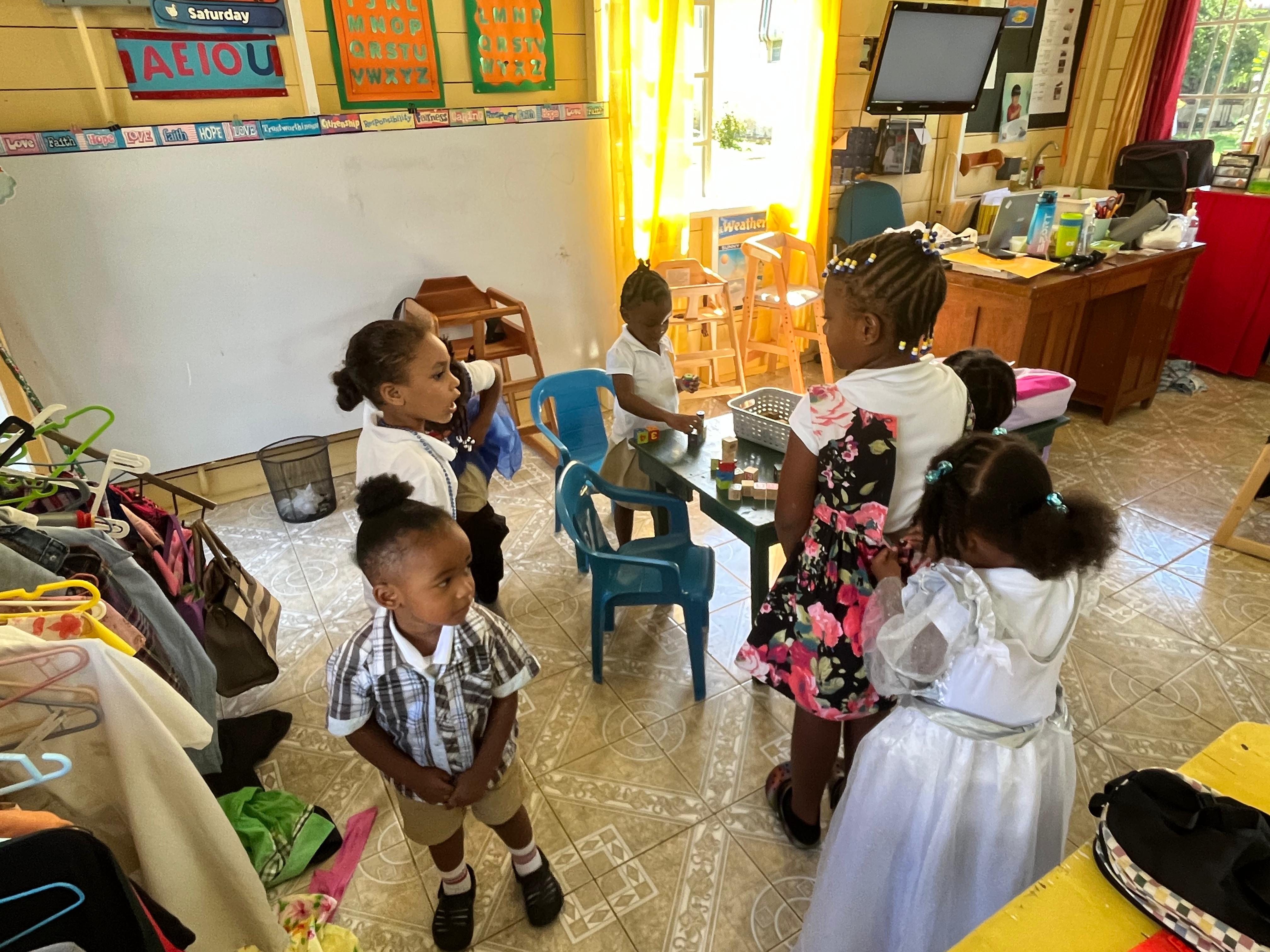
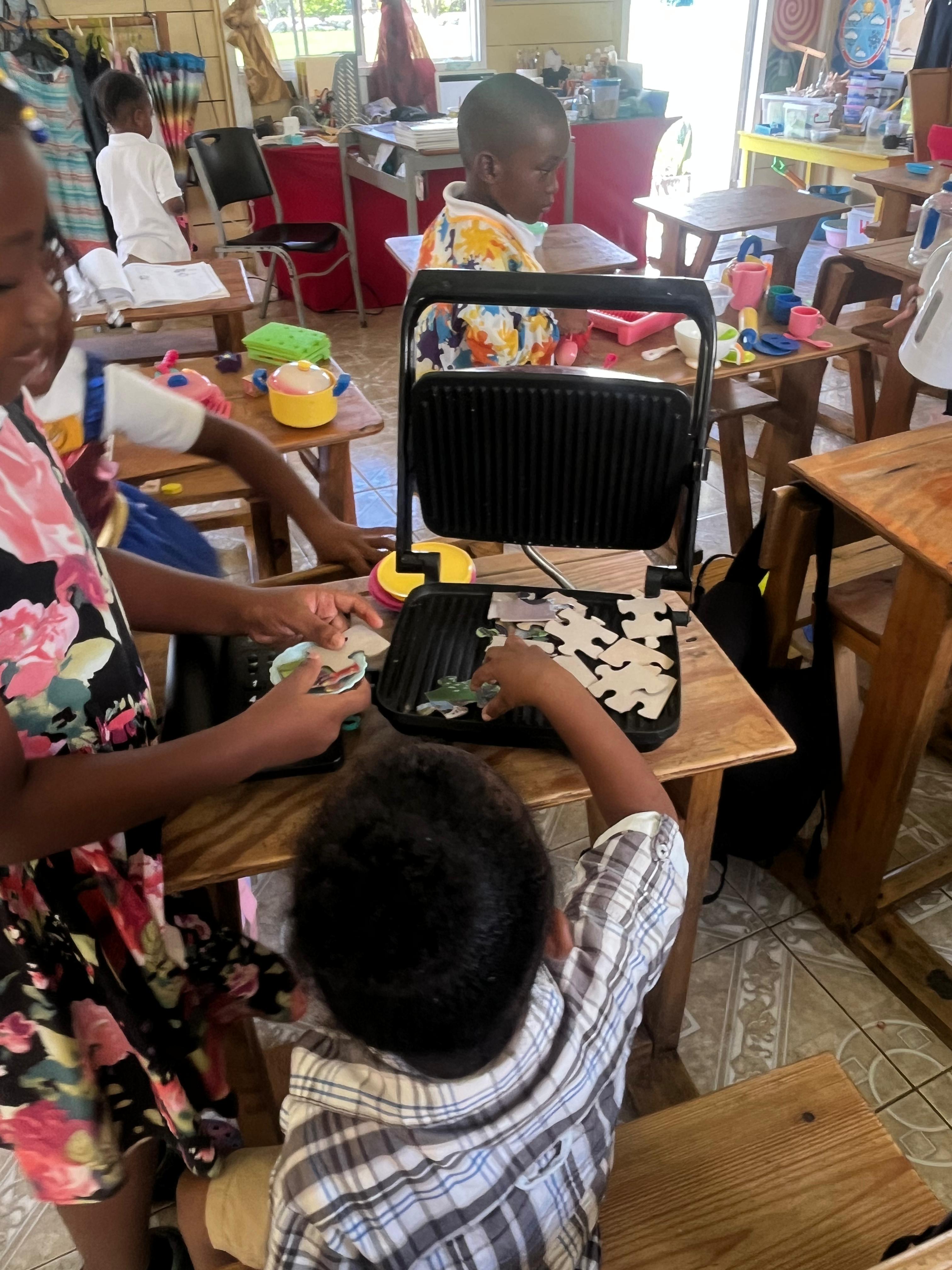
Pretend play, particularly through the simple yet impactful dress-up corner, is one of the most enjoyable ways young children learn. This fun, engaging activity allows learners to step into different roles, explore various professions, and imagine a world beyond their everyday lives. But the benefits go well beyond a child’s delightful giggles and inventive stories; let’s explore why the dress-up corner is a wonderful space for learning and growth.

1. Boosts Imagination and Creativity

Dressing up as a doctor, firefighter, chef, explorer or for different occasions allows children to create entire worlds within their minds. This kind of imaginative play is crucial as it pushes learners to think outside the box, make up stories, and develop characters. The dress-up corner becomes a stage where they can perform, dream, and expand their creative horizons.

2. Develops Social and Emotional Skills

Through role-playing, children practice empathy and understand different perspectives. For example, by playing a doctor, they explore the role of a caregiver, practising kindness and problem-solving. They also learn to cooperate with others, share costumes, and communicate effectively, building emotional intelligence that supports future relationships.

3. Enhances Language and Communication

Pretend play often includes dialogues and storytelling, which enhances vocabulary and sentence structure. As children describe who they are and what they’re doing, they practice language in context, building strong communication skills. This is particularly helpful for young learners, as they engage in conversations that expand their expressive language.

4. Improves Problem-Solving Skills

Pretend play scenarios often present “problems” to solve: How will the chef serve the hungry customers? What does the firefighter do in an emergency? These imaginary situations encourage children to think critically and make decisions, strengthening their ability to handle challenges in real-life situations.

5. Builds Confidence and Self-Esteem

Trying on various roles helps children build confidence as they discover new strengths and abilities. Playing a leader, a helper, or a brave hero helps them feel empowered and capable. Over time, these experiences can reinforce a child’s belief in their potential, making them more self-assured in other areas of life.

6. Encourages Fine and Gross Motor Skills Development

From buttoning a jacket to tying a scarf or slipping shoes, dressing up encourages children to practice fine motor skills. Moving around, acting out roles, or pretending to carry items helps develop gross motor skills, strengthening their coordination and physical abilities.

Creating Your Own Dress-Up Corner as a Parent

Setting up a dress-up corner is simple and can be done with a few costumes or even repurposed household items. Offer clothes representing different characters or professions, and let the child’s imagination do the rest! With various options and gentle guidance, a dress-up corner can become an inspiring learning environment, sparking joy and supporting essential childhood development at school and home.

Let’s Make National Children’s Day 2024 Memorable for our Little Ones!

Tip: Celebrate your children today by treating them.

As we strive to make this day extraordinary for our children, I’m excited to share some unique ways we can treat them, going beyond the usual gifts and activities.

Here are some treats that will take your children into the future that they will thank us for:

Apply for their TRN: Gather the necessary documents today, set a day next week when they are on mid-term break, take them to the tax office, and complete the process.

Apply for their passport: Download and fill out the application today; it’s available online.

Ensure full immunization: If your child is not fully immunized, take them to the nearest health centre. The amazing nurses are eager to assist you, such as those at the Grange Hill Health Centre. You may also choose to use a private paediatrician.

Open a savings account or investment: Consider the Sammy Saver’s Club offer by the Credit Union or other suitable options to start saving for their future.

Family connections: Take your children to meet family members. Utilise video calls for instances where distance is a challenge.

Seek the best educational opportunities: Make a decision to seek the best educational opportunities for the children for the new school term.

Plan summer experiences: Begin to plan their summer experiences to ensure they are enriching and enjoyable.

Teach future skills: Teach your children skills that will benefit them in the future, such as coding, financial literacy, or problem-solving.

Dental check-ups: Ensure they visit the dentist regularly to maintain good oral health.

Specialised medical care: For those who are ill, take them to the paediatrician rather than a general practitioner to ensure they receive specialised care.

Learning and personality assessments: Guide your children in taking the following tests, which will provide relevant insights:

A learning style test – https://www.lovetoknow.com/parenting/kids/learning-style-test-children

A personality test- -https://www.proprofs.com/quiz-school/story.php?title=your-kids-personality-type

Special needs assessment: If you suspect that your child has special needs, seek to get him/her assessed.

Educational resources: For worksheets that are age-appropriate, visit With Auntie Nats. www.withauntienats.com

Church involvement: Get your children involved in church to help them develop a sense of community and spiritual growth.

These treats will help prepare your children for the future, equipping them with essential documents, skills, and experiences they will appreciate as they grow.

From Auntie Nats with love.

Understanding the Impact of Attachment Relationships on Children’s Emotional Development: Building Secure Foundations for Lifelong Well-being

Rev. Dr Natasha R. Francis-Campbell, April 22, 2024

Attachment relationships are crucial in children’s emotional
development, providing a foundation for their sense of security, trust, and
emotional well-being. Attachment theory, developed by John Bowlby and
expanded upon by Mary Ainsworth, emphasizes the importance of early
relationships with caregivers in shaping children’s emotional and social
development. Here’s how attachment relationships impact children’s
emotional development:

Formation of Secure Base: Attachment relationships serve as a secure
base from which children can explore the world and develop
independence. When caregivers are responsive, consistent, and
emotionally available, children feel safe and secure, allowing them to
confidently explore their environment and interact with others.
Emotional Regulation: Secure attachment relationships provide a
buffer against stress and promote the development of emotional
regulation skills. When children feel securely attached to their
caregivers, they are better able to regulate their emotions, manage
stress, and cope with challenging situations. Caregivers serve as
emotional regulators, providing comfort, reassurance, and support
during times of distress.
Formation of Internal Working Models: Attachment relationships
shape children’s internal working models of themselves, others, and
relationships. Securely attached children develop positive internal
working models, believing themselves to be worthy of love and capable
of forming close relationships with others. These internal working models
influence children’s expectations about how relationships should function
and guide their interactions with others throughout life.
Social and Emotional Competence: Secure attachment relationships
provide a foundation for the development of social and emotional
competence. Children who feel securely attached to their caregivers
tend to have better social skills, empathy, and emotional intelligence.
They are more likely to form positive relationships with peers,
communicate effectively, and resolve conflicts constructively.

Resilience and Coping Skills: Secure attachment relationships
contribute to children’s resilience and ability to cope with adversity.
When children have a secure base of support from caregivers, they are
better equipped to navigate life’s challenges, setbacks, and transitions.
They develop confidence in their ability to seek help and support when
needed, fostering resilience and adaptive coping strategies.
Impact on Mental Health: Secure attachment relationships are
associated with positive mental health outcomes in children. Research
has shown that children who experience secure attachment tend to have
lower rates of anxiety, depression, and behavioural problems. They are
also more likely to develop a positive sense of self-esteem and self-
worth.
Continuity into Adulthood: The quality of attachment relationships
established in childhood continues to influence emotional development
into adulthood. Securely attached individuals tend to have healthier
relationships, higher levels of emotional well-being, and greater overall
life satisfaction. Conversely, insecure attachment patterns may persist
into adulthood and contribute to difficulties in forming and maintaining
close relationships.
Attachment relationships play a critical role in children’s emotional
development, providing a secure base for exploration, promoting
emotional regulation, shaping internal working models, fostering social
and emotional competence, building resilience, and influencing mental
health outcomes. By understanding the importance of attachment
relationships, caregivers, educators, and policymakers can support
children’s emotional well-being and promote positive developmental
outcomes from infancy through adulthood.