At Jabneh Christian Academy, we do not assign tasks simply to complete a curriculum requirement. We design learning experiences that shape the mind, strengthen character, and prepare our icons for life.
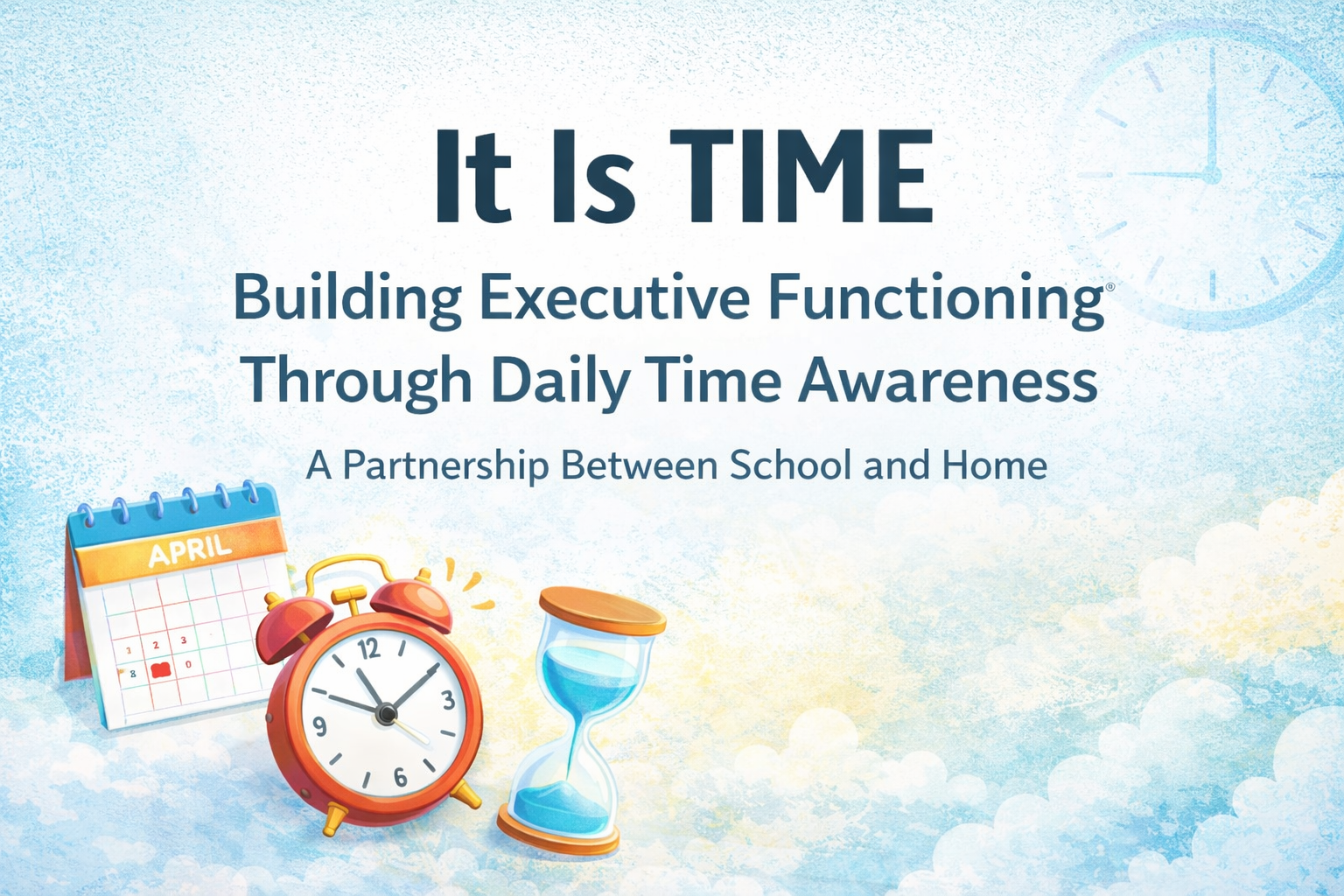
This week, our Grade 1 and 2 icons are becoming Time Detectives. On the surface, it may look like vocabulary practice. Words such as hour, minute, past, present, future, calendar, breakfast, noon, and midnight may seem simple. However, beneath the list of words lies something far deeper.
We are developing executive functioning.
Executive functioning refers to the brain-based skills that help children plan, organise, remember, regulate themselves, and manage time. These are the skills that determine whether a child can transition smoothly, follow instructions, wait their turn, and think before responding.
Let us examine what is really happening when your icon practises time words at home.
When your child identifies the date each morning, they are strengthening working memory. They must recall the month, remember yesterday’s date, and process today’s change.
When they explain what happened in the past, what is happening in the present, and what will happen in the future, they are practising cognitive flexibility. Their brain shifts between time frames and organises events in sequence.
When they plan a simple Saturday schedule or describe their bedtime routine, they are building planning and organisational skills. These are foundational executive functions.
When they understand that lunch comes after morning and dinner comes after afternoon, they develop a sense of time awareness. Time awareness reduces anxiety and improves self-regulation because the child begins to anticipate what comes next.
This is not just vocabulary. This is brain architecture.
In our recent parent meeting, we discussed executive functioning and its impact on learning. The Time Detective task is one practical way we can strengthen these skills together. The school introduces the structure. Home reinforces it in real life.
Here is how you can support effectively:
Allow your icon to think before answering. Resist correcting too quickly. Ask open-ended questions. Encourage them to explain their reasoning.
Five to ten intentional minutes daily can build habits that support long-term academic success.
Time language builds order. Order builds regulation. Regulation builds confidence.
At Jabneh, we intentionally nurture minds. We enlighten understanding thoughtfully. We build foundations that last.
Resilient Parents, it is time. Not simply to learn about time, but to shape the executive skills that will serve your icon for life.
One of the most powerful habits a person can develop, whether a student or an adult, is the discipline of finishing what they start. Many people begin with excitement, strong intentions, and hopeful plans, yet only a few follow through to completion. The future, however, is not shaped by what we start. It is shaped by what we finish.
The Bible reminds us of this principle clearly: “Being confident of this, that he who began a good work in you will carry it on to completion until the day of Christ Jesus.” (Philippians 1:6, NIV)
God Himself is a finisher. He does not abandon what He begins, and He invites us to reflect that same character in our daily lives.
Why Finishing Matters
Every unfinished assignment, abandoned goal, or half completed responsibility quietly trains the mind to accept incompletion as normal. Over time, this weakens discipline and creates gaps between potential and performance. Finishing, on the other hand, builds integrity. It teaches patience, resilience, and responsibility, qualities that are essential for guarding the future.
For students, finishing what you start might look like completing an assignment even when it feels difficult, practising a skill consistently, or preparing properly for an exam instead of cutting corners. Those small decisions accumulate and determine long-term outcomes. A single unfinished task may seem insignificant, yet repeated patterns of incompletion can close doors to future opportunities.
For adults, the same principle applies. Relationships, commitments, studies, projects, and even personal growth journeys require follow through. Many regrets are not rooted in failure, but in abandonment. What was started had promise, yet it was never carried through to maturity.
Finishing Guards the Future
The future is closer than we often realise. It is not a distant place waiting years ahead. It is built in the choices we make today. When we finish what we start, we protect tomorrow from the consequences of today’s neglect. Discipline today prevents regret tomorrow.
Consider a student who cheats because preparation was delayed or abandoned. That momentary decision may cost examinations, reputation, and future opportunities. In contrast, a student who perseveres through discomfort and completes the work honestly safeguards their future with integrity intact.
Scripture warns us against careless beginnings without thoughtful endings: “Suppose one of you wants to build a tower. Won’t you first sit down and estimate the cost to see if you have enough money to complete it?” (Luke 14:28, NIV)
Wisdom plans with completion in mind. Starting well is important, but finishing well is what truly matters.
A Personal Reflection: When Incompletion Costs Opportunity
I learned this principle personally in a very real way. Many years ago, I completed a literacy text that I was deeply proud of. Alongside it, I had begun writing a teacher and parent guide that would include lesson plans for every page. The purpose of the guide was clear. It would help users understand the author’s intent and apply the strategies effectively, so learners could achieve the best results.
The text was completed. The guide was started. Yet, I did not finish it.
Then COVID-19 arrived. Private schools were hit hard. Many parents struggled to understand the value of continuing to pay fees amid constant adjustments and uncertainty. In response, I had to find a strategy that would keep the school community together and functioning. That strategy involved using the very guide I had never completed.
Since the guide was unfinished, I ended up selling individual guide pages to parents based on what their children needed to cover each week. Instead of confidently marketing a complete, well-structured product, I was forced to write continuously just to meet immediate demand. What could have been a season of expansion and impact became a season of pressure and catch-up.
The opportunity was there. The need was real. The product had potential. Yet my failure to finish what I started limited how fully I could step into that moment. Incompletion did not stop progress entirely, but it reduced effectiveness, reach, and long-term gain.
That experience taught me a lasting lesson. Finishing is not just about closure. It is about readiness. When you do not finish, you may still move forward, but often with unnecessary strain, missed opportunities, and delayed growth.
This is why finishing what you start is so important. It guards the future by ensuring that when opportunity comes, you are prepared to meet it fully, confidently, and without regret.
Cultivating the Habit of Completion
Finishing what you start does not require perfection. It requires consistency. It means returning to the task even after enthusiasm fades. It means choosing effort over excuses and responsibility over convenience. This habit strengthens character and creates stability in both academic and personal life.
When we practise finishing, we align ourselves with God’s nature as a faithful finisher. We become people who can be trusted, relied upon, and entrusted with greater responsibility.
A Call to Action
Whether you are a student learning foundational habits or an adult shaping legacy decisions, let this principle guide you.
Start with intention.
Continue with discipline.
Finish with integrity.
In doing so, you are not just completing tasks. You are guarding your future.
At Jabneh Christian Academy, we encourage our icons and our wider community to develop habits that protect tomorrow. Finishing what you start is one of those habits. Choose it daily, and watch how it shapes your path forward.
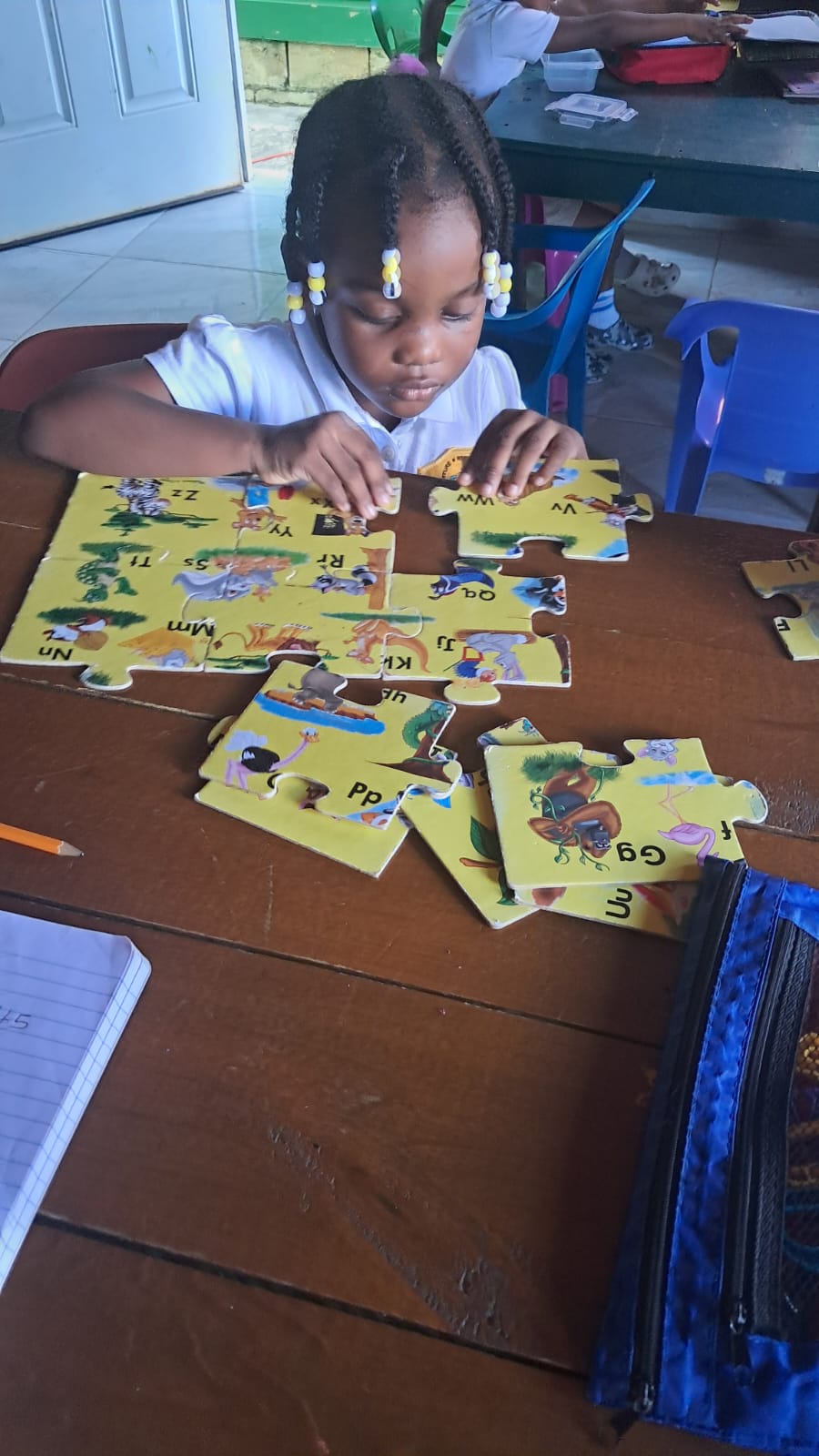
Yesterday as two of our icons quietly completed puzzles, the moment became more than just an early childhood activity. It became a living symbol of our journey as a school community as we put the pieces back together in the aftermath of Hurricane Melissa.
Melissa, a fierce category 5 hurricane, did not simply scatter debris. She scattered routines, learning spaces, teaching materials, emotional stability and the familiar rhythms of school life. For educational institutions like Jabneh Christian Academy that were ravaged by her angry winds and torrential rainfall, recovery has been a puzzle in every sense of the word.
Some pieces fit easily.
Some pieces are harder to place.
Some pieces are still missing.
Yet the picture is slowly taking shape again.
What Rebuilding Looks Like in Education After a Storm
1. Learning Continues in Unfamiliar Spaces
Classrooms may be gone, but the mission remains. Cafeterias become learning hubs, porches become reading corners and makeshift spaces become sanctuaries of resilience. Children adapt faster than adults, reminding us that a classroom is defined by purpose, not walls.
2. Emotional Restoration Takes Centre Stage
Icons are processing fear, confusion and loss. Teachers are not only delivering lessons but also providing stability, reassurance, counselling and calm. A simple puzzle becomes therapy. A conversation becomes healing. A smile becomes a victory.
3. Teaching Resources Must Be Recreated
Books were soaked, charts destroyed and learning tools blown away. What remains is creativity, resourcefulness and a determination to rebuild. Teachers lean on partnership, donations and innovation to restore what was lost.
4. Safety Becomes a Daily Priority
Every day begins and ends with risk assessment. Where can the icons sit? Which areas are secure? What repairs must be prioritised? Reopening school becomes an act of faith, planning and collective effort.
5. Community Support Becomes a Lifeline
Parents, volunteers, churches, neighbours and well-wishers form the framework that holds the school together. Rebuilding is a communal task because recovery cannot be done in isolation.
6. Hope Becomes an Educational Value
Our icons learn that storms come, but storms pass. Their little hands planting seeds, colouring storm stories, or completing puzzles are reminders that life can be rebuilt one piece at a time.
The Puzzle Metaphor: Why It Matters
A puzzle teaches patience.
A puzzle teaches focus.
A puzzle teaches that brokenness can become beauty again.
Every piece matters.
Every effort counts.
Every small win is a step forward.
Just as our icons’ puzzles came together piece by piece, so will our buildings, our programmes, our mental well-being and our sense of normalcy. We are not where we want to be yet, but we are putting the picture back together.
Moving Forward With Courage
Educational institutions across the hurricane belt know this truth well: rebuilding takes time, but rebuilding is possible. Melissa did not erase our excellence, our calling or our commitment. She only revealed the strength within us.
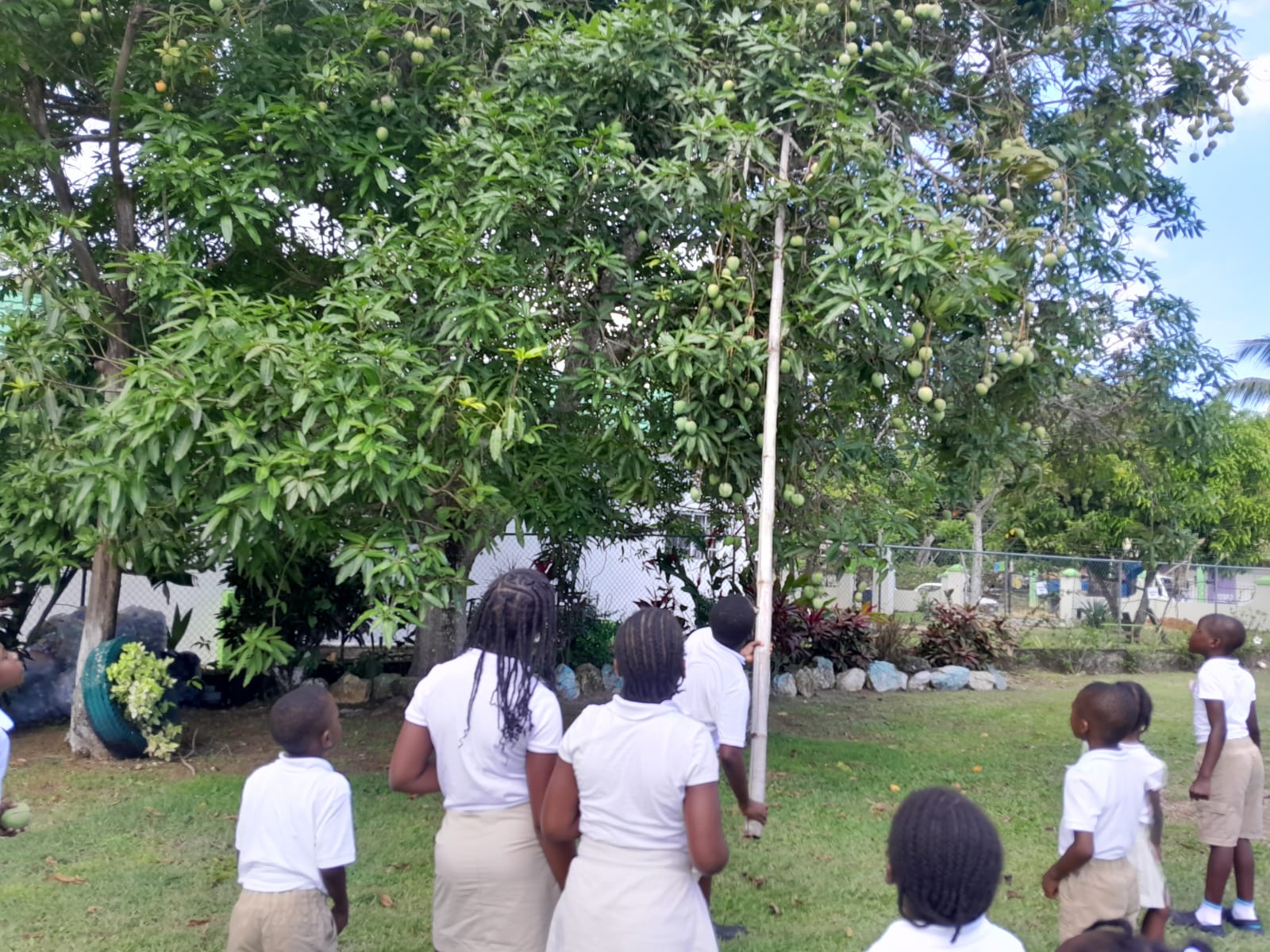
At Jabneh Christian Academy, learning often happens beyond the classroom walls. One such unforgettable experience took place under the golden sunshine as our icons ventured outdoors to pick mangoes. What may have seemed like a simple fruit-picking activity quickly unfolded into a powerful, hands-on lesson in patience, stewardship, fairness, and the beauty of God’s provision.
As the icons approached the mango tree, excitement bubbled over. Some jumped joyfully at the sight of ripe mangoes hanging low, while others eagerly pointed out the larger ones perched just out of reach. However, an important value-based structure was introduced before any fruit could be picked: take turns, share, and ensure everyone receives before taking more.
This simple guideline turned fruit-picking into a classroom of character-building. Icons learned to wait patiently, cheer each other on, and celebrate everyone’s little victories. Some even became mango spotters and pickers, helping others find the best ones within reach. Others stood guard to protect the younger mangoes and budding limbs from being damaged.
In a time when instant gratification is the norm, this experience reminded our icons that not everything good comes quickly. They had to assess each mango’s readiness—Was it mature enough? Was it too green? Could it ripen at home? Through this, they engaged in critical thinking and discernment while learning how to appreciate natural growth and timing.
Beyond the mango tree, this moment opened the door to discussions about:
Fruits in Season: Icons began to understand the rhythm of nature—how every fruit has its season and why eating fruits in their season is healthier, more sustainable, and budget-friendly.
Planting Trees at Home: If space allows, planting fruit trees at home gives icons the chance to nurture something that gives back. Caring for a tree instils responsibility, a connection to creation, and an appreciation for food sources beyond the supermarket. Imagine each icon waking up to check his/her tree’s progress—watering it, shielding it from harm, and joyfully anticipating the fruits of their labour.
Caring for the Earth: Through this one tree, they learned the more significant lesson of stewardship—taking care of what we have, not just for ourselves, but for others and for future generations.
As they walked back, mangoes in hand and hearts full of joy, one could see it clearly—this wasn’t just about fruit. It was about fruitfulness in every sense of the word. Kindness was harvested. Patience was plucked. Responsibility bloomed. Joy overflowed.
So, let’s keep planting—not just trees, but seeds of wisdom, care, and compassion. One mango moment at a time.
Have you bought the Courageous Hearts book for your icon? If not, today is a good.
See you in the next blog or in one of the Avoiding the Way of Fools books.
At Jabneh Christian Academy, the zone of optimal performance, we believe that every moment holds the potential for learning—and that even the simplest activities can lay a powerful foundation for lifelong growth. One such activity that often goes unnoticed, yet plays a crucial role in early childhood development, is ripping paper.
Yes, you read that right! That crumpled piece of scrap paper or yesterday’s newspaper can become a tool of transformation in your child’s hands.
What Are Fine Motor Skills and Why Do They Matter?
Fine motor skills involve the use of small muscles in the hands and fingers. These skills are essential for tasks such as writing, buttoning, tying shoelaces, and even feeding oneself. When children strengthen these muscles early, they are better prepared for academic tasks like pencil grip and handwriting—and for confidently navigating everyday life.
How Ripping Paper Helps
Ripping paper may look like play, but it’s actually a valuable sensory and muscle-building activity. It:
Builds hand and finger strength
Enhances hand-eye coordination
Encourages bilateral coordination (using both hands together)
Stimulates creativity and focus
At school, we incorporate this activity during art, letter formation exercises, and even in calming sensory play. The joy on the children’s faces as they tear and explore is matched by the quiet progress they are making in their developmental journey.
Ideas for Parents: Turn Tearing Into Teaching
We encourage our Resilient Parents to support this learning at home! Here are some fun, simple ways to do that:
Tear and Paste Art: Give your child different coloured paper to tear and glue onto shapes, letters, or numbers.
Texture Play: Use materials like tissue, newspaper, construction paper, cereal boxes and cardboard to explore how different papers tear.
Tear to Create: Make flowers, animals, or even collages—no scissors needed!
Bible Story Collage: After reading a story, let your child create a scene using torn paper to retell it.
A Word of Encouragement
In a world filled with screens and fast-paced routines, pausing for a paper-tearing session may seem small—but it’s a beautiful invitation for your child to explore, engage, and grow. Let’s partner together in these tiny, intentional moments that shape our icons into confident, capable learners.
Together, at school and at home, we are raising mighty builders—one little rip at a time.
With grace and growth, Rev. Dr. Natasha Francis-Campbell “Train up a child in the way he should go…” – Proverbs 22:6


 Jabneh Christian Academy