Putting the Pieces Back Together: Learning, Healing and Rebuilding After Melissa with Auntie Nats

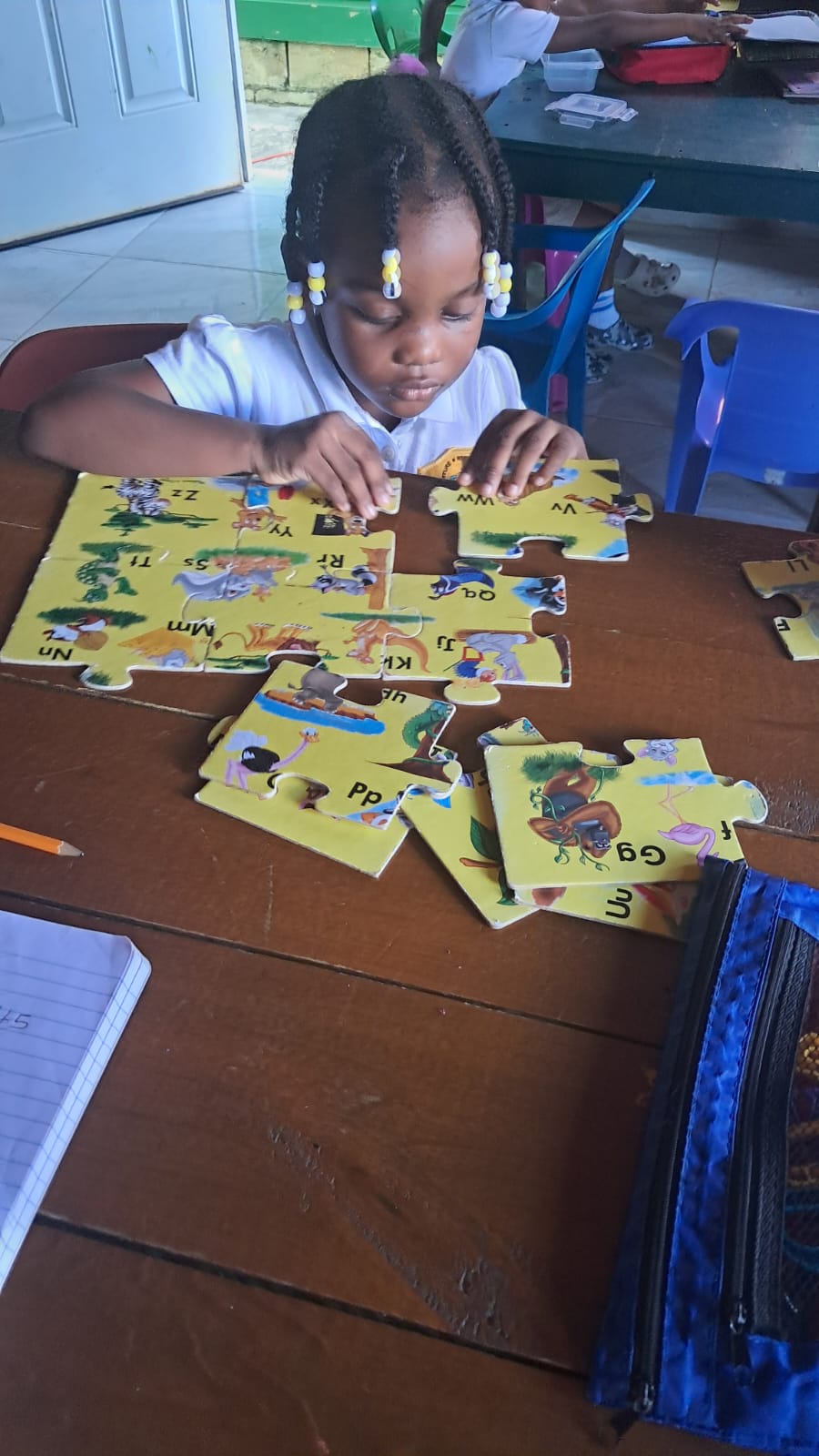
Yesterday as two of our icons quietly completed puzzles, the moment became more than just an early childhood activity. It became a living symbol of our journey as a school community as we put the pieces back together in the aftermath of Hurricane Melissa.

Melissa, a fierce category 5 hurricane, did not simply scatter debris. She scattered routines, learning spaces, teaching materials, emotional stability and the familiar rhythms of school life. For educational institutions like Jabneh Christian Academy that were ravaged by her angry winds and torrential rainfall, recovery has been a puzzle in every sense of the word.

Some pieces fit easily.

Some pieces are harder to place.

Some pieces are still missing.

Yet the picture is slowly taking shape again.

What Rebuilding Looks Like in Education After a Storm

1. Learning Continues in Unfamiliar Spaces

Classrooms may be gone, but the mission remains. Cafeterias become learning hubs, porches become reading corners and makeshift spaces become sanctuaries of resilience. Children adapt faster than adults, reminding us that a classroom is defined by purpose, not walls.

2. Emotional Restoration Takes Centre Stage

Icons are processing fear, confusion and loss. Teachers are not only delivering lessons but also providing stability, reassurance, counselling and calm. A simple puzzle becomes therapy. A conversation becomes healing. A smile becomes a victory.

3. Teaching Resources Must Be Recreated

Books were soaked, charts destroyed and learning tools blown away. What remains is creativity, resourcefulness and a determination to rebuild. Teachers lean on partnership, donations and innovation to restore what was lost.

4. Safety Becomes a Daily Priority

Every day begins and ends with risk assessment. Where can the icons sit? Which areas are secure? What repairs must be prioritised? Reopening school becomes an act of faith, planning and collective effort.

5. Community Support Becomes a Lifeline

Parents, volunteers, churches, neighbours and well-wishers form the framework that holds the school together. Rebuilding is a communal task because recovery cannot be done in isolation.

6. Hope Becomes an Educational Value

Our icons learn that storms come, but storms pass. Their little hands planting seeds, colouring storm stories, or completing puzzles are reminders that life can be rebuilt one piece at a time.

The Puzzle Metaphor: Why It Matters

A puzzle teaches patience.

A puzzle teaches focus.

A puzzle teaches that brokenness can become beauty again.

Every piece matters.

Every effort counts.

Every small win is a step forward.

Just as our icons’ puzzles came together piece by piece, so will our buildings, our programmes, our mental well-being and our sense of normalcy. We are not where we want to be yet, but we are putting the picture back together.

Moving Forward With Courage

Educational institutions across the hurricane belt know this truth well: rebuilding takes time, but rebuilding is possible. Melissa did not erase our excellence, our calling or our commitment. She only revealed the strength within us.

Piece by piece, we rise.

Piece by piece, we rebuild.

Piece by piece, we become stronger than before.

Planting Seeds that Last: Parents, Teachers, and God’s Design for Growth

October 13,2025 | Rev. Dr. Natasha Francis-Campbell, author of Parenting with Wisdom: Avoidiing the way of Fools

I planted the seed, Apollos watered it, but God has been making it grow.
1 Corinthians 3:6 (NIV)

Every good garden begins with a seed, but before that seed can thrive, someone must plant it. In the same way, every child’s development begins at home with the parents. God has entrusted mothers and fathers with the sacred role of planting the first seeds of character, faith, and learning. These are the earliest lessons a child ever receives. Lessons spoken not only through words but also through daily interactions, love, and example.

The home is the first classroom, and parents are the first teachers. Before a child can hold a pencil or recognise a number, they have already absorbed so much from the environment created by their parents. From the tone of your voice to the way you handle frustration, your child is learning. These moments form the fertile soil where seeds of trust, curiosity, and self-worth are planted.

Research supports what Scripture already teaches. According to the Cleveland Clinic, early child development occurs across multiple domains — physical, cognitive, emotional, social, and moral. Each domain requires intentional nurturing. The Tanoto Foundation also highlights that early stimulation and caregiving play a vital role in shaping a child’s character and lifelong outlook. Every bedtime story, every shared prayer, every word of encouragement becomes part of that sacred process of planting.

Then, as children grow, teachers and caregivers come alongside to water what was planted. The role of educators is not to replace the parent, but to complement and strengthen what began at home. When a teacher celebrates your child’s progress, corrects with patience, or encourages creative thinking, they are watering the seeds of potential you’ve already sown. Together, parents and teachers form a partnership designed by God, each one working in alignment with His purpose.

Still, even as we plant and water, the verse reminds us of a truth we must never forget: “God gives the increase.” Growth, the transformation of a tender seed into a flourishing tree, belongs to Him alone. Parents may sometimes feel anxious or discouraged when progress seems slow or when challenges arise, but we must rest in the assurance that God is at work beneath the surface, even when we cannot see it.

Our responsibility is faithfulness. Faithful planting. Faithful watering. Faithful praying. God’s responsibility is fruitfulness. He alone breathes life into what we nurture.

Dear parent, never underestimate the power of your influence. The seeds you plant today, seeds of faith, kindness, discipline, and perseverance, will bear fruit in due time. Whether your child becomes a scientist, an artist, or a leader, it is the values and love sown early that will guide their growth. Your role is not small; it is sacred. You are the planter in God’s garden of generations.

Therefore, continue to speak words of life over your child. Continue to model love and patience. Continue to trust God’s process, even through tears and uncertainty. As you plant, know that others, teachers, caregivers, mentors, and friends will come along to water. Yet, only God can bring the increase that turns potential into purpose.

Reflection Prayer for Parents

Heavenly Father,
Thank You for entrusting us with the gift of parenthood and the privilege of planting seeds in the hearts of our children.
Teach us to plant with love, to nurture with wisdom, and to trust You with the results.
Help us to create homes filled with peace, learning, and faith, where our children can flourish in Your presence.
Bless the teachers and caregivers who come alongside us to water these seeds with care.
May we work together in unity and humility, knowing that You alone bring the growth.
Strengthen every parent who feels weary, and remind us that our labour in You is never in vain.
In Jesus’ name, Amen.

Setting the Tone for Success: A Parent’s Guide to the New School Year

Jabneh Christian Academy
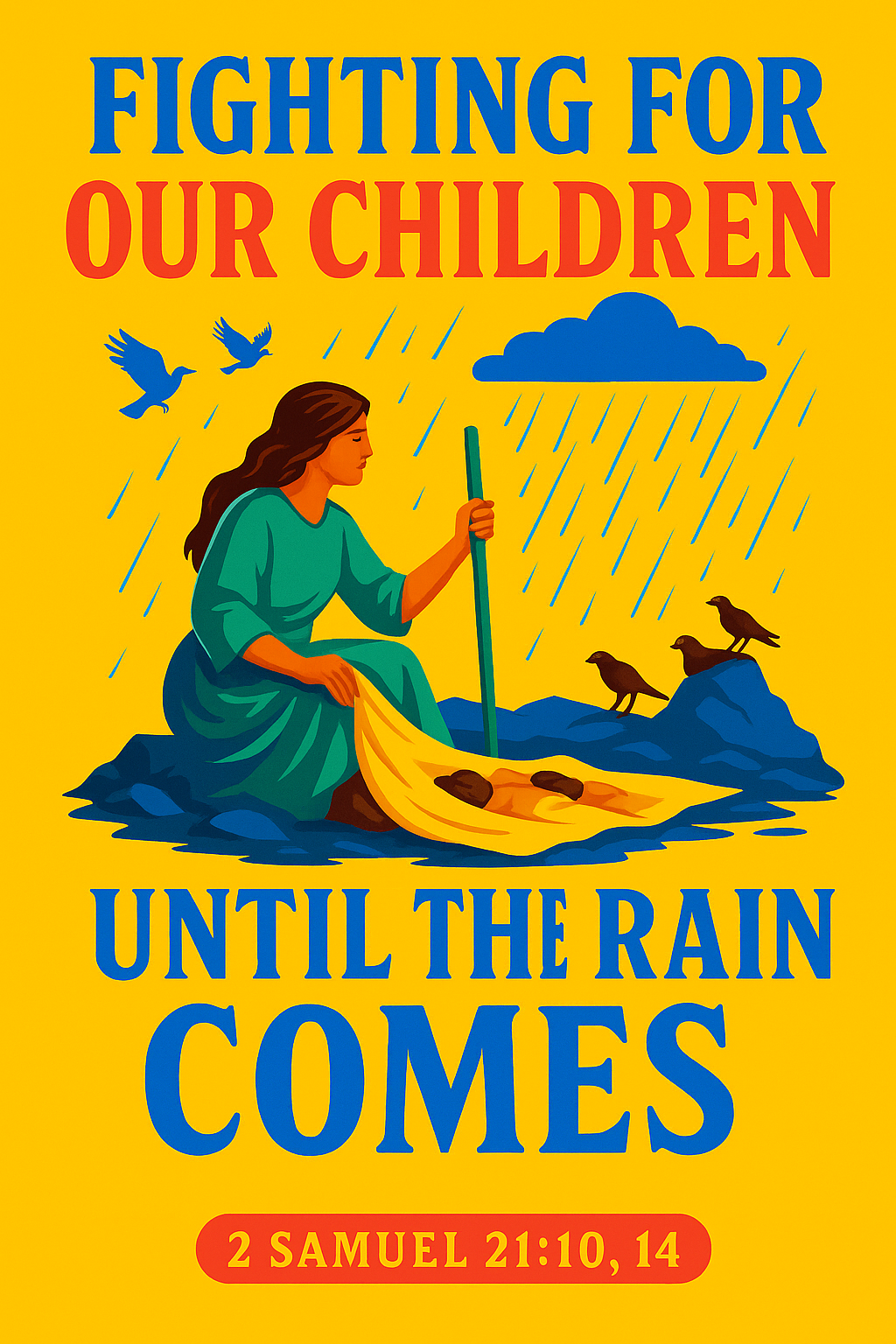
Theme 2025–2026: “Fighting for Our Children Until the Rain Comes” (2 Samuel 21:10, 14)
Term 1 Sub-theme: “Standing on the Rock – Establishing Firm Foundations in Prayer, Discipline, and Values.”

The first days of school set the stage for the months ahead. At Jabneh Christian Academy, we believe that success does not happen by accident. It is built on prayer, partnership, and a consistent approach. As resilient parents, you play a vital role in shaping your icon’s school journey. Here are some practical ways to set the right tone from the very start:

1. Establish God-Centred Routines

Begin and end each day with prayer. Invite your icon to thank God for the new day and ask for His strength to stand firm, just as Rizpah stood on the rock until the rain came. Consistent spiritual routines help your child understand that school is not just about academics, but also about character and destiny.

2. Value the Timetable

The school timetable is more than a schedule—it is a tool for responsibility. Review it with your icon each evening. This simple step reduces morning stress and teaches accountability. Encourage your child to prepare their bag, uniform, and materials the night before.

3. Create a Home Learning Space

Even though textbooks remain at school, your icon will still need a quiet, prepared space to complete homework and review lessons. A small desk or table with minimal distractions can communicate: “This is my place to focus.”

4. Build Independence, Not Dependence

It is tempting to do everything for your child, especially on busy mornings. Yet true love teaches independence. Encourage your icon to manage simple tasks: packing their bag, tying their shoes, or setting out their clothes. As we say at Jabneh, “We should never reduce children’s ability by doing too much for them. That is not the loving thing to do.”

5. Guard Your Words and Atmosphere

Children absorb more than we realise. Speak words of blessing, encouragement, and resilience. A calm, positive home atmosphere helps them walk into school with confidence and a readiness to learn. Remember: the tone you set at home echoes in the classroom.

6. Partner with the School

Our Zone of Optimal Performance works best when parents and teachers each give their 50%. Stay connected through school updates, respond promptly to notices, and support classroom expectations at home. Together, we are fighting for our children until the rain comes.

The new school year is a fresh opportunity to lay strong foundations. Resilience, courage, integrity, and faith are not just value words; they are life skills that will shape your icon’s future. As parents, you are not spectators; you are co-builders. Let us stand on the Rock together and watch God send the rain of blessing over our icons.

Prayer
Lord, thank You for the gift of my child. Help me set the right tone at home, model resilience, and partner faithfully with Jabneh. May this school year be filled with growth, excellence, and Your rain of blessing. In Jesus’ name, Amen

Fighting for Our Children Until the Rain Comes

Reflections from the Parents and Teachers’ Conference 2025–2026


Scripture: “Rizpah, daughter of Aiah, took sackcloth and spread it out for herself on a rock. From the beginning of the harvest till the rain poured down from the heavens on the bodies, she did not let the birds touch them by day or the wild animals by night… After that, God answered prayer on behalf of the land.” (2 Samuel 21:10, 14)

At Jabneh Christian Academy, we entered this new school year under a powerful charge from Scripture: “Fighting for Our Children Until the Rain Comes.”

This theme was at the heart of our Parents and Teachers’ Conference. We gathered as staff, board members, and resilient parents and were reminded of Rizpah’s vigil in 2 Samuel 21. She spread sackcloth on a rock and stood guard, refusing to allow the birds or beasts to devour her sons. Her persistence and faith stirred the king to act, and eventually, God sent the rain.

Like Rizpah, we too are called to stand guard over our children. Our fight is not physical but spiritual, moral, and practical. It is the fight to protect hearts and minds, to build strong values, to discipline in love, and to resist the culture of neglect and nonchalance that robs children of their destiny.

The Zone of Optimal Performance

At Jabneh, we describe our partnership as a 50-50 covenant. Parents and school must walk hand in hand. Excellence cannot be sustained if one side is weak. When we both give our best, our children, the icons of God’s kingdom, will soar into their full potential.

A Prayer for the Rain

As we move forward, we do so with faith that God will honour our watchfulness. Like Rizpah, we will not give up until the rain comes: the rain of favour, blessing, growth, and success over every child, every home, and every aspect of Jabneh Christian Academy.

“Lord, give us the vigilance of Rizpah, the wisdom of David, and the unity of Your Spirit as we fight for our children. May the rain of Your blessing pour upon this institution and upon the lives of our icons. In Jesus’ name, Amen.”

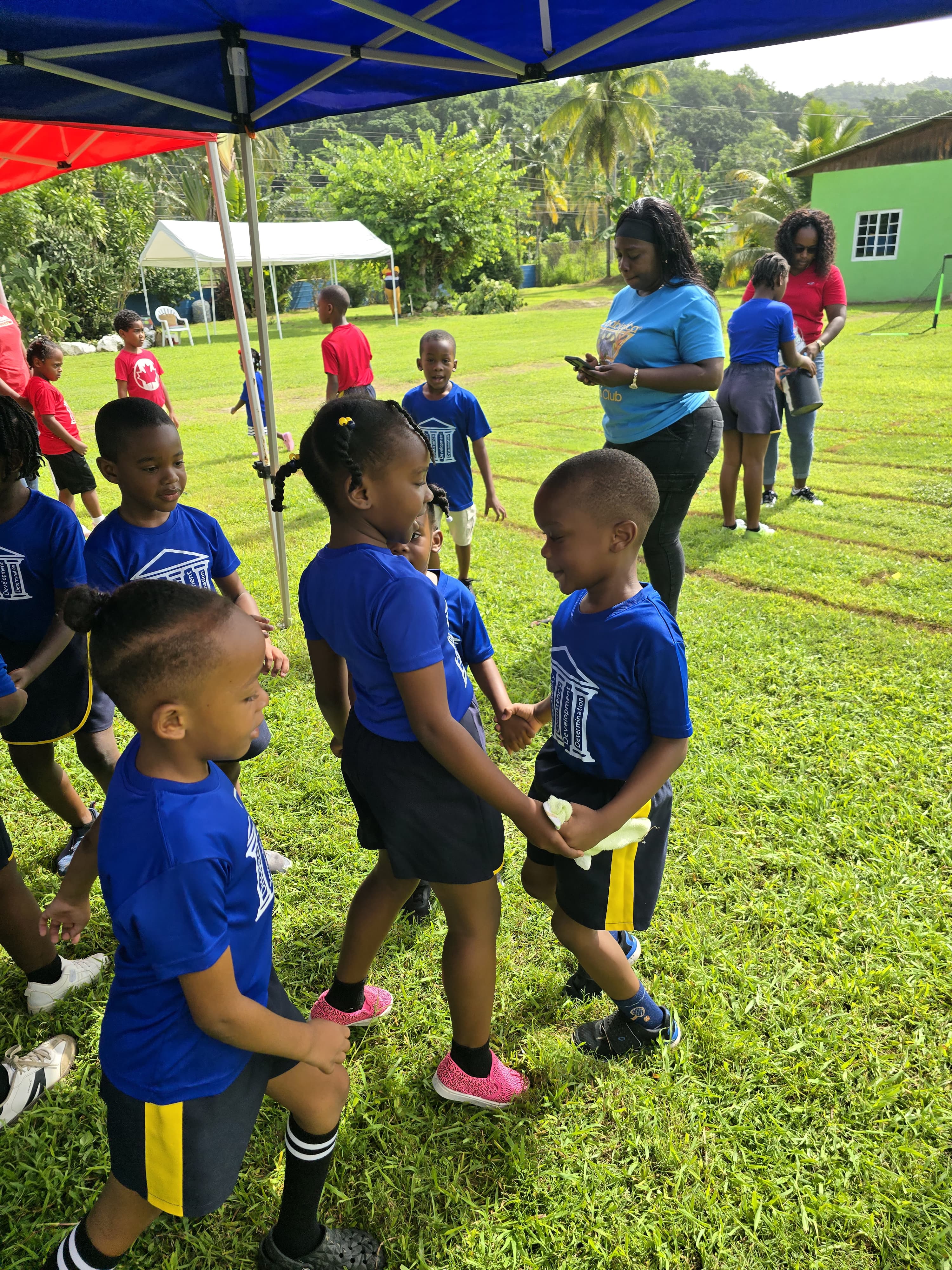
Sports Day the Jabneh Way

At Jabneh Christian Academy, everything we do is intentional, every moment, every event, every icon. Sports Day is no different. While it is filled with fun and excitement—even happening on the last day of school—our focus remains on development, inclusion, and celebrating growth. For us, Sports Day is a platform to highlight abilities, build capacity, and reinforce key developmental goals.

As a school, we begin planning immediately and prayerfully, drawing on the creative nature of our God to inspire us to do better with each passing year. We are inviting our parents to join us in this effort. Consider incorporating some of the developmental activities you saw on Sports Day into your home routines. Revisit the posts and updates we’ve shared throughout the school year. Let’s work together to strengthen the icons’ growth beyond the classroom.

We are incredibly proud of every icon who participated. Even those who didn’t win in every race displayed tremendous effort, and we saw their abilities. At Jabneh, inclusion is not optional; it is our culture. We celebrate every icon.

To the parents who came out, you were like sparks of joy and encouragement. Thank you.

To our tuck shop supporters, thank you for your contributions to the day’s success.

To Uncle Mark, who stayed behind to ensure everything was secured, thank you.

To our PTA President, Auntie Christina, who took the time to clean the classroom, thank you.

To Auntie Kerry-Ann D., thank you for returning to wash items used during the day.

To Auntie Chriss-Ann, our dedicated volunteer marshal, thank you.

To Uncle Jakim, who prepared the entire track and football field on his own days leading up to the event and assisted in training the icons for the events, then on the day, managed the music, jumping events, ball throws, refereed the football match, and even handled the digital finish line, thank you for your tireless and passionate service.

To Auntie Jurlyn, thank you for that delicious pudding!

To Uncle Kirk—word has it the Avoiding the Way of Fools mocktail was refreshing and uplifting. Thank you, and thank you to Auntie Nicola for your labour of love in the cafeteria.

Auntie Rita, our faithful fritters maker, your hard work, humility, and love for Jabneh do not go unnoticed. Thank you.

Auntie Roshelle—juggling work and Sports Day, and assisted in making snow cones, thank you.

Indeed, we are one big family. We give thanks for every effort made in love, every task completed in excellence, and every hand extended in support.

See you all on Tuesday at the Prize-giving and Award Ceremony.  Come out and support your icons, The Jabneh Way.

Never Underestimate a Learner: The Power of Multigrade Classrooms

By Auntie Nats | Jabneh Christian Academy Blog

At Jabneh Christian Academy, we believe that every child is capable of greatness when placed in a nurturing, value-rich environment. One of the unique aspects of our learning culture is our multigrade classroom setting, where learners of varying ages share the same space, engage with the same environment, and often encounter the same challenges, each at his or her own level of readiness.

Recently, a beautiful moment captured the heart of what we believe. During a lesson designed for our 5-year-old icons focused on understanding the concept of a dozen, the class was asked to complete a culminating task: Draw twelve triangles.

In the same room sat one of our three-year-old icons—a quiet observer, not expected to complete the task. Though he has not yet mastered the art of writing his name, he attentively listened, watched, and participated fully. When the task was completed, there on his page were twelve carefully drawn triangles, his best attempt, and a successful one.

This wasn’t just an exercise in shapes. It was a profound reminder:
Never underestimate a learner. Growth doesn’t always announce itself with fanfare. Sometimes, it shows up humbly, in a triangle drawn by a three-year-old.

What Multigrade Learning Offers

1. Exposure Breeds Expansion
Younger learners benefit from hearing advanced vocabulary, witnessing higher-level thinking, and absorbing rhythms of instruction beyond their current level. The 3-year-old’s ability to grasp the concept of a dozen was sparked by exposure.

2. Peer Modelling Encourages Progress
Older students naturally model behaviours, language, and strategies that younger ones observe and imitate. It creates a learning loop where leadership and growth thrive simultaneously.

3. Confidence and Independence Grow
In multigrade settings, students take initiative, challenge themselves, and step into tasks even when not directly instructed. This self-starting behaviour is a critical life skill.

4. Differentiated Learning is the Norm
Rather than rigid grade expectations, multigrade learning emphasises readiness. Students progress based on capability, not age.

5. Development Is Multi-Dimensional
Beyond academics, learners gain emotional resilience, social adaptability, and fine motor coordination. This task developed counting, shape recognition, and visual-motor skills—all unprompted.

More Than a Triangle

This icon may not yet write his name independently, but in that moment, he demonstrated initiative, understanding, and ability. In a traditional setting, this may have been missed. In our multigrade environment, it was celebrated.

At Jabneh, we teach beyond grade levels—we teach hearts, minds, and potential.

Multigrade classrooms remind us that teaching is not about holding children back until they’re “ready,” but about inviting them forward into possibility. Every child is on a journey. Every moment is a chance to rise.

To parents, educators, and caregivers:
May this be your reminder to pay attention to what your child is becoming, not just what they can already do.

There’s greatness growing quietly in every corner of the room.

Blowing Up Possibilities: What Balloons Taught Our Icons Today at Jabneh

At Jabneh Christian Academy, learning doesn’t always look like pencils and paper. Sometimes, it looks like laughter, bright colours, and puffed cheeks as icons try their very best to blow up balloons.

Yes, today we blew balloons — and no, it wasn’t just for fun. It was a lesson.

The three-year-old icons tackled what seemed like a simple task, inflating a balloon, but discovered that this activity was both fun-filled and surprisingly challenging, requiring patience, effort, coordination, and perseverance.

Some blew a few times, and it was done. Others took several tries. Some didn’t get it at all after trying my ways.

So, what did blowing balloons teach us?

  • Resilience – Trying again even when it didn’t work the first (or third) time.
  • Breath Control & Focus – A subtle yet powerful way to strengthen self-regulation.
  • Celebrating Others – Icons cheered when a classmate succeeded, learning joy in shared success.
  • Team Support – Many icons encouraged and coached one another through the task.
  • Fine Motor Coordination & Strengthening Oral Muscles – It was developmental, too!

Out-of-the-Box Learning at Jabneh

We believe in this at Jabneh: learning that connects, engages, and empowers. We don’t just teach from the book—we teach beyond the book. Every moment is a teaching opportunity. Whether it’s a science experiment, a pretend market day, or today’s balloon-blowing challenge, our icons are constantly building life skills that serve them academically, socially, and spiritually.

By teaching out of the box, we invite our icons to think creatively, problem-solve, and stretch their potential in a nurturing environment grounded in faith and wisdom.

Today was more than balloons. It was a breath of determination, joy, and purpose—the Jabneh way.

We are eagerly looking forward to the weeks to come.

Mango Moments & Life Lessons: Growing Hearts One Fruit at a Time

At Jabneh Christian Academy, learning often happens beyond the classroom walls. One such unforgettable experience took place under the golden sunshine as our icons ventured outdoors to pick mangoes. What may have seemed like a simple fruit-picking activity quickly unfolded into a powerful, hands-on lesson in patience, stewardship, fairness, and the beauty of God’s provision.

As the icons approached the mango tree, excitement bubbled over. Some jumped joyfully at the sight of ripe mangoes hanging low, while others eagerly pointed out the larger ones perched just out of reach. However, an important value-based structure was introduced before any fruit could be picked: take turns, share, and ensure everyone receives before taking more.

This simple guideline turned fruit-picking into a classroom of character-building. Icons learned to wait patiently, cheer each other on, and celebrate everyone’s little victories. Some even became mango spotters and pickers, helping others find the best ones within reach. Others stood guard to protect the younger mangoes and budding limbs from being damaged.

In a time when instant gratification is the norm, this experience reminded our icons that not everything good comes quickly. They had to assess each mango’s readiness—Was it mature enough? Was it too green? Could it ripen at home? Through this, they engaged in critical thinking and discernment while learning how to appreciate natural growth and timing.

Beyond the mango tree, this moment opened the door to discussions about:

Fruits in Season: Icons began to understand the rhythm of nature—how every fruit has its season and why eating fruits in their season is healthier, more sustainable, and budget-friendly.

Planting Trees at Home: If space allows, planting fruit trees at home gives icons the chance to nurture something that gives back. Caring for a tree instils responsibility, a connection to creation, and an appreciation for food sources beyond the supermarket. Imagine each icon waking up to check his/her tree’s progress—watering it, shielding it from harm, and joyfully anticipating the fruits of their labour.

Caring for the Earth: Through this one tree, they learned the more significant lesson of stewardship—taking care of what we have, not just for ourselves, but for others and for future generations.

As they walked back, mangoes in hand and hearts full of joy, one could see it clearly—this wasn’t just about fruit. It was about fruitfulness in every sense of the word. Kindness was harvested. Patience was plucked. Responsibility bloomed. Joy overflowed.

So, let’s keep planting—not just trees, but seeds of wisdom, care, and compassion. One mango moment at a time.

Have you bought the Courageous Hearts book for your icon? If not, today is a good.

See you in the next blog or in one of the Avoiding the Way of Fools books.

Rev. Dr. Natasha Francis-Campbell

April 6, 2025

Little Hands at Work: The Power of Ripping Paper to Develop Fine Motor Skills

At Jabneh Christian Academy, the zone of optimal performance, we believe that every moment holds the potential for learning—and that even the simplest activities can lay a powerful foundation for lifelong growth. One such activity that often goes unnoticed, yet plays a crucial role in early childhood development, is ripping paper.

Yes, you read that right! That crumpled piece of scrap paper or yesterday’s newspaper can become a tool of transformation in your child’s hands.

What Are Fine Motor Skills and Why Do They Matter?

Fine motor skills involve the use of small muscles in the hands and fingers. These skills are essential for tasks such as writing, buttoning, tying shoelaces, and even feeding oneself. When children strengthen these muscles early, they are better prepared for academic tasks like pencil grip and handwriting—and for confidently navigating everyday life.

How Ripping Paper Helps

Ripping paper may look like play, but it’s actually a valuable sensory and muscle-building activity. It:

  • Builds hand and finger strength
  • Enhances hand-eye coordination
  • Encourages bilateral coordination (using both hands together)
  • Stimulates creativity and focus

At school, we incorporate this activity during art, letter formation exercises, and even in calming sensory play. The joy on the children’s faces as they tear and explore is matched by the quiet progress they are making in their developmental journey.

Ideas for Parents: Turn Tearing Into Teaching

We encourage our Resilient Parents to support this learning at home! Here are some fun, simple ways to do that:

  • Tear and Paste Art: Give your child different coloured paper to tear and glue onto shapes, letters, or numbers.
  • Texture Play: Use materials like tissue, newspaper, construction paper, cereal boxes and cardboard to explore how different papers tear.
  • Tear to Create: Make flowers, animals, or even collages—no scissors needed!
  • Bible Story Collage: After reading a story, let your child create a scene using torn paper to retell it.

A Word of Encouragement

In a world filled with screens and fast-paced routines, pausing for a paper-tearing session may seem small—but it’s a beautiful invitation for your child to explore, engage, and grow. Let’s partner together in these tiny, intentional moments that shape our icons into confident, capable learners.

Together, at school and at home, we are raising mighty builders—one little rip at a time.

With grace and growth,
Rev. Dr. Natasha Francis-Campbell
“Train up a child in the way he should go…” – Proverbs 22:6

Helping Our Icons Understand the Value of Being True, Even When No One is Watching

At Jabneh Christian Academy, we believe that character education is just as important as academics. That’s why each week, we take time to highlight a core value that helps shape our icons into people of purpose. This week, our theme for devotion is:

Integrity Leads to Trust

When children learn to live with integrity, they are choosing to be honest, dependable, and upright—no matter who’s watching.  The reward is Trust. Trust in friendships, trust in families, and trust from those around them.

We’re anchoring this week’s focus with the story of Joseph and Potiphar’s Wife from Genesis 39:1–23. Joseph did the right thing, even when it cost him something. His integrity, even when falsely accused and imprisoned, eventually led to great favour. What a powerful reminder for our children—and for us as adults too!

We’re also memorising Proverbs 22:1:
“A good name is more desirable than great riches.”
This verse reminds our icons that who they are is more valuable than anything they could own.

 When a Child Has Broken Trust

Children are still learning. Mistakes will happen. However, those mistakes can become opportunities for growth when handled with grace and wisdom.

 1. Have Honest Conversations

Help your child understand how their actions affect trust:
“When you told a lie, it made it hard for me to believe you next time.”

 2. Model Accountability

Let your child see you take responsibility too:
“I forgot something I promised, and I’m sorry. I’ll do better next time.”

 3. Teach Them How to Make It Right

Give them a chance to fix what was broken. Whether it’s an apology or a kind act, teach them that restoration matters.

 4. Give Opportunities to Rebuild

Offer small chances for them to regain trust:
“I’m trusting you to clean up your space while I step away.”

 5. Praise Progress, Not Perfection

Celebrate moments of integrity:
“You told the truth even when it was hard—that was brave and honest.”

When a Child Has Been Hurt and Needs to Rebuild Trust

Sometimes, our icons may be on the receiving end of broken trust. As caregivers and teachers, we must help them process that pain in a healthy way.

 1. Listen and Acknowledge Their Feelings

Sometimes all they need to hear is:
“I’m so sorry that happened. Your feelings are important.”

 2. Teach Healthy Boundaries

Let them know it’s okay to protect their hearts and to rebuild trust slowly.

 3. Encourage Expression

Some children open up better through drawing, storytelling, or pretend play. Create those outlets at home.

4. Reflect on Joseph’s Story

Joseph forgave his brothers and maintained his integrity in a tough situation. This story shows that even in pain, we can hold on to what’s right.

 5. Encourage Forgiveness at Their Pace

Remind them that forgiveness is more about freeing their own hearts than excusing the wrong.

 Simple Tools to Use at Home

  • Trust Jar: Place a marble in a jar each time your child displays integrity. Watch their “trust level” grow!
  • Story Chats: After reading a story (like Joseph’s), ask: “What choice did he make? What would you have done?”
  • Role-Play Repair: Practice apologizing and rebuilding trust through fun, pretend situations.

Weekly Wisdom to Hold On To

📖 “A good name is more desirable than great riches.”Proverbs 22:1
📖 “Whoever can be trusted with very little can also be trusted with much.”Luke 16:10
📖 “Be kind and compassionate to one another, forgiving each other, just as in Christ God forgave you.”Ephesians 4:32

A Word of Encouragement to You, Resilient Parents

Rebuilding trust is a process—one that takes time, love, and intentionality. With God’s help, our children can learn that integrity always pays off. Through our united effort between school and home, they will see that even when trust is broken, it can be restored.

Let’s continue to nurture the seeds of truth, character, and grace in our icons. We’re honoured to walk this journey with you.

With love and partnership,
The Jabneh Christian Academy Family