Do My Actions Agree with My Words?”

Do My Actions Agree with My Words?

The Courage to Be Honest with Ourselves

By Rev. Dr. Natasha R. Francis-Campbell (Auntie Nats)

Can you honestly say that your actions agree with your words?

It sounds like a simple question, doesn’t it? One that should require very little thought before answering. After all, who knows us better than we know ourselves?

Well, perhaps the answer is not as straightforward as we would like to believe.

Recently, at Jabneh Christian Academy, our icons, staff and I examined this very question during our devotion: “Do My Actions Agree with My Words?”

What unfolded was both revealing and thought-provoking.

As we explored the question, we discovered something that deserves far more attention than we sometimes give it. Being honest with ourselves can be surprisingly difficult, even for children.

Some found it challenging to answer. Others appeared to wrestle with what an honest response would reveal. The question required more than remembering what they had said. It required them to examine what they had actually done.

And therein lies the challenge.

We Are Often More Comfortable with Our Intentions Than Our Actions

Most of us would like to believe that we are honest, kind, respectful, responsible and dependable.

We say that we value truth, but do we always tell it?

We say that we respect others, but what happens when someone disagrees with us?

We tell our children that kindness matters, but how do we speak to them when we are frustrated?

We encourage our children to apologise, but how readily do we acknowledge our own mistakes?

We tell others that we can be trusted, but do we consistently honour our commitments?

These are not questions intended to condemn us. They are invitations to examine ourselves.

There is often a gap between who we believe we are, who we aspire to become and what our actions actually demonstrate.

The difficulty is not always that we do not know what is right. Sometimes, the difficulty is admitting that we have not done what we know is right.

Self-Honesty Is a Skill We Must Teach Our Children

One of the most significant discoveries from our discussion was that children, too, can struggle with self-honesty.

We often assume that because children are young, they are naturally open about their behaviour. Yet children, like adults, can find it uncomfortable to acknowledge a contradiction between their words and actions.

A child may insist, “I am kind,” while struggling to acknowledge having spoken unkindly to a friend.

Another may say, “I always listen,” even though following instructions remains a challenge.

A child may sincerely believe, “I am responsible,” while regularly neglecting assigned responsibilities.

Sometimes, children answer according to what they wish were true rather than what is consistently demonstrated.

This does not necessarily mean they are deliberately dishonest. Some may lack the maturity to evaluate their own behaviour accurately. Others may fear disappointing an adult, losing approval or facing consequences.

That is why teaching self-honesty requires more than telling children to speak the truth.

We must create environments in which children feel safe enough to recognise the truth about themselves.

If every admission of wrongdoing is met with humiliation, excessive anger or harsh criticism, we should not be surprised when children become skilled at defending themselves rather than examining themselves.

A child who says, “I was wrong,” has taken an important step towards growth.

Our response can either encourage that honesty or make the child reluctant to practise it again.

As educators and parents, we must help children understand that acknowledging a mistake does not make them bad people. It provides an opportunity to make a better choice.

But What About the Adults?

Here is where our discussion becomes particularly uncomfortable.

We cannot expect children to practise a level of self-honesty that we are unwilling to demonstrate.

What happens when a parent demands respect but regularly speaks disrespectfully?

What happens when a teacher insists on punctuality but consistently arrives late?

What happens when a Christian speaks passionately about love but treats others with contempt?

What happens when a leader promotes accountability but refuses correction?

Children observe these contradictions.

They may not always have the vocabulary to explain what they notice, but they are learning.

Our actions can reinforce our words, or they can undermine them.

Perhaps one of the most powerful lessons we can teach a child is to say:

“I said one thing, but I did something different. I recognise that, and I need to do better.”

Imagine the impact of a parent, teacher or leader demonstrating that kind of humility.

We would be teaching children that honesty is not merely something we demand of others. It is a discipline we practise ourselves.

The Biblical Call to Examine Ourselves

As a Christian educator, I cannot separate this discussion from the Word of God.

James 1:22 reminds us:

“But be ye doers of the word, and not hearers only, deceiving your own selves.” (KJV)

What a powerful warning!

Notice that the Scripture does not speak only about deceiving other people. It identifies the possibility of deceiving ourselves.

We can become so comfortable hearing, discussing and even teaching what is right that we fail to recognise when our own conduct contradicts it.

We may know the Scriptures, quote them confidently and encourage others to obey them, yet neglect to examine whether we are living according to those same truths.

David’s prayer in Psalm 139:23–24 offers another important perspective:

“Search me, O God, and know my heart: try me, and know my thoughts: And see if there be any wicked way in me, and lead me in the way everlasting.” (KJV)

This is a prayer of someone willing to be examined.

Not simply by others, but by God.

Self-honesty, from a Christian perspective, requires humility. It means being willing to acknowledge what God reveals about our character, motives and behaviour.

It is not enough to say that we love truth. We must be willing to confront the truth, even when it exposes something within us that needs to change.

Self-Honesty Is Not Self-Condemnation

I believe we must make this distinction, especially when working with children.

Being honest about our shortcomings does not mean defining ourselves by them.

A child who admits to being unkind is not declaring, “I am an unkind person.”

A parent who acknowledges impatience is not declaring, “I am a terrible parent.”

A teacher who recognises an area of weakness is not admitting to being an ineffective educator.

We are acknowledging behaviours that need attention.

There is a significant difference between saying, “I made a poor choice,” and believing, “I am incapable of making good choices.”

Self-honesty should lead us towards responsibility, correction and growth, not shame and hopelessness.

This is why the way we facilitate reflection matters.

Instead of merely asking a child, “Were you kind today?” we might ask, “Can you tell me about a time today when you showed kindness? Was there a time when you could have responded differently?”

Instead of demanding, “Do you always tell the truth?” we might ask, “Have you ever found it difficult to tell the truth? What made it difficult?”

These conversations encourage children to reflect on actual experiences rather than simply provide the answers they believe adults want to hear.

And we must be willing to ask ourselves equally searching questions.

The Courage to Answer Honestly

Our discussion at Jabneh reminded me that self-honesty is not necessarily automatic. It requires intentional development.

We must learn to examine ourselves without immediately making excuses, blaming others or defending our intentions.

We must learn to recognise the difference between what we profess and what we practise.

We must be willing to say, “I need to change.”

This kind of honesty takes courage.

It requires us to move beyond appearances and acknowledge what is actually happening in our lives.

And perhaps that is why the question proved difficult for so many of us to explore.

It demanded more than a correct answer.

It demanded personal examination.

My Challenge to You

Today, I invite you to revisit the question that challenged our icons and staff:

Do my actions agree with my words?

Think about your relationships, your parenting, your marriage, your work, your ministry and your daily interactions.

Consider the promises you make, the values you promote and the example you set.

Are there areas in which your conduct consistently reinforces what you profess?

Are there areas in which your behaviour tells a different story?

And perhaps most importantly, when you recognise a contradiction, are you willing to acknowledge it and do something about it?

I am not asking whether you are perfect. None of us is.

I am asking whether you are willing to be truthful with yourself.

Our children need adults who demonstrate integrity, not merely adults who talk about it. They need to see that admitting mistakes, accepting correction and making changes are essential parts of becoming responsible individuals.

At Jabneh Christian Academy, we are committed to nurturing more than academic competence. We want our icons to develop the character, courage and discipline necessary to live responsibly and truthfully.

And that development must begin with us.

Here is my thought for you to carry away:

“The courage to tell the truth about ourselves is often the first step towards becoming the people we say we want to be.”

Can you answer the question honestly?

And if your answer is no, are you courageous enough to begin making your actions agree with your words?

With Auntie Nats

A reflection on parenting, education, Christian character and intentional personal growth.
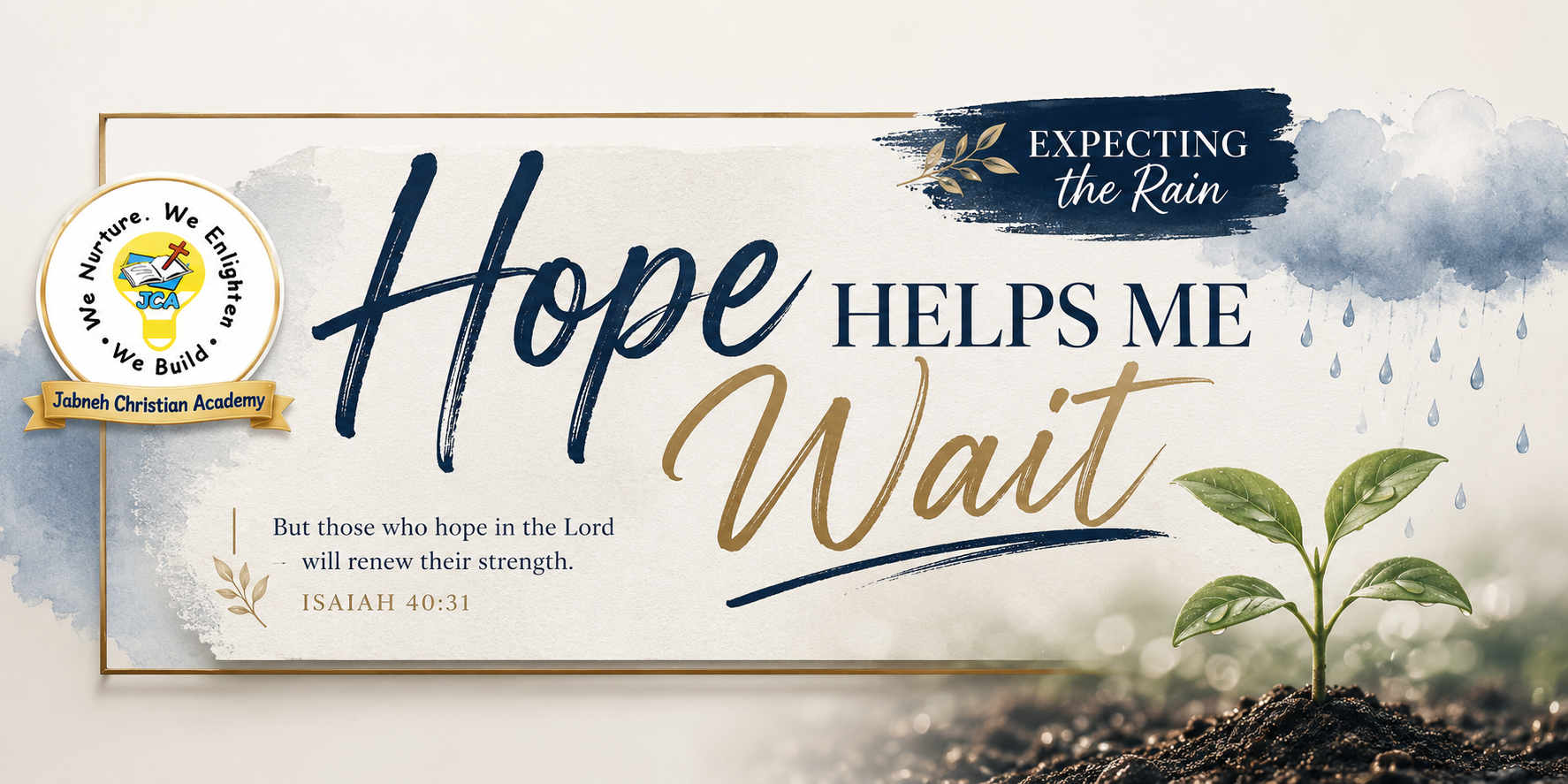
Hope Helps Me Wait: Expecting the Rain in Seasons of Delay

There are seasons in life when waiting feels heavier than working.

Moments when prayers seem unanswered.
When progress appears slow.
When the soil of life looks unchanged despite the seeds we planted with tears, sacrifice, and faith.

Waiting can challenge the mind.
It can produce frustration, fear, discouragement, and emotional exhaustion.

Yet one of the greatest lessons in both life and faith is this:

Hope teaches us how to wait.

In agriculture, rain does not arrive immediately after the seed is planted. Before visible growth appears:

  • roots develop underground
  • the soil shifts
  • unseen processes begin

The same is true in our lives.

Many times, God is working beneath the surface while we struggle with the silence of delay.

Waiting does not mean God is absent.

It is often during waiting seasons that:

  • character is formed
  • resilience develops
  • faith deepens
  • emotional strength grows

In a culture that celebrates speed and instant gratification, hopeful waiting has become difficult. Many people now associate delay with failure. However, Scripture repeatedly reminds us that growth often happens gradually.

Ecclesiastes 3:1 reminds us:

“There is a time for everything, and a season for every activity under the heavens.”

Healthy waiting requires emotional discipline.

Without hope, waiting can produce:

  • anxiety
  • hopelessness
  • irritability
  • comparison
  • emotional burnout

Hope reframes waiting.

Hope says:

  • God is still working.
  • This season is not wasted.
  • Growth may be hidden, but it is happening.
  • Rain is coming.

As a school community, our theme this term is:

Expecting the Rain

This theme is not merely poetic language.
It is a posture of faith.

Rain represents:

  • provision
  • renewal
  • growth
  • refreshing
  • answered prayers
  • transformation

Many in our community are waiting for rain in different areas:

  • emotional healing
  • financial breakthrough
  • restored relationships
  • direction
  • peace of mind
  • academic progress
  • spiritual renewal

Today, we encourage you:

Do not despise the waiting season.

The seed underground is not dead.
It is developing roots.

Some of the most important work in life happens invisibly before manifestation appears publicly.

This is especially important as we continue observing:

National Child Month

“Prioritise Our Children’s Mental Health: Strong Minds, Safer Future.”

Children are deeply affected by the emotional climate around them.

When adults model hopelessness, panic, bitterness, and despair, children absorb it.

When adults model:

  • faith
  • patience
  • emotional regulation
  • perseverance
  • hopeful thinking

children learn resilience.

Hope is contagious.

As parents, caregivers, educators, and community members, we must intentionally cultivate environments where children hear:

  • hopeful words
  • calm responses
  • faith-filled conversations
  • encouragement during difficult moments

Strong minds are often built in homes and communities where hope is consistently nurtured.

Today, perhaps your life feels like planted soil with no visible growth.

Keep watering.
Keep praying.
Keep believing.

The rain may not have arrived yet,
but the roots are growing.

Declaration

I will wait with hope.
God’s timing is perfect.
I am growing while I wait.
I am expecting the rain.

Planting Seeds that Last: Parents, Teachers, and God’s Design for Growth

October 13,2025 | Rev. Dr. Natasha Francis-Campbell, author of Parenting with Wisdom: Avoidiing the way of Fools

I planted the seed, Apollos watered it, but God has been making it grow.
1 Corinthians 3:6 (NIV)

Every good garden begins with a seed, but before that seed can thrive, someone must plant it. In the same way, every child’s development begins at home with the parents. God has entrusted mothers and fathers with the sacred role of planting the first seeds of character, faith, and learning. These are the earliest lessons a child ever receives. Lessons spoken not only through words but also through daily interactions, love, and example.

The home is the first classroom, and parents are the first teachers. Before a child can hold a pencil or recognise a number, they have already absorbed so much from the environment created by their parents. From the tone of your voice to the way you handle frustration, your child is learning. These moments form the fertile soil where seeds of trust, curiosity, and self-worth are planted.

Research supports what Scripture already teaches. According to the Cleveland Clinic, early child development occurs across multiple domains — physical, cognitive, emotional, social, and moral. Each domain requires intentional nurturing. The Tanoto Foundation also highlights that early stimulation and caregiving play a vital role in shaping a child’s character and lifelong outlook. Every bedtime story, every shared prayer, every word of encouragement becomes part of that sacred process of planting.

Then, as children grow, teachers and caregivers come alongside to water what was planted. The role of educators is not to replace the parent, but to complement and strengthen what began at home. When a teacher celebrates your child’s progress, corrects with patience, or encourages creative thinking, they are watering the seeds of potential you’ve already sown. Together, parents and teachers form a partnership designed by God, each one working in alignment with His purpose.

Still, even as we plant and water, the verse reminds us of a truth we must never forget: “God gives the increase.” Growth, the transformation of a tender seed into a flourishing tree, belongs to Him alone. Parents may sometimes feel anxious or discouraged when progress seems slow or when challenges arise, but we must rest in the assurance that God is at work beneath the surface, even when we cannot see it.

Our responsibility is faithfulness. Faithful planting. Faithful watering. Faithful praying. God’s responsibility is fruitfulness. He alone breathes life into what we nurture.

Dear parent, never underestimate the power of your influence. The seeds you plant today, seeds of faith, kindness, discipline, and perseverance, will bear fruit in due time. Whether your child becomes a scientist, an artist, or a leader, it is the values and love sown early that will guide their growth. Your role is not small; it is sacred. You are the planter in God’s garden of generations.

Therefore, continue to speak words of life over your child. Continue to model love and patience. Continue to trust God’s process, even through tears and uncertainty. As you plant, know that others, teachers, caregivers, mentors, and friends will come along to water. Yet, only God can bring the increase that turns potential into purpose.

Reflection Prayer for Parents

Heavenly Father,
Thank You for entrusting us with the gift of parenthood and the privilege of planting seeds in the hearts of our children.
Teach us to plant with love, to nurture with wisdom, and to trust You with the results.
Help us to create homes filled with peace, learning, and faith, where our children can flourish in Your presence.
Bless the teachers and caregivers who come alongside us to water these seeds with care.
May we work together in unity and humility, knowing that You alone bring the growth.
Strengthen every parent who feels weary, and remind us that our labour in You is never in vain.
In Jesus’ name, Amen.

Setting the Tone for Success: A Parent’s Guide to the New School Year

Jabneh Christian Academy
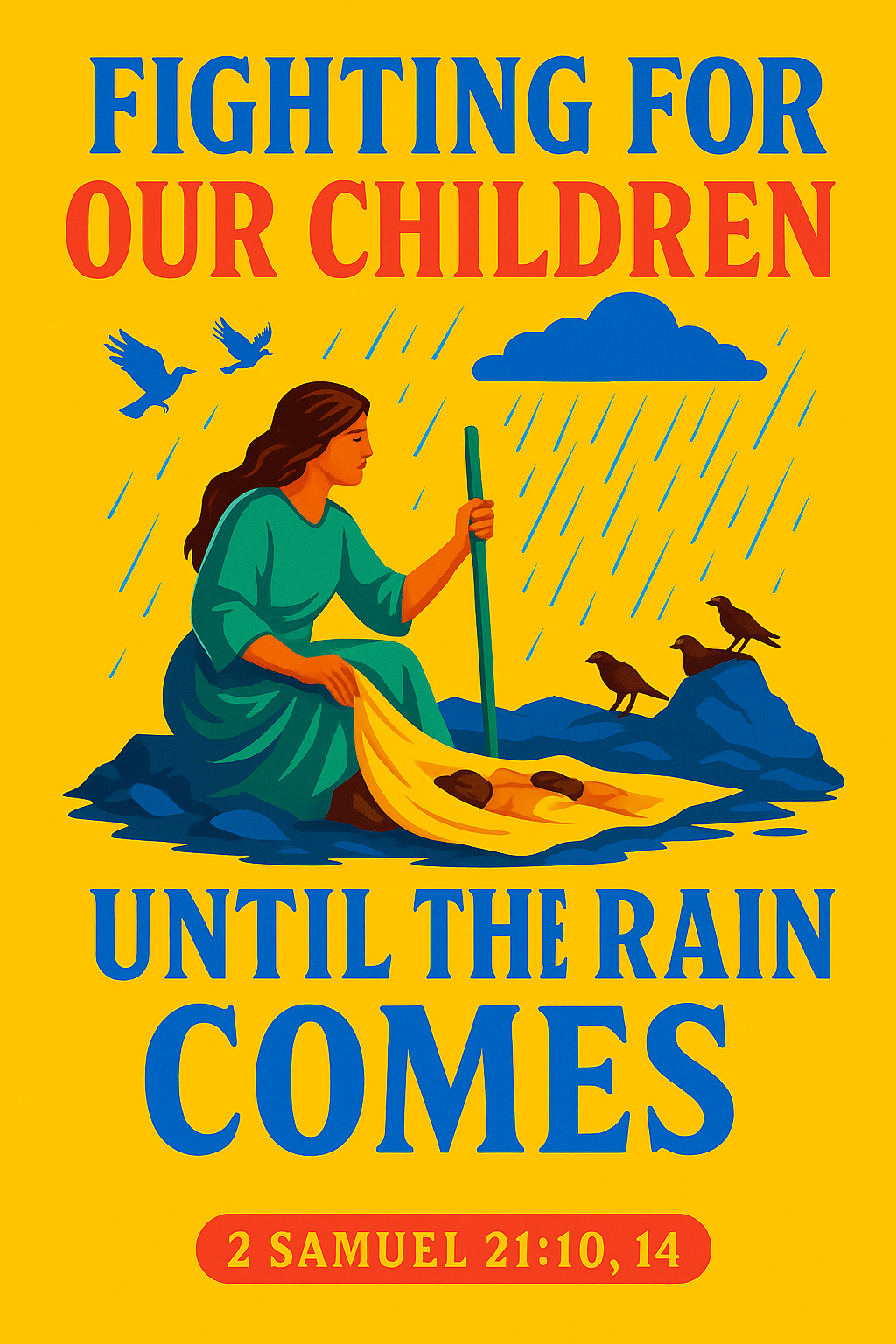
Theme 2025–2026: “Fighting for Our Children Until the Rain Comes” (2 Samuel 21:10, 14)
Term 1 Sub-theme: “Standing on the Rock – Establishing Firm Foundations in Prayer, Discipline, and Values.”

The first days of school set the stage for the months ahead. At Jabneh Christian Academy, we believe that success does not happen by accident. It is built on prayer, partnership, and a consistent approach. As resilient parents, you play a vital role in shaping your icon’s school journey. Here are some practical ways to set the right tone from the very start:

1. Establish God-Centred Routines

Begin and end each day with prayer. Invite your icon to thank God for the new day and ask for His strength to stand firm, just as Rizpah stood on the rock until the rain came. Consistent spiritual routines help your child understand that school is not just about academics, but also about character and destiny.

2. Value the Timetable

The school timetable is more than a schedule—it is a tool for responsibility. Review it with your icon each evening. This simple step reduces morning stress and teaches accountability. Encourage your child to prepare their bag, uniform, and materials the night before.

3. Create a Home Learning Space

Even though textbooks remain at school, your icon will still need a quiet, prepared space to complete homework and review lessons. A small desk or table with minimal distractions can communicate: “This is my place to focus.”

4. Build Independence, Not Dependence

It is tempting to do everything for your child, especially on busy mornings. Yet true love teaches independence. Encourage your icon to manage simple tasks: packing their bag, tying their shoes, or setting out their clothes. As we say at Jabneh, “We should never reduce children’s ability by doing too much for them. That is not the loving thing to do.”

5. Guard Your Words and Atmosphere

Children absorb more than we realise. Speak words of blessing, encouragement, and resilience. A calm, positive home atmosphere helps them walk into school with confidence and a readiness to learn. Remember: the tone you set at home echoes in the classroom.

6. Partner with the School

Our Zone of Optimal Performance works best when parents and teachers each give their 50%. Stay connected through school updates, respond promptly to notices, and support classroom expectations at home. Together, we are fighting for our children until the rain comes.

The new school year is a fresh opportunity to lay strong foundations. Resilience, courage, integrity, and faith are not just value words; they are life skills that will shape your icon’s future. As parents, you are not spectators; you are co-builders. Let us stand on the Rock together and watch God send the rain of blessing over our icons.

Prayer
“
Lord, thank You for the gift of my child. Help me set the right tone at home, model resilience, and partner faithfully with Jabneh. May this school year be filled with growth, excellence, and Your rain of blessing. In Jesus’ name, Amen

Fighting for Our Children Until the Rain Comes

Reflections from the Parents and Teachers’ Conference 2025–2026


Scripture: “Rizpah, daughter of Aiah, took sackcloth and spread it out for herself on a rock. From the beginning of the harvest till the rain poured down from the heavens on the bodies, she did not let the birds touch them by day or the wild animals by night… After that, God answered prayer on behalf of the land.” (2 Samuel 21:10, 14)

At Jabneh Christian Academy, we entered this new school year under a powerful charge from Scripture: “Fighting for Our Children Until the Rain Comes.”

This theme was at the heart of our Parents and Teachers’ Conference. We gathered as staff, board members, and resilient parents and were reminded of Rizpah’s vigil in 2 Samuel 21. She spread sackcloth on a rock and stood guard, refusing to allow the birds or beasts to devour her sons. Her persistence and faith stirred the king to act, and eventually, God sent the rain.

Like Rizpah, we too are called to stand guard over our children. Our fight is not physical but spiritual, moral, and practical. It is the fight to protect hearts and minds, to build strong values, to discipline in love, and to resist the culture of neglect and nonchalance that robs children of their destiny.

The Zone of Optimal Performance

At Jabneh, we describe our partnership as a 50-50 covenant. Parents and school must walk hand in hand. Excellence cannot be sustained if one side is weak. When we both give our best, our children, the icons of God’s kingdom, will soar into their full potential.

A Prayer for the Rain

As we move forward, we do so with faith that God will honour our watchfulness. Like Rizpah, we will not give up until the rain comes: the rain of favour, blessing, growth, and success over every child, every home, and every aspect of Jabneh Christian Academy.

“Lord, give us the vigilance of Rizpah, the wisdom of David, and the unity of Your Spirit as we fight for our children. May the rain of Your blessing pour upon this institution and upon the lives of our icons. In Jesus’ name, Amen.”

Helping Our Icons Understand the Value of Being True, Even When No One is Watching

At Jabneh Christian Academy, we believe that character education is just as important as academics. That’s why each week, we take time to highlight a core value that helps shape our icons into people of purpose. This week, our theme for devotion is:

Integrity Leads to Trust

When children learn to live with integrity, they are choosing to be honest, dependable, and upright—no matter who’s watching.  The reward is Trust. Trust in friendships, trust in families, and trust from those around them.

We’re anchoring this week’s focus with the story of Joseph and Potiphar’s Wife from Genesis 39:1–23. Joseph did the right thing, even when it cost him something. His integrity, even when falsely accused and imprisoned, eventually led to great favour. What a powerful reminder for our children—and for us as adults too!

We’re also memorising Proverbs 22:1:
“A good name is more desirable than great riches.”
This verse reminds our icons that who they are is more valuable than anything they could own.

 When a Child Has Broken Trust

Children are still learning. Mistakes will happen. However, those mistakes can become opportunities for growth when handled with grace and wisdom.

 1. Have Honest Conversations

Help your child understand how their actions affect trust:
“When you told a lie, it made it hard for me to believe you next time.”

 2. Model Accountability

Let your child see you take responsibility too:
“I forgot something I promised, and I’m sorry. I’ll do better next time.”

 3. Teach Them How to Make It Right

Give them a chance to fix what was broken. Whether it’s an apology or a kind act, teach them that restoration matters.

 4. Give Opportunities to Rebuild

Offer small chances for them to regain trust:
“I’m trusting you to clean up your space while I step away.”

 5. Praise Progress, Not Perfection

Celebrate moments of integrity:
“You told the truth even when it was hard—that was brave and honest.”

When a Child Has Been Hurt and Needs to Rebuild Trust

Sometimes, our icons may be on the receiving end of broken trust. As caregivers and teachers, we must help them process that pain in a healthy way.

 1. Listen and Acknowledge Their Feelings

Sometimes all they need to hear is:
“I’m so sorry that happened. Your feelings are important.”

 2. Teach Healthy Boundaries

Let them know it’s okay to protect their hearts and to rebuild trust slowly.

 3. Encourage Expression

Some children open up better through drawing, storytelling, or pretend play. Create those outlets at home.

4. Reflect on Joseph’s Story

Joseph forgave his brothers and maintained his integrity in a tough situation. This story shows that even in pain, we can hold on to what’s right.

 5. Encourage Forgiveness at Their Pace

Remind them that forgiveness is more about freeing their own hearts than excusing the wrong.

 Simple Tools to Use at Home

  • Trust Jar: Place a marble in a jar each time your child displays integrity. Watch their “trust level” grow!
  • Story Chats: After reading a story (like Joseph’s), ask: “What choice did he make? What would you have done?”
  • Role-Play Repair: Practice apologizing and rebuilding trust through fun, pretend situations.

Weekly Wisdom to Hold On To

📖 “A good name is more desirable than great riches.” – Proverbs 22:1
📖 “Whoever can be trusted with very little can also be trusted with much.” – Luke 16:10
📖 “Be kind and compassionate to one another, forgiving each other, just as in Christ God forgave you.” – Ephesians 4:32

A Word of Encouragement to You, Resilient Parents

Rebuilding trust is a process—one that takes time, love, and intentionality. With God’s help, our children can learn that integrity always pays off. Through our united effort between school and home, they will see that even when trust is broken, it can be restored.

Let’s continue to nurture the seeds of truth, character, and grace in our icons. We’re honoured to walk this journey with you.

With love and partnership,
The Jabneh Christian Academy Family