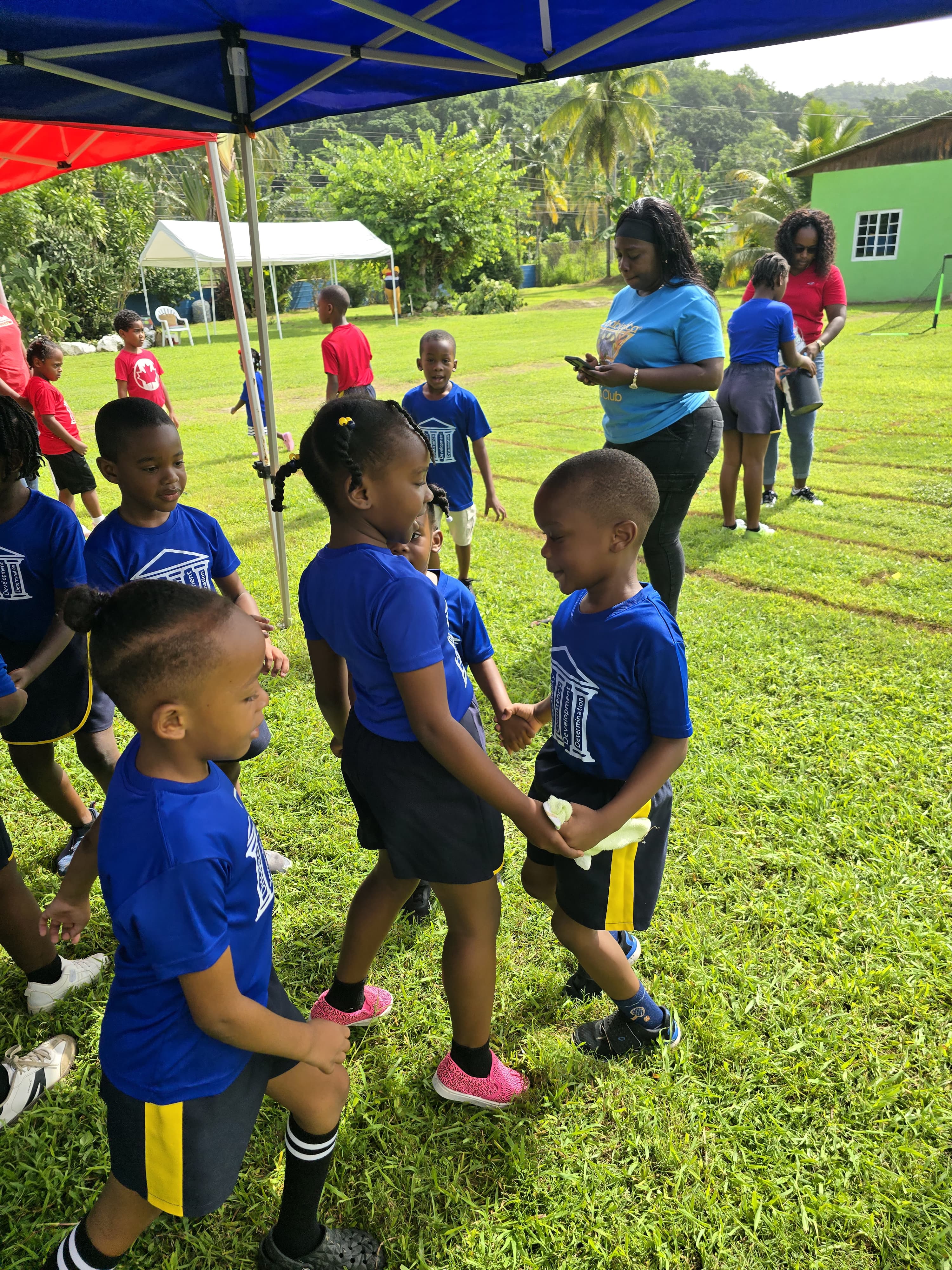
Sports Day the Jabneh Way

At Jabneh Christian Academy, everything we do is intentional, every moment, every event, every icon. Sports Day is no different. While it is filled with fun and excitement—even happening on the last day of school—our focus remains on development, inclusion, and celebrating growth. For us, Sports Day is a platform to highlight abilities, build capacity, and reinforce key developmental goals.

As a school, we begin planning immediately and prayerfully, drawing on the creative nature of our God to inspire us to do better with each passing year. We are inviting our parents to join us in this effort. Consider incorporating some of the developmental activities you saw on Sports Day into your home routines. Revisit the posts and updates we’ve shared throughout the school year. Let’s work together to strengthen the icons’ growth beyond the classroom.

We are incredibly proud of every icon who participated. Even those who didn’t win in every race displayed tremendous effort, and we saw their abilities. At Jabneh, inclusion is not optional; it is our culture. We celebrate every icon.

To the parents who came out, you were like sparks of joy and encouragement. Thank you.

To our tuck shop supporters, thank you for your contributions to the day’s success.

To Uncle Mark, who stayed behind to ensure everything was secured, thank you.

To our PTA President, Auntie Christina, who took the time to clean the classroom, thank you.

To Auntie Kerry-Ann D., thank you for returning to wash items used during the day.

To Auntie Chriss-Ann, our dedicated volunteer marshal, thank you.

To Uncle Jakim, who prepared the entire track and football field on his own days leading up to the event and assisted in training the icons for the events, then on the day, managed the music, jumping events, ball throws, refereed the football match, and even handled the digital finish line, thank you for your tireless and passionate service.

To Auntie Jurlyn, thank you for that delicious pudding!

To Uncle Kirk—word has it the Avoiding the Way of Fools mocktail was refreshing and uplifting. Thank you, and thank you to Auntie Nicola for your labour of love in the cafeteria.

Auntie Rita, our faithful fritters maker, your hard work, humility, and love for Jabneh do not go unnoticed. Thank you.

Auntie Roshelle—juggling work and Sports Day, and assisted in making snow cones, thank you.

Indeed, we are one big family. We give thanks for every effort made in love, every task completed in excellence, and every hand extended in support.

See you all on Tuesday at the Prize-giving and Award Ceremony.  Come out and support your icons, The Jabneh Way.
Helping Our Icons Understand the Value of Being True, Even When No One is Watching

At Jabneh Christian Academy, we believe that character education is just as important as academics. That’s why each week, we take time to highlight a core value that helps shape our icons into people of purpose. This week, our theme for devotion is:

Integrity Leads to Trust

When children learn to live with integrity, they are choosing to be honest, dependable, and upright—no matter who’s watching.  The reward is Trust. Trust in friendships, trust in families, and trust from those around them.

We’re anchoring this week’s focus with the story of Joseph and Potiphar’s Wife from Genesis 39:1–23. Joseph did the right thing, even when it cost him something. His integrity, even when falsely accused and imprisoned, eventually led to great favour. What a powerful reminder for our children—and for us as adults too!

We’re also memorising Proverbs 22:1:
“A good name is more desirable than great riches.”
This verse reminds our icons that who they are is more valuable than anything they could own.

 When a Child Has Broken Trust

Children are still learning. Mistakes will happen. However, those mistakes can become opportunities for growth when handled with grace and wisdom.

 1. Have Honest Conversations

Help your child understand how their actions affect trust:
“When you told a lie, it made it hard for me to believe you next time.”

 2. Model Accountability

Let your child see you take responsibility too:
“I forgot something I promised, and I’m sorry. I’ll do better next time.”

 3. Teach Them How to Make It Right

Give them a chance to fix what was broken. Whether it’s an apology or a kind act, teach them that restoration matters.

 4. Give Opportunities to Rebuild

Offer small chances for them to regain trust:
“I’m trusting you to clean up your space while I step away.”

 5. Praise Progress, Not Perfection

Celebrate moments of integrity:
“You told the truth even when it was hard—that was brave and honest.”

When a Child Has Been Hurt and Needs to Rebuild Trust

Sometimes, our icons may be on the receiving end of broken trust. As caregivers and teachers, we must help them process that pain in a healthy way.

 1. Listen and Acknowledge Their Feelings

Sometimes all they need to hear is:
“I’m so sorry that happened. Your feelings are important.”

 2. Teach Healthy Boundaries

Let them know it’s okay to protect their hearts and to rebuild trust slowly.

 3. Encourage Expression

Some children open up better through drawing, storytelling, or pretend play. Create those outlets at home.

4. Reflect on Joseph’s Story

Joseph forgave his brothers and maintained his integrity in a tough situation. This story shows that even in pain, we can hold on to what’s right.

 5. Encourage Forgiveness at Their Pace

Remind them that forgiveness is more about freeing their own hearts than excusing the wrong.

 Simple Tools to Use at Home

  • Trust Jar: Place a marble in a jar each time your child displays integrity. Watch their “trust level” grow!
  • Story Chats: After reading a story (like Joseph’s), ask: “What choice did he make? What would you have done?”
  • Role-Play Repair: Practice apologizing and rebuilding trust through fun, pretend situations.

Weekly Wisdom to Hold On To

📖 “A good name is more desirable than great riches.”Proverbs 22:1
📖 “Whoever can be trusted with very little can also be trusted with much.”Luke 16:10
📖 “Be kind and compassionate to one another, forgiving each other, just as in Christ God forgave you.”Ephesians 4:32

A Word of Encouragement to You, Resilient Parents

Rebuilding trust is a process—one that takes time, love, and intentionality. With God’s help, our children can learn that integrity always pays off. Through our united effort between school and home, they will see that even when trust is broken, it can be restored.

Let’s continue to nurture the seeds of truth, character, and grace in our icons. We’re honoured to walk this journey with you.

With love and partnership,
The Jabneh Christian Academy Family

Understanding the Impact of Attachment Relationships on Children’s Emotional Development: Building Secure Foundations for Lifelong Well-being

Rev. Dr Natasha R. Francis-Campbell, April 22, 2024

Attachment relationships are crucial in children’s emotional
development, providing a foundation for their sense of security, trust, and
emotional well-being. Attachment theory, developed by John Bowlby and
expanded upon by Mary Ainsworth, emphasizes the importance of early
relationships with caregivers in shaping children’s emotional and social
development. Here’s how attachment relationships impact children’s
emotional development:

Formation of Secure Base: Attachment relationships serve as a secure
base from which children can explore the world and develop
independence. When caregivers are responsive, consistent, and
emotionally available, children feel safe and secure, allowing them to
confidently explore their environment and interact with others.
Emotional Regulation: Secure attachment relationships provide a
buffer against stress and promote the development of emotional
regulation skills. When children feel securely attached to their
caregivers, they are better able to regulate their emotions, manage
stress, and cope with challenging situations. Caregivers serve as
emotional regulators, providing comfort, reassurance, and support
during times of distress.
Formation of Internal Working Models: Attachment relationships
shape children’s internal working models of themselves, others, and
relationships. Securely attached children develop positive internal
working models, believing themselves to be worthy of love and capable
of forming close relationships with others. These internal working models
influence children’s expectations about how relationships should function
and guide their interactions with others throughout life.
Social and Emotional Competence: Secure attachment relationships
provide a foundation for the development of social and emotional
competence. Children who feel securely attached to their caregivers
tend to have better social skills, empathy, and emotional intelligence.
They are more likely to form positive relationships with peers,
communicate effectively, and resolve conflicts constructively.

Resilience and Coping Skills: Secure attachment relationships
contribute to children’s resilience and ability to cope with adversity.
When children have a secure base of support from caregivers, they are
better equipped to navigate life’s challenges, setbacks, and transitions.
They develop confidence in their ability to seek help and support when
needed, fostering resilience and adaptive coping strategies.
Impact on Mental Health: Secure attachment relationships are
associated with positive mental health outcomes in children. Research
has shown that children who experience secure attachment tend to have
lower rates of anxiety, depression, and behavioural problems. They are
also more likely to develop a positive sense of self-esteem and self-
worth.
Continuity into Adulthood: The quality of attachment relationships
established in childhood continues to influence emotional development
into adulthood. Securely attached individuals tend to have healthier
relationships, higher levels of emotional well-being, and greater overall
life satisfaction. Conversely, insecure attachment patterns may persist
into adulthood and contribute to difficulties in forming and maintaining
close relationships.
Attachment relationships play a critical role in children’s emotional
development, providing a secure base for exploration, promoting
emotional regulation, shaping internal working models, fostering social
and emotional competence, building resilience, and influencing mental
health outcomes. By understanding the importance of attachment
relationships, caregivers, educators, and policymakers can support
children’s emotional well-being and promote positive developmental
outcomes from infancy through adulthood.