Planting Seeds that Last: Parents, Teachers, and God’s Design for Growth

October 13,2025 | Rev. Dr. Natasha Francis-Campbell, author of Parenting with Wisdom: Avoidiing the way of Fools

I planted the seed, Apollos watered it, but God has been making it grow.
1 Corinthians 3:6 (NIV)

Every good garden begins with a seed, but before that seed can thrive, someone must plant it. In the same way, every child’s development begins at home with the parents. God has entrusted mothers and fathers with the sacred role of planting the first seeds of character, faith, and learning. These are the earliest lessons a child ever receives. Lessons spoken not only through words but also through daily interactions, love, and example.

The home is the first classroom, and parents are the first teachers. Before a child can hold a pencil or recognise a number, they have already absorbed so much from the environment created by their parents. From the tone of your voice to the way you handle frustration, your child is learning. These moments form the fertile soil where seeds of trust, curiosity, and self-worth are planted.

Research supports what Scripture already teaches. According to the Cleveland Clinic, early child development occurs across multiple domains — physical, cognitive, emotional, social, and moral. Each domain requires intentional nurturing. The Tanoto Foundation also highlights that early stimulation and caregiving play a vital role in shaping a child’s character and lifelong outlook. Every bedtime story, every shared prayer, every word of encouragement becomes part of that sacred process of planting.

Then, as children grow, teachers and caregivers come alongside to water what was planted. The role of educators is not to replace the parent, but to complement and strengthen what began at home. When a teacher celebrates your child’s progress, corrects with patience, or encourages creative thinking, they are watering the seeds of potential you’ve already sown. Together, parents and teachers form a partnership designed by God, each one working in alignment with His purpose.

Still, even as we plant and water, the verse reminds us of a truth we must never forget: “God gives the increase.” Growth, the transformation of a tender seed into a flourishing tree, belongs to Him alone. Parents may sometimes feel anxious or discouraged when progress seems slow or when challenges arise, but we must rest in the assurance that God is at work beneath the surface, even when we cannot see it.

Our responsibility is faithfulness. Faithful planting. Faithful watering. Faithful praying. God’s responsibility is fruitfulness. He alone breathes life into what we nurture.

Dear parent, never underestimate the power of your influence. The seeds you plant today, seeds of faith, kindness, discipline, and perseverance, will bear fruit in due time. Whether your child becomes a scientist, an artist, or a leader, it is the values and love sown early that will guide their growth. Your role is not small; it is sacred. You are the planter in God’s garden of generations.

Therefore, continue to speak words of life over your child. Continue to model love and patience. Continue to trust God’s process, even through tears and uncertainty. As you plant, know that others, teachers, caregivers, mentors, and friends will come along to water. Yet, only God can bring the increase that turns potential into purpose.

Reflection Prayer for Parents

Heavenly Father,
Thank You for entrusting us with the gift of parenthood and the privilege of planting seeds in the hearts of our children.
Teach us to plant with love, to nurture with wisdom, and to trust You with the results.
Help us to create homes filled with peace, learning, and faith, where our children can flourish in Your presence.
Bless the teachers and caregivers who come alongside us to water these seeds with care.
May we work together in unity and humility, knowing that You alone bring the growth.
Strengthen every parent who feels weary, and remind us that our labour in You is never in vain.
In Jesus’ name, Amen.

Fighting for Our Children Until the Rain Comes

Reflections from the Parents and Teachers’ Conference 2025–2026


Scripture: “Rizpah, daughter of Aiah, took sackcloth and spread it out for herself on a rock. From the beginning of the harvest till the rain poured down from the heavens on the bodies, she did not let the birds touch them by day or the wild animals by night… After that, God answered prayer on behalf of the land.” (2 Samuel 21:10, 14)

At Jabneh Christian Academy, we entered this new school year under a powerful charge from Scripture: “Fighting for Our Children Until the Rain Comes.”

This theme was at the heart of our Parents and Teachers’ Conference. We gathered as staff, board members, and resilient parents and were reminded of Rizpah’s vigil in 2 Samuel 21. She spread sackcloth on a rock and stood guard, refusing to allow the birds or beasts to devour her sons. Her persistence and faith stirred the king to act, and eventually, God sent the rain.

Like Rizpah, we too are called to stand guard over our children. Our fight is not physical but spiritual, moral, and practical. It is the fight to protect hearts and minds, to build strong values, to discipline in love, and to resist the culture of neglect and nonchalance that robs children of their destiny.

The Zone of Optimal Performance

At Jabneh, we describe our partnership as a 50-50 covenant. Parents and school must walk hand in hand. Excellence cannot be sustained if one side is weak. When we both give our best, our children, the icons of God’s kingdom, will soar into their full potential.

A Prayer for the Rain

As we move forward, we do so with faith that God will honour our watchfulness. Like Rizpah, we will not give up until the rain comes: the rain of favour, blessing, growth, and success over every child, every home, and every aspect of Jabneh Christian Academy.

“Lord, give us the vigilance of Rizpah, the wisdom of David, and the unity of Your Spirit as we fight for our children. May the rain of Your blessing pour upon this institution and upon the lives of our icons. In Jesus’ name, Amen.”

Sports Day the Jabneh Way

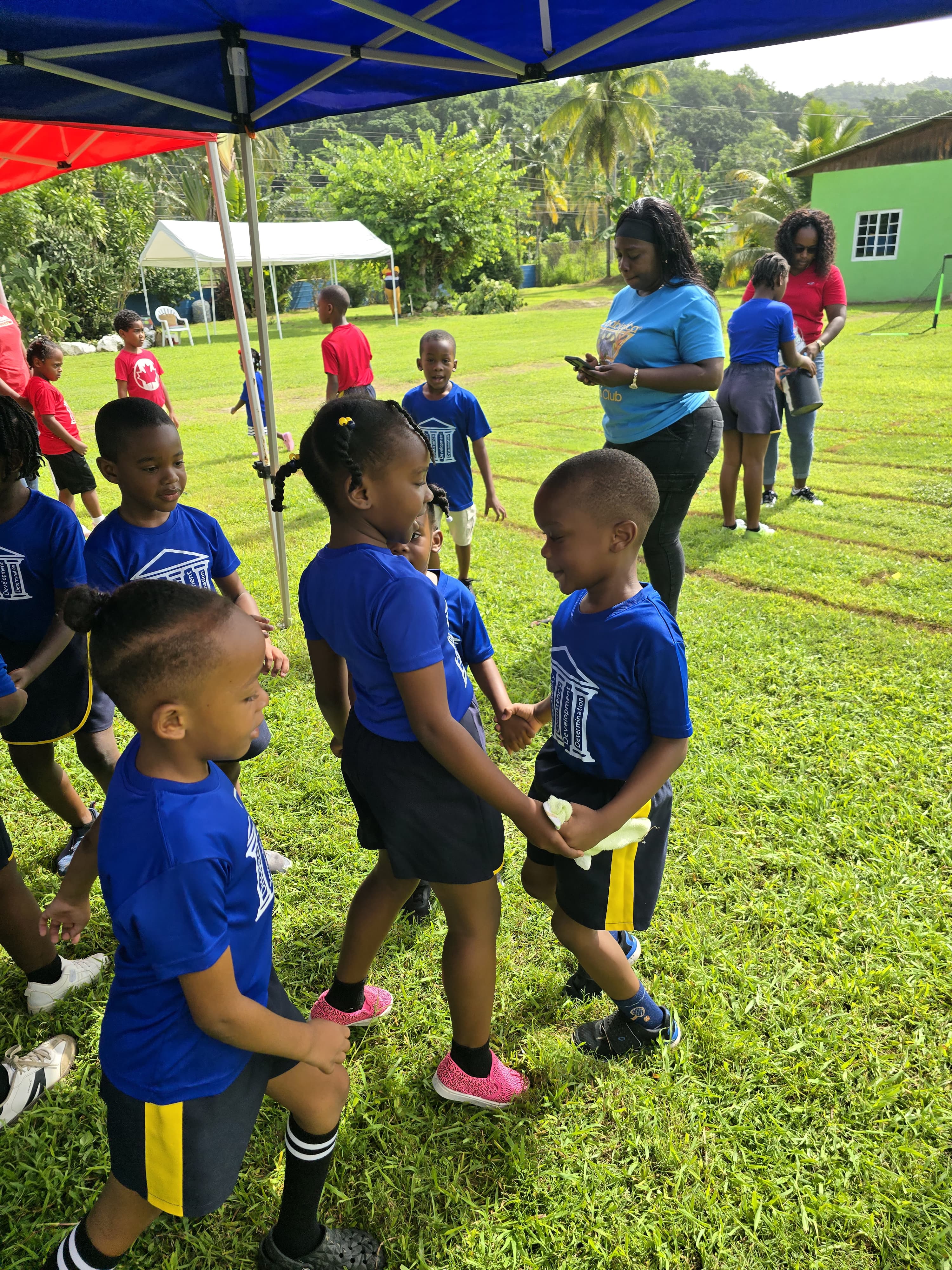
At Jabneh Christian Academy, everything we do is intentional, every moment, every event, every icon. Sports Day is no different. While it is filled with fun and excitement—even happening on the last day of school—our focus remains on development, inclusion, and celebrating growth. For us, Sports Day is a platform to highlight abilities, build capacity, and reinforce key developmental goals.

As a school, we begin planning immediately and prayerfully, drawing on the creative nature of our God to inspire us to do better with each passing year. We are inviting our parents to join us in this effort. Consider incorporating some of the developmental activities you saw on Sports Day into your home routines. Revisit the posts and updates we’ve shared throughout the school year. Let’s work together to strengthen the icons’ growth beyond the classroom.

We are incredibly proud of every icon who participated. Even those who didn’t win in every race displayed tremendous effort, and we saw their abilities. At Jabneh, inclusion is not optional; it is our culture. We celebrate every icon.

To the parents who came out, you were like sparks of joy and encouragement. Thank you.

To our tuck shop supporters, thank you for your contributions to the day’s success.

To Uncle Mark, who stayed behind to ensure everything was secured, thank you.

To our PTA President, Auntie Christina, who took the time to clean the classroom, thank you.

To Auntie Kerry-Ann D., thank you for returning to wash items used during the day.

To Auntie Chriss-Ann, our dedicated volunteer marshal, thank you.

To Uncle Jakim, who prepared the entire track and football field on his own days leading up to the event and assisted in training the icons for the events, then on the day, managed the music, jumping events, ball throws, refereed the football match, and even handled the digital finish line, thank you for your tireless and passionate service.

To Auntie Jurlyn, thank you for that delicious pudding!

To Uncle Kirk—word has it the Avoiding the Way of Fools mocktail was refreshing and uplifting. Thank you, and thank you to Auntie Nicola for your labour of love in the cafeteria.

Auntie Rita, our faithful fritters maker, your hard work, humility, and love for Jabneh do not go unnoticed. Thank you.

Auntie Roshelle—juggling work and Sports Day, and assisted in making snow cones, thank you.

Indeed, we are one big family. We give thanks for every effort made in love, every task completed in excellence, and every hand extended in support.

See you all on Tuesday at the Prize-giving and Award Ceremony.  Come out and support your icons, The Jabneh Way.

Never Underestimate a Learner: The Power of Multigrade Classrooms

By Auntie Nats | Jabneh Christian Academy Blog

At Jabneh Christian Academy, we believe that every child is capable of greatness when placed in a nurturing, value-rich environment. One of the unique aspects of our learning culture is our multigrade classroom setting, where learners of varying ages share the same space, engage with the same environment, and often encounter the same challenges, each at his or her own level of readiness.

Recently, a beautiful moment captured the heart of what we believe. During a lesson designed for our 5-year-old icons focused on understanding the concept of a dozen, the class was asked to complete a culminating task: Draw twelve triangles.

In the same room sat one of our three-year-old icons—a quiet observer, not expected to complete the task. Though he has not yet mastered the art of writing his name, he attentively listened, watched, and participated fully. When the task was completed, there on his page were twelve carefully drawn triangles, his best attempt, and a successful one.

This wasn’t just an exercise in shapes. It was a profound reminder:
Never underestimate a learner. Growth doesn’t always announce itself with fanfare. Sometimes, it shows up humbly, in a triangle drawn by a three-year-old.

What Multigrade Learning Offers

1. Exposure Breeds Expansion
Younger learners benefit from hearing advanced vocabulary, witnessing higher-level thinking, and absorbing rhythms of instruction beyond their current level. The 3-year-old’s ability to grasp the concept of a dozen was sparked by exposure.

2. Peer Modelling Encourages Progress
Older students naturally model behaviours, language, and strategies that younger ones observe and imitate. It creates a learning loop where leadership and growth thrive simultaneously.

3. Confidence and Independence Grow
In multigrade settings, students take initiative, challenge themselves, and step into tasks even when not directly instructed. This self-starting behaviour is a critical life skill.

4. Differentiated Learning is the Norm
Rather than rigid grade expectations, multigrade learning emphasises readiness. Students progress based on capability, not age.

5. Development Is Multi-Dimensional
Beyond academics, learners gain emotional resilience, social adaptability, and fine motor coordination. This task developed counting, shape recognition, and visual-motor skills—all unprompted.

More Than a Triangle

This icon may not yet write his name independently, but in that moment, he demonstrated initiative, understanding, and ability. In a traditional setting, this may have been missed. In our multigrade environment, it was celebrated.

At Jabneh, we teach beyond grade levels—we teach hearts, minds, and potential.

Multigrade classrooms remind us that teaching is not about holding children back until they’re “ready,” but about inviting them forward into possibility. Every child is on a journey. Every moment is a chance to rise.

To parents, educators, and caregivers:
May this be your reminder to pay attention to what your child is becoming, not just what they can already do.

There’s greatness growing quietly in every corner of the room.

Mango Moments & Life Lessons: Growing Hearts One Fruit at a Time

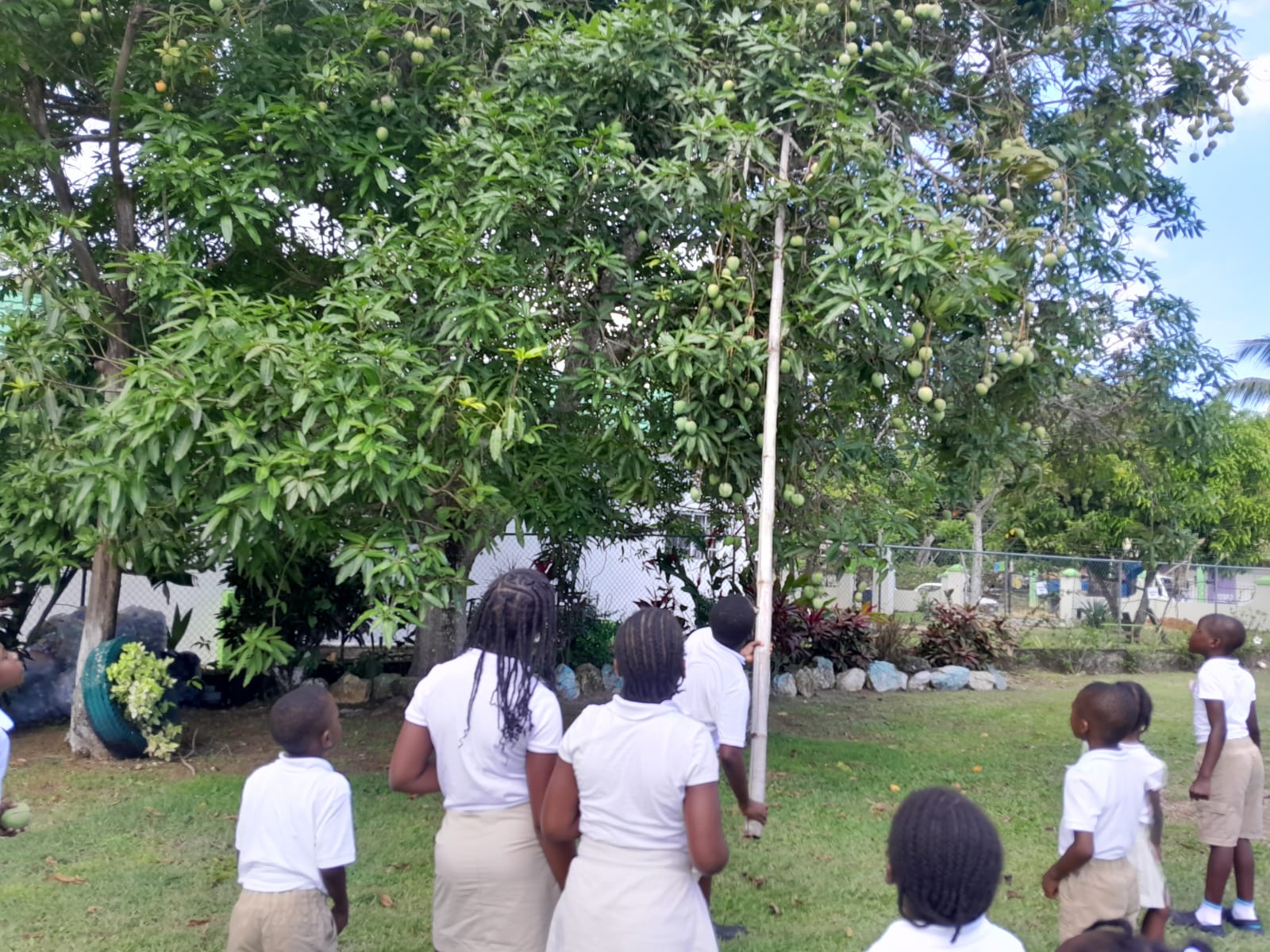
At Jabneh Christian Academy, learning often happens beyond the classroom walls. One such unforgettable experience took place under the golden sunshine as our icons ventured outdoors to pick mangoes. What may have seemed like a simple fruit-picking activity quickly unfolded into a powerful, hands-on lesson in patience, stewardship, fairness, and the beauty of God’s provision.

As the icons approached the mango tree, excitement bubbled over. Some jumped joyfully at the sight of ripe mangoes hanging low, while others eagerly pointed out the larger ones perched just out of reach. However, an important value-based structure was introduced before any fruit could be picked: take turns, share, and ensure everyone receives before taking more.

This simple guideline turned fruit-picking into a classroom of character-building. Icons learned to wait patiently, cheer each other on, and celebrate everyone’s little victories. Some even became mango spotters and pickers, helping others find the best ones within reach. Others stood guard to protect the younger mangoes and budding limbs from being damaged.

In a time when instant gratification is the norm, this experience reminded our icons that not everything good comes quickly. They had to assess each mango’s readiness—Was it mature enough? Was it too green? Could it ripen at home? Through this, they engaged in critical thinking and discernment while learning how to appreciate natural growth and timing.

Beyond the mango tree, this moment opened the door to discussions about:

Fruits in Season: Icons began to understand the rhythm of nature—how every fruit has its season and why eating fruits in their season is healthier, more sustainable, and budget-friendly.

Planting Trees at Home: If space allows, planting fruit trees at home gives icons the chance to nurture something that gives back. Caring for a tree instils responsibility, a connection to creation, and an appreciation for food sources beyond the supermarket. Imagine each icon waking up to check his/her tree’s progress—watering it, shielding it from harm, and joyfully anticipating the fruits of their labour.

Caring for the Earth: Through this one tree, they learned the more significant lesson of stewardship—taking care of what we have, not just for ourselves, but for others and for future generations.

As they walked back, mangoes in hand and hearts full of joy, one could see it clearly—this wasn’t just about fruit. It was about fruitfulness in every sense of the word. Kindness was harvested. Patience was plucked. Responsibility bloomed. Joy overflowed.

So, let’s keep planting—not just trees, but seeds of wisdom, care, and compassion. One mango moment at a time.

Have you bought the Courageous Hearts book for your icon? If not, today is a good.

See you in the next blog or in one of the Avoiding the Way of Fools books.

Rev. Dr. Natasha Francis-Campbell

April 6, 2025

Let’s Make National Children’s Day 2024 Memorable for our Little Ones!

Tip: Celebrate your children today by treating them.

As we strive to make this day extraordinary for our children, I’m excited to share some unique ways we can treat them, going beyond the usual gifts and activities.

Here are some treats that will take your children into the future that they will thank us for:

Apply for their TRN: Gather the necessary documents today, set a day next week when they are on mid-term break, take them to the tax office, and complete the process.

Apply for their passport: Download and fill out the application today; it’s available online.

Ensure full immunization: If your child is not fully immunized, take them to the nearest health centre. The amazing nurses are eager to assist you, such as those at the Grange Hill Health Centre. You may also choose to use a private paediatrician.

Open a savings account or investment: Consider the Sammy Saver’s Club offer by the Credit Union or other suitable options to start saving for their future.

Family connections: Take your children to meet family members. Utilise video calls for instances where distance is a challenge.

Seek the best educational opportunities: Make a decision to seek the best educational opportunities for the children for the new school term.

Plan summer experiences: Begin to plan their summer experiences to ensure they are enriching and enjoyable.

Teach future skills: Teach your children skills that will benefit them in the future, such as coding, financial literacy, or problem-solving.

Dental check-ups: Ensure they visit the dentist regularly to maintain good oral health.

Specialised medical care: For those who are ill, take them to the paediatrician rather than a general practitioner to ensure they receive specialised care.

Learning and personality assessments: Guide your children in taking the following tests, which will provide relevant insights:

A learning style test – https://www.lovetoknow.com/parenting/kids/learning-style-test-children

A personality test- -https://www.proprofs.com/quiz-school/story.php?title=your-kids-personality-type

Special needs assessment: If you suspect that your child has special needs, seek to get him/her assessed.

Educational resources: For worksheets that are age-appropriate, visit With Auntie Nats. www.withauntienats.com

Church involvement: Get your children involved in church to help them develop a sense of community and spiritual growth.

These treats will help prepare your children for the future, equipping them with essential documents, skills, and experiences they will appreciate as they grow.

From Auntie Nats with love.

Understanding the Impact of Attachment Relationships on Children’s Emotional Development: Building Secure Foundations for Lifelong Well-being

Rev. Dr Natasha R. Francis-Campbell, April 22, 2024

Attachment relationships are crucial in children’s emotional
development, providing a foundation for their sense of security, trust, and
emotional well-being. Attachment theory, developed by John Bowlby and
expanded upon by Mary Ainsworth, emphasizes the importance of early
relationships with caregivers in shaping children’s emotional and social
development. Here’s how attachment relationships impact children’s
emotional development:

Formation of Secure Base: Attachment relationships serve as a secure
base from which children can explore the world and develop
independence. When caregivers are responsive, consistent, and
emotionally available, children feel safe and secure, allowing them to
confidently explore their environment and interact with others.
Emotional Regulation: Secure attachment relationships provide a
buffer against stress and promote the development of emotional
regulation skills. When children feel securely attached to their
caregivers, they are better able to regulate their emotions, manage
stress, and cope with challenging situations. Caregivers serve as
emotional regulators, providing comfort, reassurance, and support
during times of distress.
Formation of Internal Working Models: Attachment relationships
shape children’s internal working models of themselves, others, and
relationships. Securely attached children develop positive internal
working models, believing themselves to be worthy of love and capable
of forming close relationships with others. These internal working models
influence children’s expectations about how relationships should function
and guide their interactions with others throughout life.
Social and Emotional Competence: Secure attachment relationships
provide a foundation for the development of social and emotional
competence. Children who feel securely attached to their caregivers
tend to have better social skills, empathy, and emotional intelligence.
They are more likely to form positive relationships with peers,
communicate effectively, and resolve conflicts constructively.

Resilience and Coping Skills: Secure attachment relationships
contribute to children’s resilience and ability to cope with adversity.
When children have a secure base of support from caregivers, they are
better equipped to navigate life’s challenges, setbacks, and transitions.
They develop confidence in their ability to seek help and support when
needed, fostering resilience and adaptive coping strategies.
Impact on Mental Health: Secure attachment relationships are
associated with positive mental health outcomes in children. Research
has shown that children who experience secure attachment tend to have
lower rates of anxiety, depression, and behavioural problems. They are
also more likely to develop a positive sense of self-esteem and self-
worth.
Continuity into Adulthood: The quality of attachment relationships
established in childhood continues to influence emotional development
into adulthood. Securely attached individuals tend to have healthier
relationships, higher levels of emotional well-being, and greater overall
life satisfaction. Conversely, insecure attachment patterns may persist
into adulthood and contribute to difficulties in forming and maintaining
close relationships.
Attachment relationships play a critical role in children’s emotional
development, providing a secure base for exploration, promoting
emotional regulation, shaping internal working models, fostering social
and emotional competence, building resilience, and influencing mental
health outcomes. By understanding the importance of attachment
relationships, caregivers, educators, and policymakers can support
children’s emotional well-being and promote positive developmental
outcomes from infancy through adulthood.

Empowering Minds: Navigating Addition with a Student on the Autism Spectrum

Today’s focus was on continuing our exploration of addition. With my student demonstrating a solid grasp of numbers from 1 to 9 and a budding number sense, I saw it as the perfect opportunity to introduce the concept of addition.

Navigating the Fundamentals of Addition in the World of Autism

In our first lesson, we began by familiarizing ourselves with the plus sign, an essential symbol in the world of addition. Through repetition and visual aids, my student began to recognize and name the symbol with increasing confidence.

Moving forward to our second lesson, we delved into reading the first half of addition equations. We practiced identifying the numbers involved in the addition process, such as in 3 + 4 or 7 + 2, laying a foundational understanding.

In lesson three, we introduced the concept of the equal sign, a pivotal step in comprehending the balance inherent in addition equations. After revisiting the skills learned in the previous lesson, we incorporated the equal sign into our equation readings, such as in 3 + 4 =.

During this journey, my student encountered challenges, as is common in the learning process. There were moments of difficulty differentiating between the plus and equal signs, leading to moments of frustration. However, through supportive guidance and reassurance, we navigated these obstacles together.

I vividly recall one such moment when my student looked at me with a mixture of determination and desperation, seeking assistance in remembering. It was a powerful reminder of the importance of personalized support and encouragement in the learning process.

Although we encountered setbacks along the way, we celebrated small victories, such as the one captured in the video from today’s session. Witnessing my student’s progress and sense of accomplishment serves as a testament to the effectiveness of breaking down concepts into manageable segments.

Teaching learners in small, digestible segments has proven to be an effective approach, allowing for incremental progress and meaningful engagement. As we continue our journey together, I am inspired by the resilience and determination demonstrated by my student, reinforcing my commitment to providing tailored support and fostering a love for learning.

Engaging my student with autism has been a rewarding journey of patience, understanding, and tailored instruction.

Today’s focus was on continuing our exploration of addition. With my student demonstrating a solid grasp of numbers from 1 to 9 and a budding number sense, I saw it as the perfect opportunity to introduce the concept of addition.

In our first lesson, we began by familiarizing ourselves with the plus sign, an essential symbol in the world of addition. Through repetition and visual aids, my student began to recognize and name the symbol with increasing confidence.

Moving forward to our second lesson, we delved into reading the first half of addition equations. We practiced identifying the numbers involved in the addition process, such as in 3 + 4 or 7 + 2, laying a foundational understanding.

In lesson three, we introduced the concept of the equal sign, a pivotal step in comprehending the balance inherent in addition equations. After revisiting the skills learned in the previous lesson, we incorporated the equal sign into our equation readings, such as in 3 + 4 =.

During this journey, my student encountered challenges, as is common in the learning process. There were moments of difficulty differentiating between the plus and equal signs, leading to moments of frustration. However, through supportive guidance and reassurance, we navigated these obstacles together.

I vividly recall one such moment when my student looked at me with a mixture of determination and desperation, seeking assistance in remembering. It was a powerful reminder of the importance of personalized support and encouragement in the learning process.

Although we encountered setbacks along the way, we celebrated small victories, such as the one captured in the video from today’s session. Witnessing my student’s progress and sense of accomplishment serves as a testament to the effectiveness of breaking down concepts into manageable segments.

Teaching learners in small, digestible segments has proven to be an effective approach, allowing for incremental progress and meaningful engagement. As we continue our journey together, I am inspired by the resilience and determination demonstrated by my student, reinforcing my commitment to providing tailored support and fostering a love for learning.

Pajama Day 2023 | Bedtime Activities

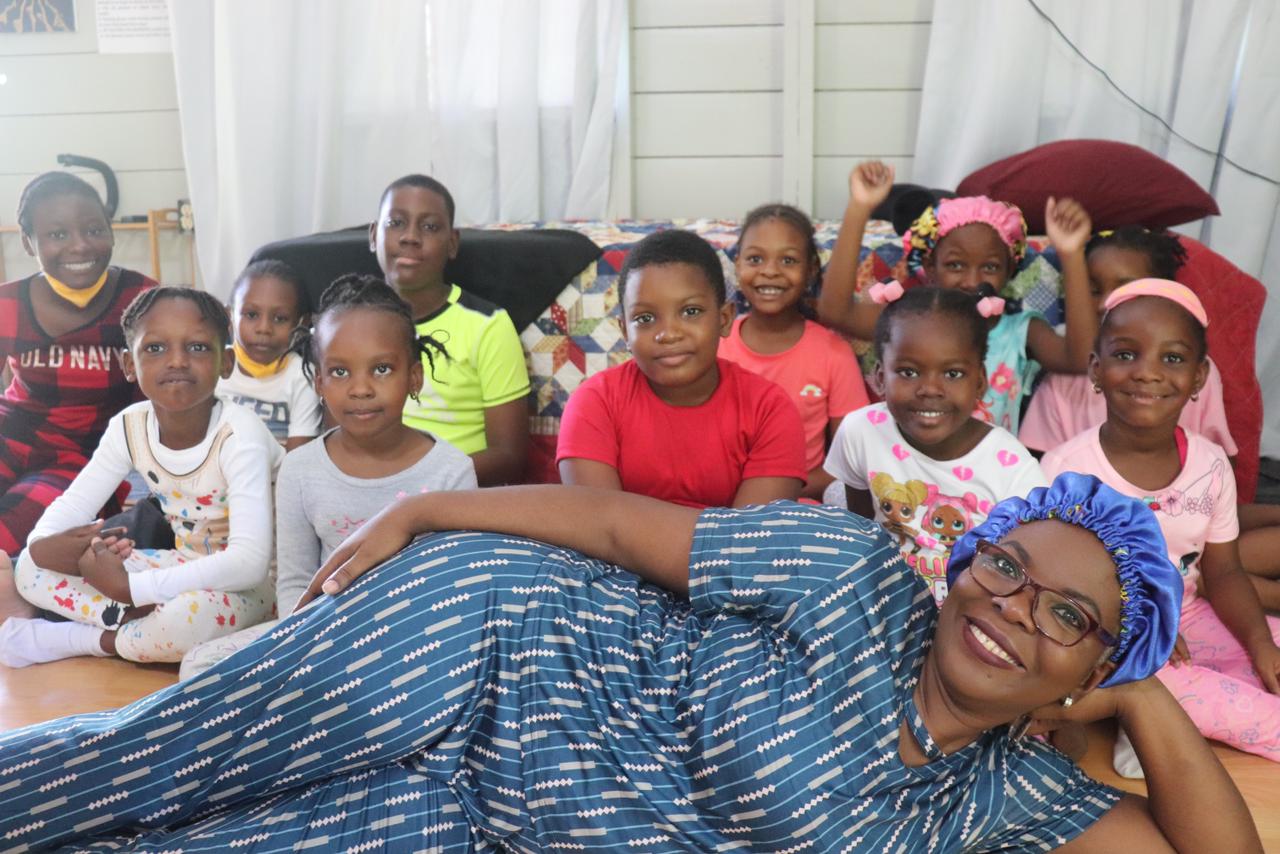
Pajama Day is another one of our anticipated events in term one. We are aware of the difficulties that are likely to arise in homes over bedtime or getting children to relax into a sleepy state.

Let us consider that children are coming off the summer holiday where bedtime routines were probably relaxed somewhat. For those kindergarteners who have just started to interact with the world around them and learn new things, it can be daunting and cause them to experience difficulties relaxing before bedtime. Some children do find the rigors of daily life stressful and anxiety-laden which can result in sleeping challenges.

With that said, we can surmise that adults should be more mindful about bedtime for children and try to do their very best to make it enjoyable and beneficial to their children. There are many important things to consider to achieve this, however, in this article, I want to pay attention to suitable activities that children could be engaged in to prepare them for bedtime.

Here are a few examples:

  • Shower/bath – This serves several purposes. It could cool and calm children down, It certainly will clean them up and could prepare them for my next point.
  • Massages- Gentle massages can help children to relax; reduce tension in muscles and help the muscles become stronger; reduce fatigue and maintain healthy muscles. What’s more is that it provides an opportunity for them to be touched. Are you aware that some children are not touched by their parents often although they live with them?
  • Lotioning is a good way to introduce massages to children. Massage their hands and feet, paying attention to those little fingers. They are used during a school day.
  • Treading beads for older children.
  • Puzzles
  • Colour and trace
  • Listen to or play music
  • blow bubbles
  • read books including the Bible
  • Listen to books being read to them
  • listen to audio-books
  • breathing exercises
  • pray for others
  • eat a healthy bedtime snack

Which of the above have you been doing? Which one will you try?

Rev. Dr. Natasha R. Francis-Campbell

October 2023

Photo credit: Jakim Campbell

Joy! We’ve Got Joy.

Our value word for the month of June is JOY

We have intentionally pulled joy to the foreground as it can get lost in the myriad of disappointments, challenges, anxious moments, and lawlessness that appears to occupy the scene constantly.

Joy is not happiness.

Joy is not the result of being healthy, wealthy, or smart.

A friend of mine lost her beloved mother this week. We started conversing a few hours after and though it was obvious she was mourning she exuded such joy.  As a matter of fact, she told me that she was mourning not mournful.  Can you imagine that!

We can, if we understand James 1:2-3 which states,

Dear brothers and sisters,[a] when troubles of any kind come your way, consider it an opportunity for great joy. For you know that when your faith is tested, your endurance has a chance to grow.”

Weeping is not indicative of the absence of joy.  Joy is rooted in Christ Jesus.  The fullness of joy is found in Him.

No matter what comes, we have joy.  For the month of June, we pray that you will experience the fullness of joy.

Joy Overflow- We do not own the rights to the song. Dancer- Icon Ajahne Reid